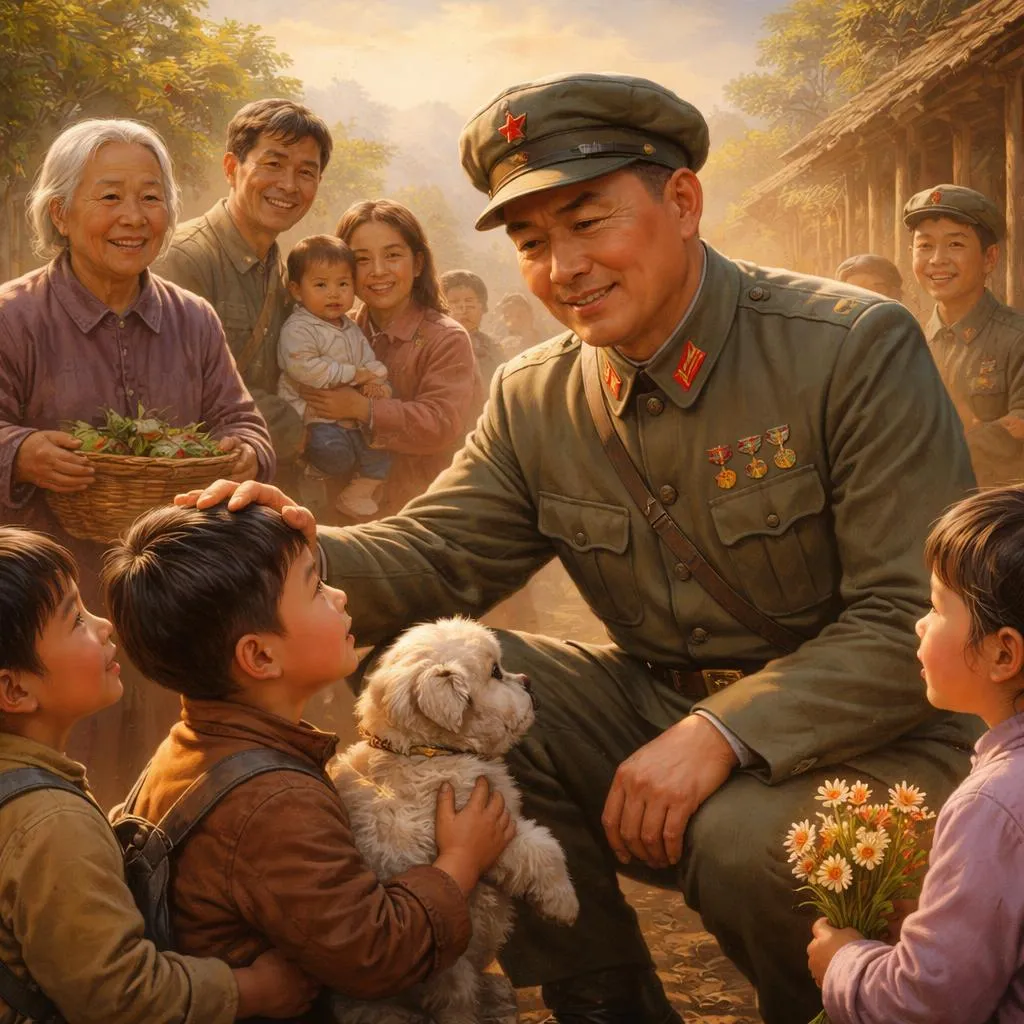

Who Is This Celebrity?
Liu Bocheng was one of China's most respected military leaders. People called him the "Chinese Field Marshal" for his brilliant strategies. He also earned the nickname "One-Eyed Dragon" after losing an eye in battle. Despite his fierce appearance, he had a very kind heart. He loved teaching young soldiers and sharing his knowledge. He translated many foreign military books into Chinese. His soldiers trusted him because he never sent them into danger without a plan. His story shows that true strength includes wisdom and kindness.
Early Life and Childhood
Liu Bocheng was born in 1892 in Sichuan Province, China. His family lived in a small town called Kaixian. His father was a farmer and a teacher. Young Liu grew up in a poor but educated home. His father taught him to read and write at a very young age. He loved listening to stories about ancient Chinese heroes. He also enjoyed watching village elders perform traditional opera. The opera stories often talked about loyalty and bravery. He dreamed of becoming a hero who protected weak people. He practiced writing characters with a brush every single day.
Education and Learning Journey
Liu Bocheng attended a traditional Chinese school in his town. He studied Confucius classics and ancient poetry. His teachers praised his sharp memory and hard work. At age 12, his father passed away suddenly. The family lost their main supporter. Young Liu had to leave school and work on farms. But he never stopped studying. He read every book he could borrow. At age 19, he entered a modern military academy in Sichuan. He studied military history, tactics, and weapons. He graduated at the top of his class. Later, he went to a military university in Moscow, Russia. He learned to speak Russian fluently.
How Did They Become Successful?
Liu Bocheng became successful by combining intelligence with hard work. He joined the revolutionary army when he was young. His commanders quickly noticed his brilliant mind. He won many battles against larger enemy forces. He used terrain and weather to his advantage. He also cared deeply about his soldiers' lives. He never ordered attacks that seemed hopeless. During the Long March, he led his troops across dangerous rivers and mountains. He always walked in front, not behind. His soldiers said they would follow him anywhere. After World War II, he became one of China's top military educators. He founded military schools to train young officers.
Big Ideas and Achievements
Liu Bocheng's biggest achievement was modernizing China's military education. He translated over a million words of foreign military texts into Chinese. These books taught Chinese officers about new tactics and technologies. He also wrote many original training manuals. His methods turned ordinary farmers into skilled soldiers. During the Civil War, he led a famous campaign across the Yellow River. His army defeated over 300,000 enemy soldiers. He also helped plan the final battles that united China. After the war, he became the president of China's top military academy. He trained thousands of young officers who later became leaders themselves.
Challenges and Difficult Times
Liu Bocheng faced extreme physical challenges throughout his life. In 1916, a bullet hit his right eye during a battle. The wound became infected. A foreign doctor had to remove his eye without any pain medicine. Liu stayed completely still and did not scream during the entire operation. The doctor called him a "steel man." He wore a glass eye for the rest of his life. He also suffered from chronic pain in his legs from old wounds. During the Long March, he walked hundreds of miles despite the pain. He never complained or asked for special treatment. He simply kept moving forward.
Fun Facts About the Celebrity
Liu Bocheng loved reading Russian novels in their original language. His favorite author was Leo Tolstoy. He also enjoyed playing Chinese chess with his students. He always explained his moves so they could learn. He never ate meat on Fridays because of a personal promise. He kept that promise for over fifty years. He also loved planting flowers in his garden. Roses were his favorite. He wrote beautiful poetry about nature and peace. He never raised his voice or yelled at anyone. People called him the gentle general. He also kept a diary every day until his hands became too weak to write.
Why Is This Celebrity Important Today?
Liu Bocheng's military textbooks still train Chinese officers today. His translations of foreign works helped China learn from other countries. He showed that learning never stops, even for generals. His military academy continues to produce excellent leaders. Many of China's modern military ideas trace back to his teachings. He also represents the idea that strength and kindness can coexist. He was a fierce warrior but also a gentle teacher. His former home in Sichuan is now a museum. Thousands of students visit each year to learn about his life. His name reminds us that true leaders build others up.
What Can Kids Learn from This Story?
You can learn that learning is a lifelong journey. Liu Bocheng studied his whole life, even as a famous general. You can also learn to endure pain without complaining. He lost an eye and walked on wounded legs. But he never stopped working. You can learn that leaders serve others. He walked in front of his soldiers, sharing their dangers. You can learn to share your knowledge. He spent years translating books so others could learn. You can also learn that being gentle is not weakness. He never yelled or lost his temper. But everyone respected him deeply.
Quick Quiz or Practice Time
Let's see what you remember about Liu Bocheng.
Question 1: What nickname did Liu Bocheng receive after losing his eye?
Answer: The One-Eyed Dragon.
Question 2: In which province was Liu Bocheng born?
Answer: Sichuan Province.
Question 3: What foreign language did Liu Bocheng learn to speak fluently?
Answer: Russian.
Question 4: What did Liu Bocheng love planting in his garden?
Answer: Roses.
Question 5: What kind of novels did Liu Bocheng enjoy reading?
Answer: Russian novels, especially by Leo Tolstoy.
Activity: Think of something difficult you have faced, like a hard test or a sports injury. Draw a picture of yourself getting through that difficulty. Write one sentence about what helped you keep going. Share it with a family member.
Liu Bocheng lived to be 94 years old. He passed away in 1986. He saw China transform from a poor, broken country into a strong nation. He lost his eye, his health, and many friends. But he never lost his love for learning. He never lost his kindness. He taught thousands of young soldiers how to be brave and wise. He wrote books that educated generations. He planted flowers that bloomed long after he left. His life teaches us a beautiful truth. The strongest people are often the kindest. The wisest people are often the most gentle. You do not need to shout to be heard. You do not need to hurt to be strong. Liu Bocheng showed us that. Now carry his quiet strength with you. Read a book today. Help someone who needs it. Stay calm when things get hard. That is how you become a hero, just like him.