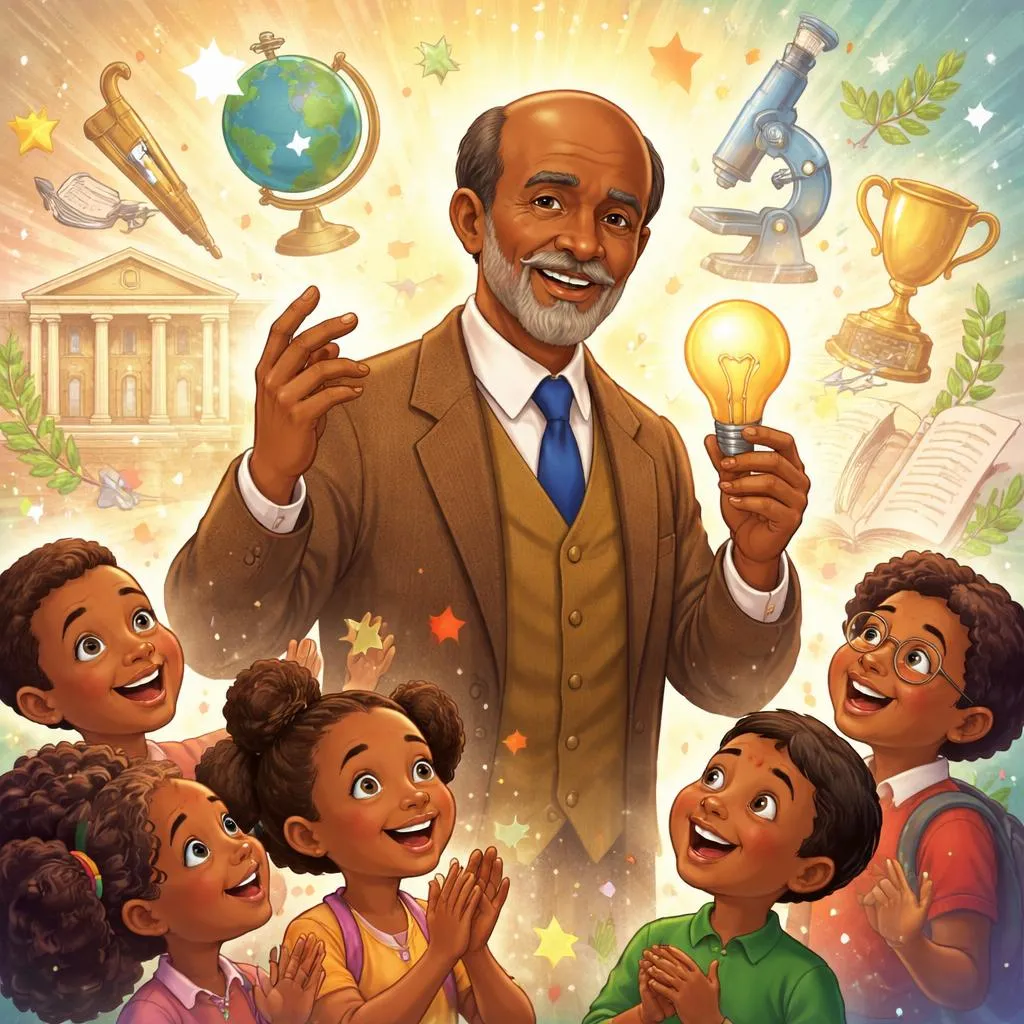

Who Is This Celebrity?
W.E.B. Du Bois was a writer, historian, and civil rights leader. He became the first Black American to earn a PhD from Harvard University. He wrote famous books about race and equality.
This celebrity story follows a man who used words as weapons. W.E.B. Du Bois did not accept unfair treatment. He wrote articles, gave speeches, and organized protests for equal rights.
Kids who love reading and history will find his story powerful. Du Bois showed that knowledge is power. He proved that one person with a pen can change the world.
He helped start the NAACP, a group that still fights for civil rights today. His ideas influenced Martin Luther King Jr. and many other leaders.
Early Life and Childhood
W.E.B. Du Bois was born in 1868. He grew up in Great Barrington, Massachusetts. His family was one of the few Black families in that town.
Young William loved school. He read every book he could find. His teachers saw his bright mind and encouraged him.
He did not face much racism as a child. His town treated him fairly. He played with white children and attended good schools.
But one day, a white girl in his class refused to trade cards with him. She said he was Black. Du Bois felt confused and hurt.
That small moment opened his eyes. He realized that some people would judge him by his skin color. He decided to fight against this unfairness with his mind.
He worked hard at everything he did. He wrote for the local newspaper. He studied Latin and Greek. He dreamed of attending a great university.
His mother supported him. She worked hard to keep him in school. She believed her son would do great things.
When Du Bois was a teenager, his mother died. He felt very sad. He continued his studies to honor her memory.
Education and Learning Journey
W.E.B. Du Bois attended Fisk University in Tennessee. This was his first time living in the South. He saw racism for the first time.
He saw Black people treated like second-class citizens. He saw separate water fountains and waiting rooms. He became angry and determined.
At Fisk, Du Bois learned about the history of Black people. He realized that Black people had achieved great things before slavery. He wanted to share this history with the world.
After Fisk, Du Bois attended Harvard University. He was one of the few Black students there. He studied history and philosophy.
He worked hard every day. He often stayed in the library until midnight. He earned his bachelor’s degree in 1890.
Then he earned a second degree. Then he earned a master’s degree. Harvard had never given a PhD to a Black person before.
Du Bois became the first. He earned his PhD in 1895. He wrote a famous dissertation about the African slave trade.
He also studied in Berlin, Germany. European professors treated him as an equal. He loved the feeling of being judged only by his work.
How Did They Become Successful?
W.E.B. Du Bois became successful through research and writing. He did not just talk about problems. He studied them with science.
He taught at Atlanta University. He created a research program about Black life in America. He published studies about poverty, crime, and health.
His book “The Philadelphia Negro” changed how people thought about race. He used data and facts. He proved that Black people faced discrimination, not laziness.
In 1903, Du Bois published his most famous book. He called it “The Souls of Black Folk.” This book became a classic.
In this book, Du Bois introduced the idea of “double consciousness.” He described how Black Americans see themselves through two sets of eyes. Their own eyes and the eyes of white people who judge them.
The book also contained a famous quote. Du Bois said the problem of the 20th century is the problem of the color line. He meant that race divided America.
Du Bois disagreed with Booker T. Washington. Washington wanted Black people to focus on trades and jobs. Du Bois wanted Black people to fight for full equality immediately.
He believed in what he called the “Talented Tenth.” He said the best educated Black people should become leaders. They should demand rights for everyone.
Big Ideas and Achievements
W.E.B. Du Bois achieved many things that changed America. His biggest idea was simple. Black people deserve full equality right now, not later.
In 1909, Du Bois helped start the NAACP. This group fought against lynching, segregation, and voter suppression. The NAACP still fights for civil rights today.
Du Bois edited the NAACP’s magazine called The Crisis. He wrote articles every month for 24 years. He reached millions of readers.
He used The Crisis to show pictures of lynching victims. White newspapers did not show these horrors. Du Bois forced America to see the truth.
He also organized protests. In 1917, he led a silent march down Fifth Avenue in New York. Thousands of Black people walked in silence to protest violence.
Du Bois wrote 21 books and hundreds of articles. He wrote history, sociology, and fiction. His book “Black Reconstruction” changed how historians understand the Civil War.
He also organized international conferences. He brought together Black leaders from Africa, Europe, and the Americas. He believed racism was a global problem.
Du Bois ran for Senate in 1950. He lost the election. But he used his campaign to speak about peace and justice.
Challenges and Difficult Times
W.E.B. Du Bois faced many challenges. White scholars ignored his work. They did not believe a Black man could be a real historian.
The US government watched him for many years. They thought his ideas were dangerous. He spoke against war and colonialism.
In 1951, the government put Du Bois on trial. They accused him of being a spy for other countries. He was 83 years old.
A judge dismissed the case. But the trial cost Du Bois his savings. He lost most of his money.
Du Bois also faced criticism from other Black leaders. Some said he was too radical. Some said he asked for too much too fast.
He never stopped fighting. He kept writing and speaking into his 90s. He believed that justice would come eventually.
In 1961, Du Bois moved to Ghana, Africa. The government there welcomed him. He became a citizen of Ghana.
He died in 1963 at age 95. One day before his death, he wrote about the March on Washington. Martin Luther King Jr. gave his famous “I Have a Dream” speech that day.
Du Bois never saw the speech. But his ideas helped make it possible.
Fun Facts About the Celebrity
W.E.B. Du Bois has many fun facts that kids enjoy. He learned to read at age four. He read the Bible and newspapers before starting school.
He played the piano. He loved classical music. He said music helped him think clearly.
Du Bois kept a diary for 70 years. He wrote in it almost every day. Historians use his diaries to understand his life.
He loved to travel. He visited Europe, Africa, and Asia. He learned to speak German and French.
Du Bois was a vegetarian for many years. He believed eating meat was unhealthy. He preferred fruits and vegetables.
He had a photographic memory. He could read a page and then recite it from memory. This skill helped him in school.
Du Bois lived to see the Supreme Court ban school segregation in 1954. He was 86 years old. He said it was one of the happiest days of his life.
Why Is This Celebrity Important Today?
W.E.B. Du Bois remains very important today. His books are still in print. College students read “The Souls of Black Folk” in classes.
The NAACP still uses his ideas. The organization has millions of members. It continues the work Du Bois started.
His idea of double consciousness helps people understand racism. Psychologists and sociologists still study this concept.
Du Bois proved that Black history matters. Before him, most historians ignored Black people. He showed that Black Americans built this country too.
He also showed that protest works. Du Bois did not wait for change. He demanded it. His courage inspired the civil rights movement.
The US government apologized for how it treated Du Bois. In 2003, the State Department honored his legacy. They admitted the trial against him was wrong.
Du Bois’s face appears on posters and murals. Young activists study his speeches. His words still inspire people to fight for justice.
What Can Kids Learn from This Story?
Kids can learn many lessons from W.E.B. Du Bois. The first lesson is about using your mind. Du Bois fought racism with research and writing. Knowledge is a powerful weapon.
The second lesson is about speaking the truth. Du Bois did not soften his message. He told America exactly what he saw.
The third lesson is about being brave. The government put Du Bois on trial. He kept speaking anyway.
The fourth lesson is about thinking for yourself. Du Bois disagreed with Booker T. Washington. He followed his own beliefs, not someone else’s.
The fifth lesson is about looking at the whole world. Du Bois believed racism was global. He made friends with people from many countries.
The final lesson is about never stopping. Du Bois fought for justice until he died at 95. You are never too old to make a difference.
Quick Quiz or Practice Time
Let us see what you remember about W.E.B. Du Bois. Ask a parent to help with these questions.
Question 1: What university did Du Bois attend for his PhD?
Question 2: What was the name of Du Bois’s most famous book?
Question 3: What organization did Du Bois help start in 1909?
Question 4: What was the name of the magazine Du Bois edited?
Question 5: How old was Du Bois when he died?
Activity Time: Draw W.E.B. Du Bois writing at his desk. Draw books and papers around him. Add the words “The Souls of Black Folk” on one book.
Another Activity: Write a short paragraph about something unfair you have seen. Describe what happened. Then write one sentence about what should change.
Talk about a time someone judged you without knowing you. Write down how it made you feel. Then write down one thing you can do to treat others fairly.
W.E.B. Du Bois held a pen and changed the world. He wrote about pain and hope. He demanded that America live up to its promises. He faced enemies and jail. He never stopped. His story tells every child that your voice matters. Use it. Write. Speak. Organize. Demand fairness. You are never too young to start. Du Bois started reading at four. He never stopped learning. Pick up a book. Pick up a pen. Change the world.