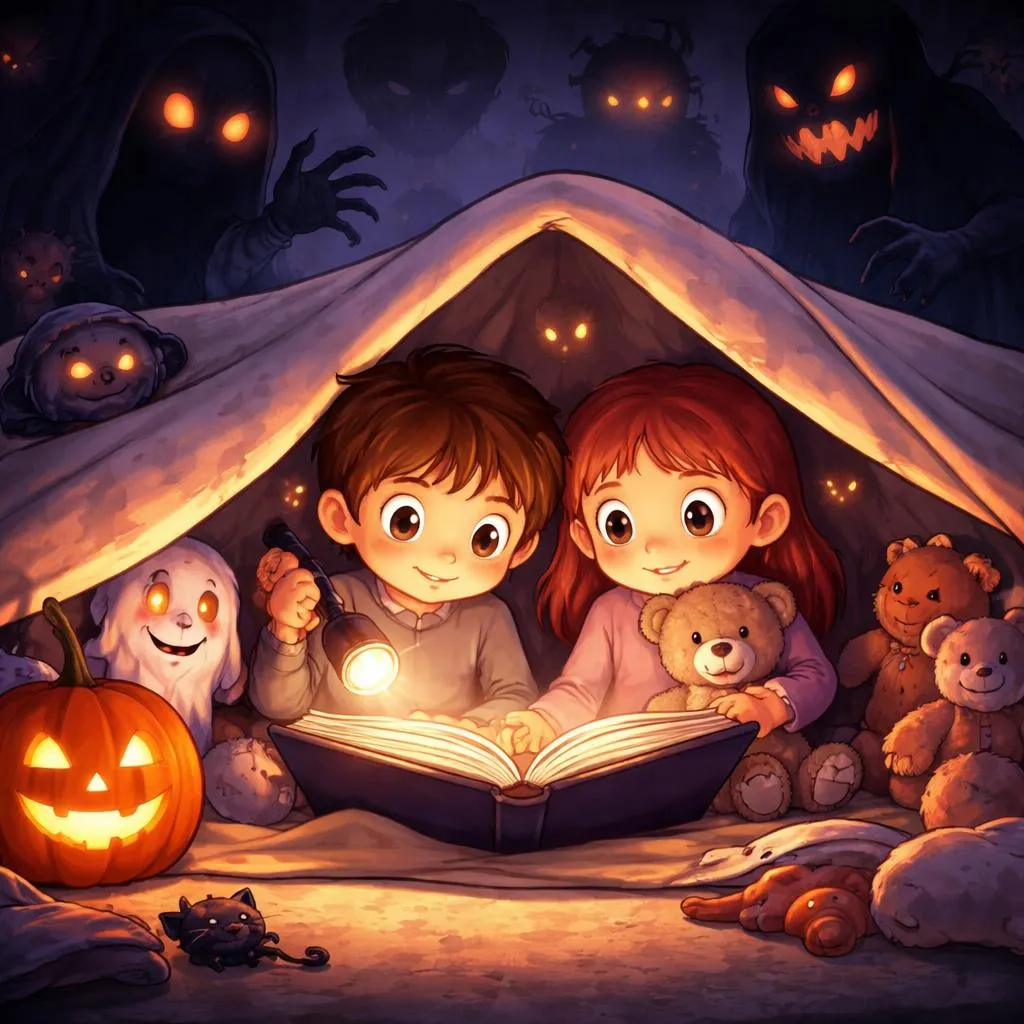

What Is a Children's Horror Story? Let us explore this unique genre of children's literature together. A children's horror story creates fear and suspense for young readers. It includes scary elements that thrill without overwhelming completely. The stories feature monsters, ghosts, or mysterious happenings. Dark settings like haunted houses or creepy forests appear. Strange sounds and shadows create atmosphere and tension. The horror is usually mild compared to adult versions. Happy endings resolve the scary situations eventually. Children know the fear is temporary and will end well. The stories allow safe exploration of frightening ideas. They help children learn to manage fear responses gradually. This genre has existed as long as storytelling itself.
Meaning and Purpose of Children's Horror Horror stories serve several important purposes for developing children. They allow safe practice with fear in controlled settings. Children experience scary feelings without real danger present. This builds emotional resilience and coping skills gradually. The stories also help children face their real fears indirectly. A child afraid of the dark might read about it. The story provides distance while addressing the fear. Horror also teaches that scary situations can be survived. Characters face terrors and overcome them successfully. This builds confidence in children's own abilities. The genre also develops imagination and creativity richly. Children envision scenarios beyond ordinary daily experience. This mental flexibility serves many learning purposes well.
Categories of Children's Horror Stories We can organize children's horror into several helpful categories. Gentle horror creates mild shivers without true terror. Stories about friendly ghosts or silly monsters belong here. Spooky mysteries involve unexplained events to solve. Creepy houses or mysterious disappearances appear often. Traditional tales include some frightening elements naturally. Many fairy tales have dark moments and scary characters. Monster stories feature creatures that are more funny than frightening. The monster might be misunderstood rather than truly evil. Psychological horror plays with children's minds and expectations. Strange occurrences make characters doubt what is real. Adventure horror combines thrills with exciting plot elements. Characters face dangers but also have exciting journeys.
Vocabulary Learning from Horror Stories Horror stories introduce rich atmospheric vocabulary for children. Fear means the feeling when something scary happens. Terror means very strong fear that overwhelms completely. Spooky means creepy in a fun, not too scary way. Eerie means strange and frightening at the same time. Mysterious means difficult to understand or explain clearly. Shadow means dark shape caused by blocking light. Creep means to move slowly and quietly to avoid notice. Howl means the long loud sound wolves and wind make. Whisper means to speak very softly and quietly. Glow means soft light that seems to come from nowhere. We can teach these words with picture cards showing examples. Use them in sentences about story events and feelings.
Phonics Points in Horror Stories Horror stories provide useful phonics practice with atmospheric language. Scary has the SC blend and long E and R sound. Ghost has the GH silent and long O and ST blend. Monster has the short O and N sound and ER ending. Shadow has the SH digraph and short A and OW diphthong. Creep has the CR blend and long E and P sound. Howl has the H sound and OW diphthong and L sound. Setting words offer valuable sound patterns. Haunted has the H sound and AU diphthong and ED ending. Forest has the FOR combination and short E and ST blend. Basement has the long A and short E and ENT ending. Action words demonstrate patterns. Tremble has the TR blend and short E and LE ending. Shiver has the SH digraph and short I and ER ending. Hide has the H sound and long I. We can focus on one sound pattern from each story. Find all words with that sound in the horror tale. Write them on bat or ghost shapes for practice.
Grammar Patterns in Horror Narratives Horror stories model useful grammar for young readers effectively. Past tense carries the main narrative throughout. "The children heard a strange noise in the attic." Present tense appears in dialogue and urgent moments. "I think something is following us!" she whispers. Future tense shows anticipation and fear ahead. "We will never go back to that house again." Questions express character confusion and worry. "What was that shadow?" "Who is hiding in the closet?" Commands appear in moments of danger. "Run!" "Hide!" "Don't look back!" Descriptive language builds atmosphere and tension. "The dark, cold room smelled like damp earth and secrets." Prepositional phrases describe locations precisely. "Under the bed, behind the door, inside the closet." We can point out these patterns during reading.
Daily Life Connections Through Horror Horror stories connect to children's everyday experiences naturally. Shadows at night look different than in daytime. Ordinary objects appear strange and threatening in darkness. Strange sounds happen in every house occasionally. Creaking floors and settling pipes make noises. Being alone somewhere can feel slightly uncomfortable. A big empty house feels different than a full one. Dreams sometimes feel scary and out of control. Nightmares visit most children at some point. Imagination turns ordinary things into scary possibilities. A coat on a hook becomes a person at night. We can point out these connections during reading. "Have you ever seen a shadow that scared you?" "Sometimes our imagination plays tricks on us."
Learning Activities for Horror Stories Many activities deepen engagement with children's horror tales. Create a story map showing scary elements and their resolution. Track what causes fear and how it gets resolved. Draw the scariest moment from the story just read. Explain why that part felt frightening and why. Write an alternative ending that is less scary or more. Discuss how different choices would change the story. Act out scenes showing characters facing their fears. Practice brave faces and overcoming terror dramatically. Create a "courage kit" with items that help feel brave. Flashlight, stuffed animal, and positive notes included. Design a monster that is scary but also sympathetic. Give it reasons for its behavior and actions. These activities help process fear through creative expression.
Printable Materials for Horror Learning Printable resources support deep engagement with horror stories safely. Create emotion tracking sheets for during reading. Note when characters feel scared and when they feel brave. Design vocabulary cards with horror words and definitions. Spooky, eerie, creepy, mysterious, terrifying included. Make a courage journal for recording personal brave moments. Write about times when fear was faced successfully. Create a monster design template with descriptive prompts. Name, appearance, sounds, and habits sections included. Design a scary setting description guide with sensory prompts. What does it look, sound, smell, and feel like? Make a story map for tracking plot elements. Characters, setting, problem, scary moments, resolution. These printables structure horror exploration activities safely.
Educational Games About Horror Games make horror learning playful and controlled for children. Play "Sound Detective" identifying scary sounds recordings. Guess what makes each sound in real life. Create "Shadow Charades" making shadow shapes on wall. Others guess what creature the shadow represents. Play "Brave or Scared" sorting character reactions. Decide if actions show courage or fear in situations. Design "Monster Match" pairing descriptions with monster pictures. Match appearance with behavior and habitat clues. Play "Flashlight Tag" in dimmed room with boundaries. Practice being brave in semi-darkness with friends. Create "Fear Thermometer" rating story scariness levels. Discuss why some parts feel scarier than others. These games build fear management through playful exposure.
Teaching About Healthy Fear Horror stories provide opportunities to discuss fear's purpose. Fear protects us from real dangers always. It makes us careful around heights and strangers. The feeling itself is not bad or wrong ever. What matters is how we respond to fear. Courage means acting despite feeling afraid sometimes. Fear becomes a problem only when too big. It should not stop us from living fully ever. Real dangers deserve fear, imagined ones less so. Children can learn to evaluate threats realistically. The stories help distinguish real from imaginary fears. They also teach that fear feelings pass eventually. Everyone feels scared sometimes, even adults too.
Creating Appropriate Scare Levels Children's horror must match developmental stages carefully. Very young children need minimal scary elements always. Gentle suspense works better than actual frightening content. Slightly older children enjoy mild thrills and chills. They like being scared but knowing it's pretend. Pre-teens can handle more complex and darker themes. They appreciate psychological suspense and mystery. Parents and teachers know individual children's tolerance best. Some children love scary stories from early ages. Others remain sensitive to frightening content longer. Choice and control matter enormously for children. They should choose whether to engage with horror. The option to stop reading always remains available.
The Comfort of Happy Endings Children's horror stories almost always end happily ever after. The monster is defeated or turns out friendly. The scary situation resolves and characters are safe. This pattern provides essential reassurance for children. They learn that fear passes and safety returns always. The happy ending makes the scary journey worthwhile. Children can endure temporary fear for satisfying resolution. This mirrors how real difficulties resolve eventually. Problems get solved and hard times end. The pattern builds hope and resilience gradually. Children internalize that they can survive hard things. The happy ending is not just comfort but teaching.
Why Children Choose Scary Stories Many children actively seek out frightening stories repeatedly. The thrill of fear feels exciting in safe contexts. Adrenaline provides a natural high some enjoy. Mastering fear through stories builds confidence greatly. Finishing a scary book feels like accomplishment. The stories also provide social bonding opportunities. Children share scary stories with friends often. Telling ghost stories at sleepovers is traditional. The shared experience of being scared together bonds. Children also explore identity through facing fears. They discover they can be brave after all. The stories become milestones in growing up gradually. Surviving a scary book marks developmental progress.