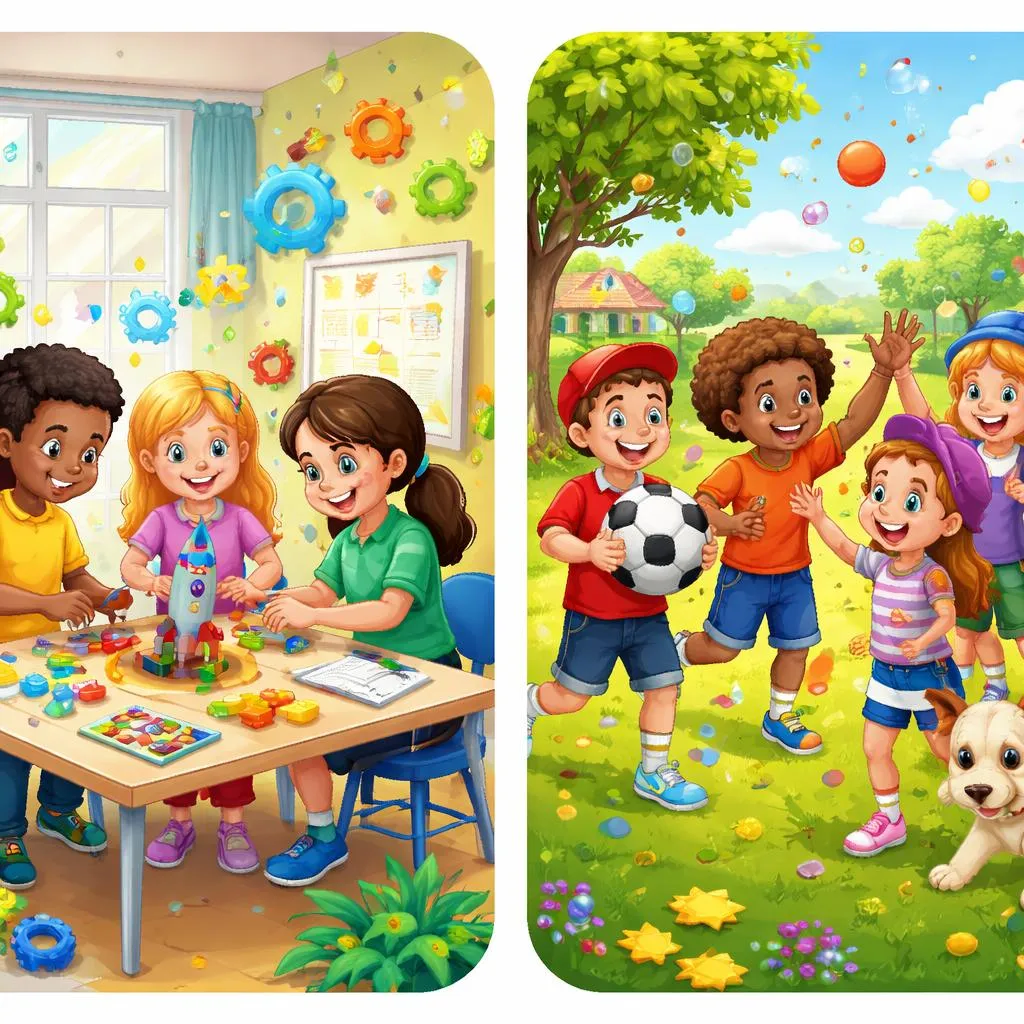

Children join many teams. A soccer team. A classroom group. A family cleanup crew. Some teams feel fine. Some teams feel amazing. What makes the difference?
Two phrases describe these different levels. "Good team" and "great group." Parents and teachers use both as praise. But they mean different things.
One describes a team that works well. One describes a group that goes beyond. Children need to understand the difference. They need to know what to aim for.
This article helps families explore what makes groups special. Your child will learn the difference between good and great. Team activities will have clearer goals.
What Do These Expressions Mean?
"Good team" means "a group of people who work together without major problems." The team completes tasks. Members mostly get along. The group functions properly.
For a child, think of this like a school project group. Everyone does their part. No one fights. You finish on time. The project is fine. That is a good team.
"Great group" means "a group of people who work together exceptionally well." The group does more than expected. Members help each other. The group feels special.
For a child, think of this like a sports team that wins the championship. Players cheer for each other. They practice extra. They celebrate together. That is a great group.
These two expressions seem similar because both describe positive groups. Both mean people cooperate. Both are better than a bad team or a messy group.
But one meets expectations. One goes beyond expectations.
What's the Difference?
The main difference lies in the level of quality and connection. "Good team" meets the basic standard. "Great group" exceeds the standard in noticeable ways.
One is about functioning. One is about flourishing.
"Good team" sounds solid but not amazing. The team does what it needs to do. No big problems. No big complaints. The work gets done. That is good.
"Great group" sounds exceptional. The group does more than required. Members go out of their way for each other. The energy feels high. The results shine.
Another difference involves feelings. A good team feels fine. You do not dread meetings. You do your part. But you might not feel excited.
A great group feels exciting. You look forward to seeing the others. You feel proud to belong. You miss the group when you are apart.
Also, a good team can become a great group. Greatness is not magic. It comes from extra effort, kindness, and shared joy.
So remember: good team = works well, meets expectations. great group = works exceptionally, exceeds expectations.
When Do We Use Each One?
Use "good team" for groups that function properly. Use it after a project finishes on time. Use it for a sports team with a winning record. Use it for any group that does its job.
For example, a classroom group finishes their science poster. No arguments. Everyone contributed. The teacher says "you were a good team." The praise fits the solid performance.
Use "good team" for everyday cooperation. A family works together to clean the garage. You finish in two hours. No one complained. "We are a good team."
Use "great group" for groups that go above and beyond. Use it when members help each other without being asked. Use it when the group shows extra spirit or kindness.
For example, a soccer team loses the game but stays positive. Players hug each other. They cheer for the other team. The coach says "you are a great group. Your sportsmanship is amazing."
Use "great group" for groups that achieve something special. A school club raises twice their goal for charity. Members stayed late to help. "You are a great group."
Also use "great group" when the bond feels strong. A theater cast becomes close friends. They help each other learn lines. They celebrate together. That is a great group.
Remember: meets expectations = "good team." Exceeds expectations = "great group."
Example Sentences for Kids
Here are simple sentences for "good team":
You finished your group project on time and everyone did their part. That is a good team.
(This praises solid, expected performance.)
Our family worked together to pack for vacation without any fighting. We are a good team.
(This praises functional cooperation without conflict.)
The cleanup crew got the park ready in two hours. Good team effort everyone.
(This praises efficient task completion.)
Here are simple sentences for "great group":
You not only finished the project, but you also helped another group who was struggling. That is a great group.
(This praises going beyond the task to help others.)
Our soccer team lost every game, but we never gave up and we cheered for each other. We are a great group.
(This praises spirit and mutual support, not results.)
The baking club stayed late to make extra cookies for the shelter. What a great group you are.
(This praises extra effort for a good cause.)
Notice how "good team" praises basic functioning. "Great group" praises exceptional effort, kindness, or spirit.
Common Mistakes to Avoid
Many adults call every group "great." This dilutes the word. A group does the minimum. You say "you are great." The word loses its special meaning.
Incorrect: Group finishes basic worksheet. "You are a great group!"
Correct: "You worked well together as a good team."
Save "great" for moments that truly stand out.
Another mistake: never calling a group great even when they earn it. Some adults hold back praise. A group does something amazing. The adult just says "good job."
Do not hold back. When a group shows exceptional kindness, effort, or spirit, call them great. They earned the big word.
A third mistake: praising results only, not the way the group works together. A team wins a game. You say "great group" only because they won. But they argued the whole time.
Winning does not make a group great. How they treat each other makes a group great. Praise the kindness, the help, the spirit. Those matter more than the score.
Easy Memory Tips
Here is a fun trick for kids. Think of a bicycle and a racing car.
"Good team" = a bicycle. A bicycle gets you where you need to go. It works. It is reliable. It does the job. That is good.
"Great group" = a racing car. A racing car goes faster. It looks amazing. It feels exciting to drive. It goes beyond just getting there. That is great.
Another memory tip: look at the letters. "Good" has four letters. It feels shorter and simpler. "Great" has five letters. It feels bigger and stronger. The words themselves tell you which is which.
Draw a simple picture. Draw a bicycle next to "good team." Draw a race car with a checkered flag next to "great group." The images help children feel the difference.
Also try this question: "Did the group just do the job, or did they do something extra special?" If just the job, say "good team." If extra special, say "great group."
Quick Practice Time
Try these easy exercises with your child. Fill in the blank with "good team" or "great group."
A classroom group finishes their history presentation. No one argued. Everyone spoke. The teacher says "you were a ________________."
A scout troop collects 200 cans for a food drive. Their goal was 100 cans. They also made cards to put on each can. The leader says "what a ________________ you are."
A family does their weekly chores. Everyone finishes their assigned tasks. No reminders needed. A parent says "we are a ________________."
A dance team helps a new member learn the routine. They stay late after practice. They give her encouragement. The captain says "this is a ________________. Look how we support each other."
Answers:
Good team (met expectations, no extra special behavior)
Great group (doubled the goal and added extra kindness)
Good team (finished assigned tasks, nothing extra)
Great group (went out of the way to help a new member)
Now practice using both phrases at home. When your family finishes basic tasks together, say "good team" with a nod and a smile. When someone goes out of their way to help another, pause and say "this is a great group." Your child will learn that good is wonderful, but great is extraordinary.
Wrap-up
Use "good team" for groups that work well together and meet basic expectations. Use "great group" for groups that go beyond expectations with exceptional kindness, spirit, or effort. Both deserve praise, but one meets the mark while one sets a new one.