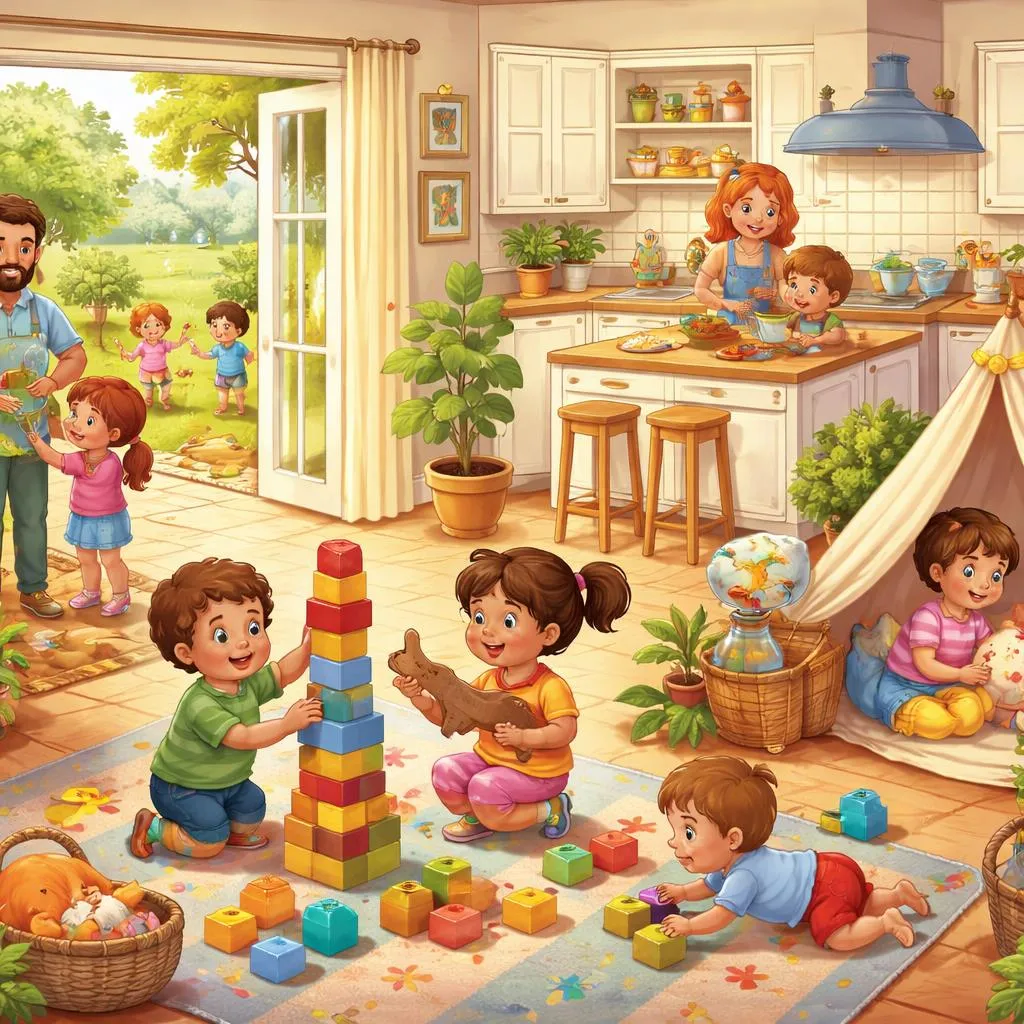

Teaching children about the world begins with the places they know best. The house is the first environment children truly understand. It is where they feel safe, loved, and comfortable. Today, we are going to explore the concept of house place and discover how teaching about houses can build vocabulary, cultural understanding, and a sense of belonging in young learners.
What Is a House? Let us start with the basic question. A house is a building where people live. It provides shelter from weather. It gives people a place to sleep, eat, and spend time with family. Houses come in many shapes and sizes around the world.
For young children, the house is their whole world at first. It contains everything familiar. Their bedroom, the kitchen where food appears, the living room where family gathers. Understanding the parts of a house helps children describe their daily environment.
When we teach about houses, we are teaching children to observe and name their surroundings. We give them words to talk about where they live. This builds confidence and communication skills.
Meaning and Explanation of House as a Place How do we explain a house to young children? We start with what they know. A house is where you wake up in the morning. It is where you eat breakfast. It is where you play with your toys. It is where you sleep at night.
We can explain that a house has different rooms for different activities. The kitchen is for cooking and eating. The bedroom is for sleeping. The bathroom is for washing. The living room is for spending time together.
A house also has special things that make it a home. Family pictures on the walls. Favorite toys in the bedroom. The smell of food cooking. The sound of family members talking. These are the things that make a house feel like home.
Categories or Lists of House Places To make learning organized, we can group house places into categories. This helps children build their vocabulary step by step.
Rooms Inside the House: Bedroom, kitchen, bathroom, living room, dining room, family room, laundry room, home office, playroom, basement, attic. Each room has a special purpose.
Parts of the House: Roof, walls, windows, doors, floor, ceiling, stairs, hallway, porch, balcony, garage, driveway, garden, yard. These are the structural parts.
Things in the Kitchen: Refrigerator, stove, oven, sink, cabinets, counter, table, chairs, microwave, toaster, dishes, cups, pots, pans. Children learn what belongs in this room.
Things in the Bedroom: Bed, pillow, blanket, dresser, closet, lamp, nightstand, toys, books, rug. These are the items that make a bedroom cozy.
Things in the Bathroom: Toilet, sink, bathtub, shower, mirror, towel, soap, toothbrush, toothpaste. Children learn about hygiene along with vocabulary.
Things in the Living Room: Couch, chair, television, table, lamp, bookshelf, rug, curtains, pictures. These are items for relaxing together.
Daily Life Examples of House Places The best way to learn about house places is to connect them to daily routines. Every day offers opportunities to talk about different parts of the house.
In the morning, we are in the bedroom waking up. We go to the bathroom to brush teeth. We go to the kitchen to eat breakfast. We get our backpack from the entryway.
After school, we come home through the front door. We put our things in our bedroom. We have a snack in the kitchen. We play in the living room or playroom.
In the evening, we eat dinner in the dining room or kitchen. We take a bath in the bathroom. We read stories in the bedroom. We say goodnight and go to sleep.
Each of these moments is a chance to name the room and talk about what happens there. "We are in the kitchen. What do we do in the kitchen? We eat food!"
Printable Flashcards for House Places Flashcards are excellent for teaching house vocabulary. Each card should show a clear picture of a room or item and the word for it.
For rooms, we show a picture of a bedroom with a bed. A kitchen with a stove and refrigerator. A bathroom with a toilet and sink. A living room with a couch and television.
For parts of the house, we show a roof, a window, a door, stairs. For furniture, we show a bed, a table, a chair, a couch.
We can use these cards in many ways. Hold up a card and ask, "What room is this?" Ask children to describe what people do there. "What do we do in the kitchen? We cook food!" Ask children to find the card for a room you describe.
Learning Activities or Games for House Places Games make learning about houses active and engaging. Here are some activities that work well in the classroom.
Build a House: Use large blocks or cardboard boxes to build a play house. Children can add rooms and furniture. They can label each room with a sign. This builds understanding of house structure.
House Scavenger Hunt: Hide pictures of different rooms or items around the classroom. Children search for them and name what they find. "I found the kitchen! I found the bed!"
Where Does It Go? Game: Gather pictures of different household items. Children sort them into which room they belong in. The toothbrush goes in the bathroom. The pillow goes in the bedroom. The pot goes in the kitchen.
House Drawing: Children draw their own house. They can include their family and favorite things. They can label the rooms. This connects art to vocabulary.
Dollhouse Play: If available, a dollhouse is perfect for house vocabulary. Children move small furniture and people through the rooms. They describe where things go.
House Bingo: Create bingo cards with pictures of rooms and household items. Call out the names. Children cover the matching picture. This builds listening and recognition.
Different Kinds of Houses Houses look different around the world. Teaching children about diverse houses builds cultural awareness.
Some people live in apartments in tall buildings. Some live in houses with yards. Some live in mobile homes. Some live in houses made of wood, brick, stone, or even ice in some places.
We can show pictures of houses from different cultures. An igloo, a hut, a house on stilts, a cave dwelling. Children learn that people create homes from whatever materials are available.
This teaches respect for diversity. Children understand that "house" means different things to different people, but all houses are homes.
Houses in Stories Stories are wonderful for teaching about houses. Many children's books feature houses prominently.
"The Three Little Pigs" shows houses made of straw, sticks, and bricks. Children learn about different building materials.
"Goldilocks and the Three Bears" takes place entirely in the bears' house. Children see the different rooms and furniture.
"Goodnight Moon" shows a detailed bedroom. Children name all the objects in the room.
While reading, we pause and talk about the house in the story. "Where are the bears? What room are they in? What furniture do you see?"
Building a House Vocabulary Wall Create a classroom display about houses. Add words and pictures as children learn them.
Start with a large outline of a house. Add room labels as you teach them. Add pictures of furniture in each room. Add family members.
Children can add their own drawings to the wall. This creates a sense of ownership. The wall becomes a reference they can use throughout the unit.
My House Project A wonderful project is having children create books about their own houses. Each child gets a small blank book.
Page one: "This is my house." A drawing of the outside. Page two: "This is my bedroom." A drawing of their room. Page three: "This is my kitchen." A drawing of where they eat. Page four: "My family in the living room." A drawing of family time.
Children can dictate or write sentences about each page. These books become treasured keepsakes. Children can "read" them to family and friends.
Connecting House to Home As we teach about house places, we also teach about home. A house is a building. A home is where love lives.
We talk about what makes a house a home. Family, pets, favorite toys, special memories. These are the things that turn a house into a special place.
Children can share what they love about their homes. "I love my bed. I love my dog. I love when we eat dinner together." This builds emotional connection to the vocabulary.
As we explore the concept of house place with young learners, we help them understand their most familiar environment. They learn words for rooms, furniture, and daily activities. They see that houses around the world can be different but serve the same purpose. They connect the building to the love that makes it a home. This foundation of vocabulary and understanding will serve them as they learn about the wider world beyond their front door.