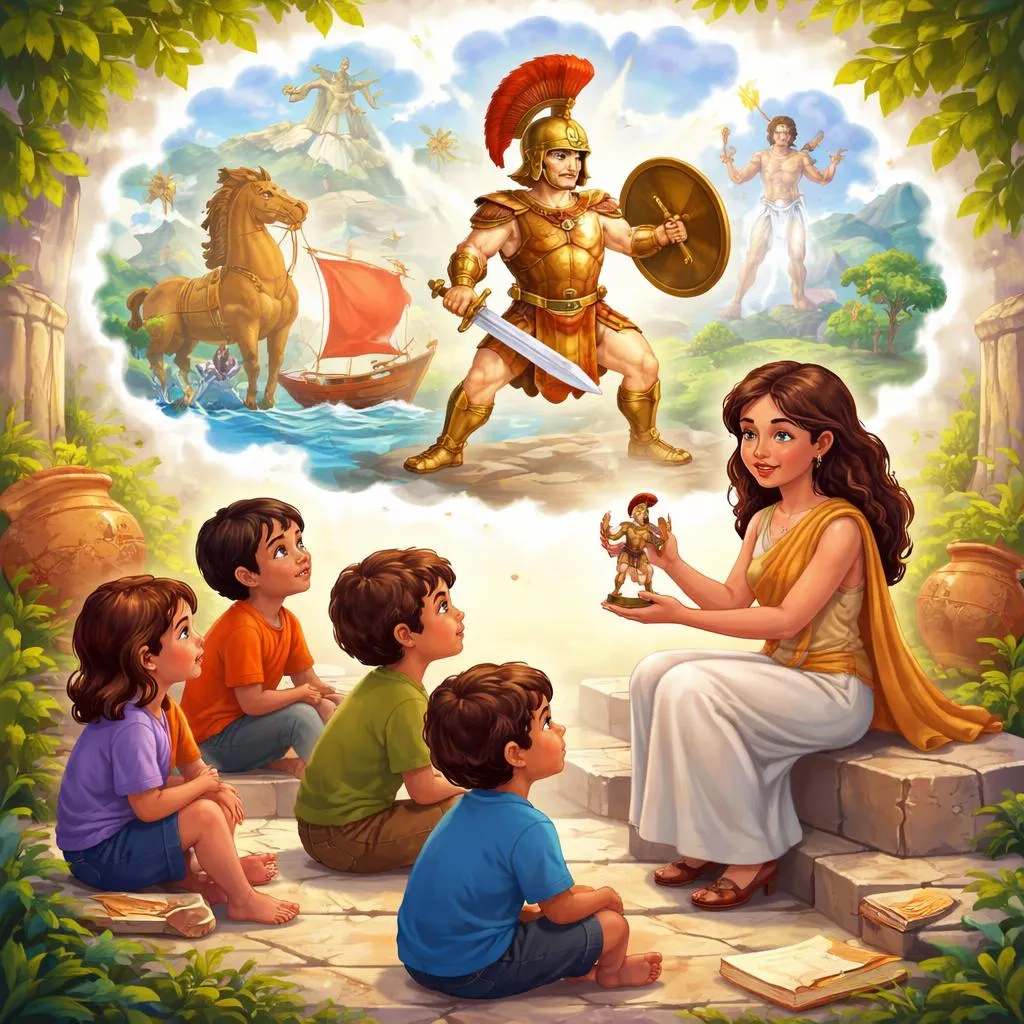

What Is an Achilles Children's Story? Let us explore this exciting tale from Greek mythology together. An Achilles children's story tells of the greatest warrior in the Trojan War. Achilles was a Greek hero with superhuman strength and courage. His mother was Thetis, a sea nymph, and his father was King Peleus. When Achilles was a baby, his mother tried to make him immortal. She dipped him in the River Styx, whose waters gave protection. She held him by his heel, so that spot remained vulnerable. This is where we get the phrase "Achilles heel" meaning a weak spot. Achilles grew to be a mighty and almost unbeatable warrior. When the Trojan War began, he was their greatest champion. The story of Achilles teaches about strength, pride, anger, and consequences.
Meaning and Purpose of the Achilles Story This story carries deep meaning about human nature and choices. Achilles was nearly invincible but had one small weakness. No matter how strong someone is, everyone has vulnerabilities. The story also teaches about the danger of uncontrolled anger. Achilles became so angry at Agamemnon that he refused to fight. His pride caused him to withdraw from battle. His best friend Patroclus died because of Achilles' anger. Grief and rage then drove Achilles to return and fight. He killed Hector, the Trojan prince, in revenge. But his own death soon followed when Paris struck his heel. The story shows how emotions can lead to both greatness and downfall.
Main Characters in the Achilles Story We can identify several important figures in this narrative. Achilles is the central hero of the story. His strength and courage are unmatched among the Greeks. His weakness is his pride and his vulnerable heel. Thetis is Achilles' mother, a sea nymph. She tried to make her son immortal and protected him. Patroclus is Achilles' beloved friend and companion. His death at Hector's hands changes everything. Agamemnon is the leader of the Greek army. His conflict with Achilles causes Achilles to withdraw from battle. Hector is the greatest Trojan warrior. He kills Patroclus and is killed by Achilles in revenge. Paris is Hector's brother who kills Achilles. He shoots an arrow that strikes Achilles' heel.
Vocabulary Learning from the Achilles Story This story introduces rich vocabulary from Greek mythology. Hero means a person admired for courage and noble qualities. Myth means a traditional story explaining beliefs or natural events. Immortal means able to live forever, never dying. Vulnerable means able to be easily hurt or attacked. Warrior means a brave and experienced soldier or fighter. Rage means violent, uncontrollable anger. Revenge means hurting someone because they hurt you. Pride means having too high an opinion of oneself. Fate means the development of events beyond a person's control. Honor means high respect and esteem earned by noble actions. We can teach these words with examples from the story. Use them in sentences about Achilles and his choices.
Phonics Points in the Achilles Story This story provides useful phonics practice with mythological names. Achilles has the short A and short I and long E and S sound. Thetis has the TH digraph and short E and short I and S sound. Patroclus has the short A and long O and short U and S sound. Agamemnon has the short A and short A and short E and short O and N. Hector has the short E and OR combination. Paris has the short A and short I and S sound. Greek names offer valuable sound patterns. Zeus has the long U and S sound. Hera has the long E and short A. Athena has the short A and long E and short A. Place names provide phonics elements. Troy has the TR blend and OI diphthong. Greece has the GR blend and long E and S sound. We can focus on one sound pattern from each part. Find all words with that sound in the Achilles tale. Write them on shield or spear shapes for practice.
Grammar Patterns in the Achilles Story This story models useful grammar for young readers naturally. Past tense carries the main narrative throughout. "Achilles fought bravely in the Trojan War for many years." Present tense appears in lessons and applications. "Everyone has a weakness, just like Achilles had his heel." Future tense shows what will happen in the story. "Achilles will regret his anger when Patroclus dies." Questions explore character motivations and events. "Why did Achilles refuse to fight?" "How did Hector die?" Commands appear in moments of drama. "Fight for Greece!" "Remember your honor!" Descriptive language paints battle scenes vividly. "The mighty, fierce warrior charged across the battlefield toward Troy." Prepositional phrases describe locations. "In the Greek camp, on the battlefield, before the walls of Troy." We can point out these patterns during reading.
Daily Life Connections Through the Achilles Story This story connects to children's experiences in meaningful ways. Everyone has strengths and weaknesses like Achilles. Children can identify things they're good at and things that are hard. Pride can cause problems in friendships and family. Children understand when someone's pride gets in the way. Anger can lead to choices we regret later. Children experience anger and its consequences. Friendship matters deeply, as with Achilles and Patroclus. Children value their friends and feel loss deeply. Revenge feels satisfying but often causes more problems. Children learn that responding to hurt with more hurt doesn't fix things. We can point out these connections during reading. "Everyone has things they're good at and things that are hard." "Being too proud can cause problems with friends."
Learning Activities for the Achilles Story Many activities deepen understanding of this Greek myth. Create a shield for Achilles with symbols of his strengths. Draw designs representing courage, strength, and honor. Map the journey of Achilles from birth to death. Show key events on a timeline. Act out scenes from the story with simple costumes. Use paper crowns, shields, and swords. Draw the death of Hector and Achilles' grief. Show emotions through art. Write a diary entry from Achilles after Patroclus dies. Express his feelings of rage and sorrow. Compare Achilles to modern heroes in movies or books. How are they similar? Different? Create a "what if" story changing one event. What if Achilles had controlled his anger?
Printable Materials for the Achilles Story Printable resources support deep engagement with this Greek myth. Create sequencing cards showing major story events. Birth, dipped in Styx, war begins, conflict with Agamemnon, Patroclus dies, Hector killed, Achilles dies. Design character cards for each figure in the story. Achilles, Thetis, Patroclus, Agamemnon, Hector, Paris included. Make vocabulary cards with myth words and definitions. Hero, myth, immortal, vulnerable, warrior, rage, revenge, pride, fate, honor included. Create a map of ancient Greece and Troy for reference. Locate important places in the story. Design a coloring page showing Achilles in battle. Children color while hearing the story. Make a "Achilles heel" writing prompt page. "My strength is... My weakness is..." These printables structure myth exploration effectively.
Educational Games About the Achilles Story Games make Greek myth learning playful and interactive. Play "Myth Match" pairing characters with their descriptions. Match Achilles with "greatest Greek warrior," Hector with "Trojan prince." Create "Story Sequence Relay" arranging events in correct order. Teams race to put story cards in sequence. Play "Who Said It?" matching quotes with characters. "I will not fight for a leader who insults me" matches Achilles. Design "Trojan War Bingo" with story elements on cards. Achilles, Hector, Patroclus, Troy, Greece, heel, shield included. Play "Weakness or Strength" sorting character traits. Sort courage, pride, anger, loyalty, revenge into categories. Create "Myth Maker" where children create their own hero with one weakness. Share creations with the class. These games build myth knowledge through active participation.
Teaching About Strengths and Weaknesses The Achilles story teaches that everyone has both strengths and weaknesses. Children can identify their own strengths proudly. They can also acknowledge areas where they need to grow. Having a weakness doesn't make someone weak overall. Achilles was nearly invincible but had one vulnerable spot. Children learn that weakness is normal and human. The story also shows that ignoring weaknesses can be dangerous. Achilles knew about his heel but probably didn't guard it. His enemy knew and aimed there. Children learn to be aware of their vulnerable areas. They can work to strengthen them or protect them.
The Danger of Uncontrolled Emotions Achilles' story powerfully shows how emotions can control us. His pride made him withdraw from battle. His anger at Agamemnon hurt everyone, not just Agamemnon. His grief at Patroclus' death drove him to revenge. Each emotion led to consequences he didn't intend. Children can learn to recognize their own strong emotions. They can learn strategies to manage anger and pride. They can see that acting on every emotion causes problems. The story doesn't say emotions are bad. It shows they need to be handled wisely. This lesson serves children throughout life.
The Concept of the Achilles Heel The phrase "Achilles heel" has entered everyday language. It means a person's area of weakness or vulnerability. Even the strongest person has an Achilles heel somewhere. Children can identify their own Achilles heels. Maybe they struggle with math or making friends. Maybe they lose their temper too easily. Naming the weakness is the first step to managing it. The concept helps children understand themselves better. It also builds empathy for others' struggles. Everyone has something they find hard. This understanding builds compassion and patience. The ancient myth still teaches modern lessons daily.