
What Is This Plant?
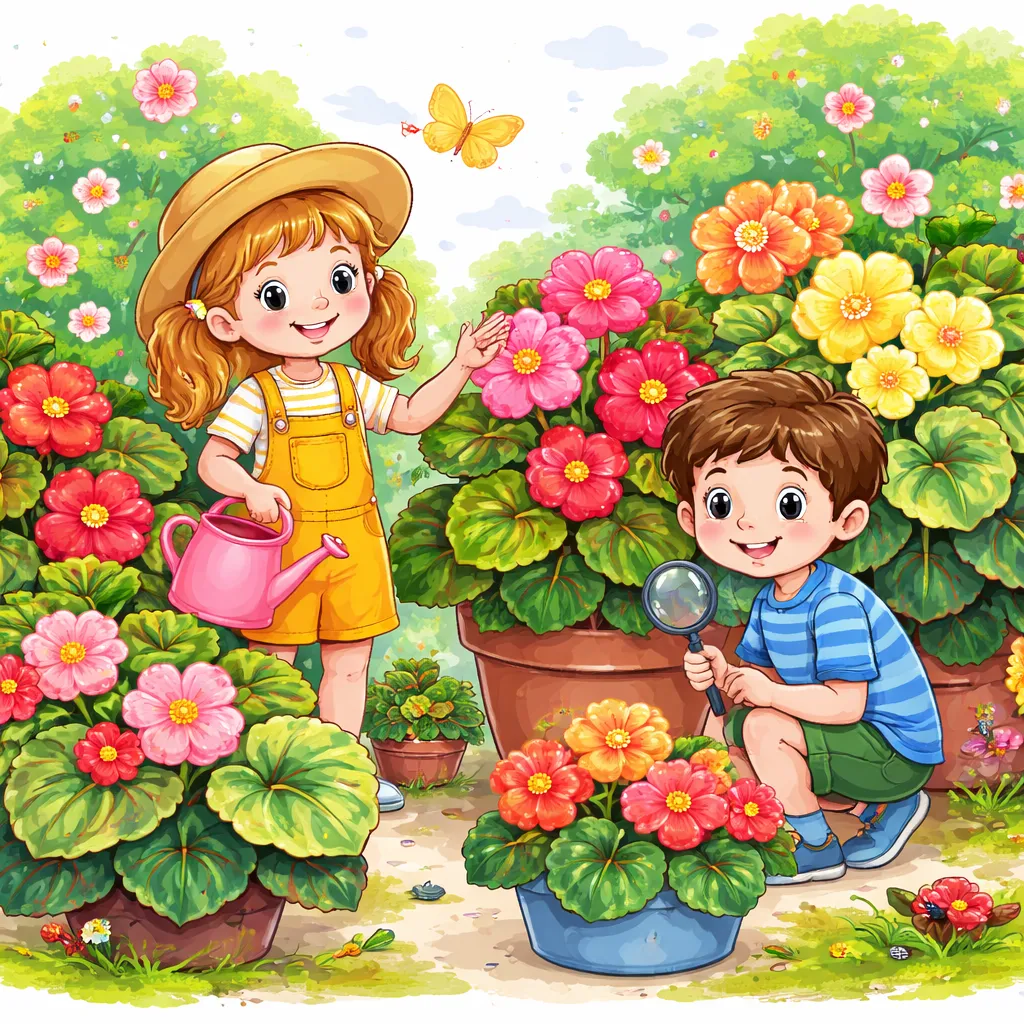
The begonia plant is a beautiful, versatile plant known for its colorful flowers and interesting leaves. It grows in many shapes and sizes. Some begonias are small and bushy. Others have trailing stems that hang down. The leaves are one of the most amazing parts. They are often asymmetric, meaning one side is different from the other. The leaves can be green, red, silver, or purple. Some have spots or swirls. The flowers are also beautiful. They come in pink, red, white, yellow, and orange. Some flowers are small and delicate. Others are large and showy. Begonias bloom from spring until fall. They can grow indoors or outdoors in shade. For children, begonias are like plants with puzzle leaves. The leaves are not the same on both sides. Parents can plant begonias in pots or garden beds. Children love the colorful leaves and flowers. This plant teaches children about diversity and the beauty of things that are not perfectly symmetrical.
English Learning About This Plant
The English name “begonia” honors Michel Bégon, a French plant collector. The pronunciation is “be-gon-ya.” The International Phonetic Alphabet (IPA) is /bɪˈɡoʊniə/. The word has three syllables. Children can say it: be-gon-ya. When we learn about begonia plant, we learn words for its parts. The leaf is the asymmetric, colorful part. The stem is the fleshy, branching part that holds the leaves and flowers. The flower is the colorful, delicate blossom. The tuber is the thick, underground part that stores food in some begonias. The rhizome is the creeping stem that grows along the soil surface. These words help children describe this diverse plant.
There is a famous saying about begonias. They are one of the most popular shade plants. Another saying goes, “Begonias are the jewels of the shade garden.” Parents can share these words with their child. They become gentle lessons about finding beauty in the shade and embracing asymmetry. Begonias are native to tropical regions around the world.
Plant Facts and Scientific Knowledge
The begonia plant belongs to the genus Begonia. There are over 1,800 species. This is one of the largest plant genera. Begonias are native to tropical regions of Central and South America, Africa, and Asia. They are members of the begonia family, Begoniaceae.
Begonia leaves are often asymmetric. One side of the leaf is larger than the other. This is called oblique. The leaves come in many colors. They can be green, red, silver, purple, or bronze. Some have spots, stripes, or swirls. The leaf shapes vary. Some are round. Some are angel-wing shaped. Some are star-shaped.
Begonia flowers can be male or female on the same plant. The male flowers are often showier. The flowers come in pink, red, white, yellow, and orange. They bloom from spring until fall.
There are three main types of begonias. Tuberous begonias grow from tubers. They have large, showy flowers. Wax begonias have waxy leaves and small flowers. They are often used in bedding. Rhizomatous begonias have creeping stems and beautiful leaves. They are grown for their foliage.
Begonias have symbolic meaning. They represent caution, individuality, and uniqueness. The asymmetric leaves remind us that being different is beautiful.
How to Grow and Care for This Plant
Growing a begonia plant is easy for families. Choose a spot with bright, indirect light. Begonias need shade or filtered sun. They do not like direct hot sun. They need well-drained soil. They like rich, organic soil.
Plant begonias in spring. Dig a hole twice as wide as the root ball. Place the plant in the hole. Fill with soil. Water well. Children can help by holding the plant straight while you fill the hole.
Water begonias regularly. They like consistent moisture. Do not let the soil dry out completely. But do not overwater. Wet soil can cause rot. Water at the base. Avoid wetting the leaves.
Fertilize begonias every few weeks during the growing season. Use a balanced fertilizer. Begonias need food to bloom well. Pinch back the growing tips to make the plant bushy.
In cold climates, bring begonias indoors for winter. They make excellent houseplants. Place them in a bright window. Water less in winter.
Benefits of Growing This Plant
Growing a begonia plant brings many gifts to a family. First, the leaves are beautiful and interesting. Children love the asymmetrical shapes and colorful patterns. Second, begonias bloom for a long time. They provide color from spring until fall.
Begonias are excellent for shady spots. They thrive where many other flowers cannot grow. Children learn that beauty can grow in shade.
The plant is versatile. It can grow in pots, hanging baskets, or garden beds. Children can have their own potted begonia to care for.
Begonias also teach about diversity. The leaves are not symmetrical. Children learn that being different is beautiful.
What Can We Learn From This Plant
A begonia plant teaches children about asymmetry. The leaves are not the same on both sides. Children learn that beauty does not require perfection. They can be different and still be beautiful.
Begonias also teach about thriving in shade. They grow where other plants struggle. Children learn that they can thrive in different conditions. They can find their own place.
Another lesson is about diversity. There are over 1,800 species of begonias. Children learn that variety is wonderful. They can appreciate many different kinds of beauty.
Begonias also teach about patience. They need consistent care to bloom. Children learn that care leads to beauty.
Fun Learning Activities
There are many simple activities to help children learn about begonia plant. One activity is a leaf study. Look at a begonia leaf. Notice that one side is different from the other. Trace the leaf. See how it is not symmetrical. This builds observation.
Another activity is a color hunt. Look at different begonia leaves. Find green, red, silver, and purple leaves. Find leaves with spots and swirls. This builds color awareness.
A nature journal works well for begonias. Draw the asymmetric leaves. Draw the colorful flowers. Draw the pattern on the leaves. Label the parts: leaf, stem, flower. Write the date when the first flower opened.
For art, try painting begonias. Use pink, red, and white paint for the flowers. Use green, red, and silver for the leaves. Paint the asymmetric leaf shapes. This creates a unique, beautiful picture.
Vocabulary games are fun too. Write the words begonia, leaf, stem, flower, asymmetric, and shade on cards. Say each word. Ask your child to point to the part on the plant. Practice saying begonia together. Clap the syllables: be-gon-ya.
Finally, try a diversity activity. Talk about how begonia leaves are not perfect. They are different on each side. Ask your child what makes them unique. Draw a picture of something that makes them special. This connects the plant to self-acceptance.
Through these activities, children build a deep connection with a plant that celebrates asymmetry and thrives in shade. They learn new words, study leaves, and discover the joy of being unique. The begonia plant becomes a symbol of diversity and beauty in imperfection. Each summer when the colorful flowers bloom, children remember that they do not need to be perfect. They remember that they can thrive in their own place. This versatile plant opens a world of leaf patterns, shade gardening, and the lasting lesson that being different is what makes us beautiful.