
What Is This Plant?
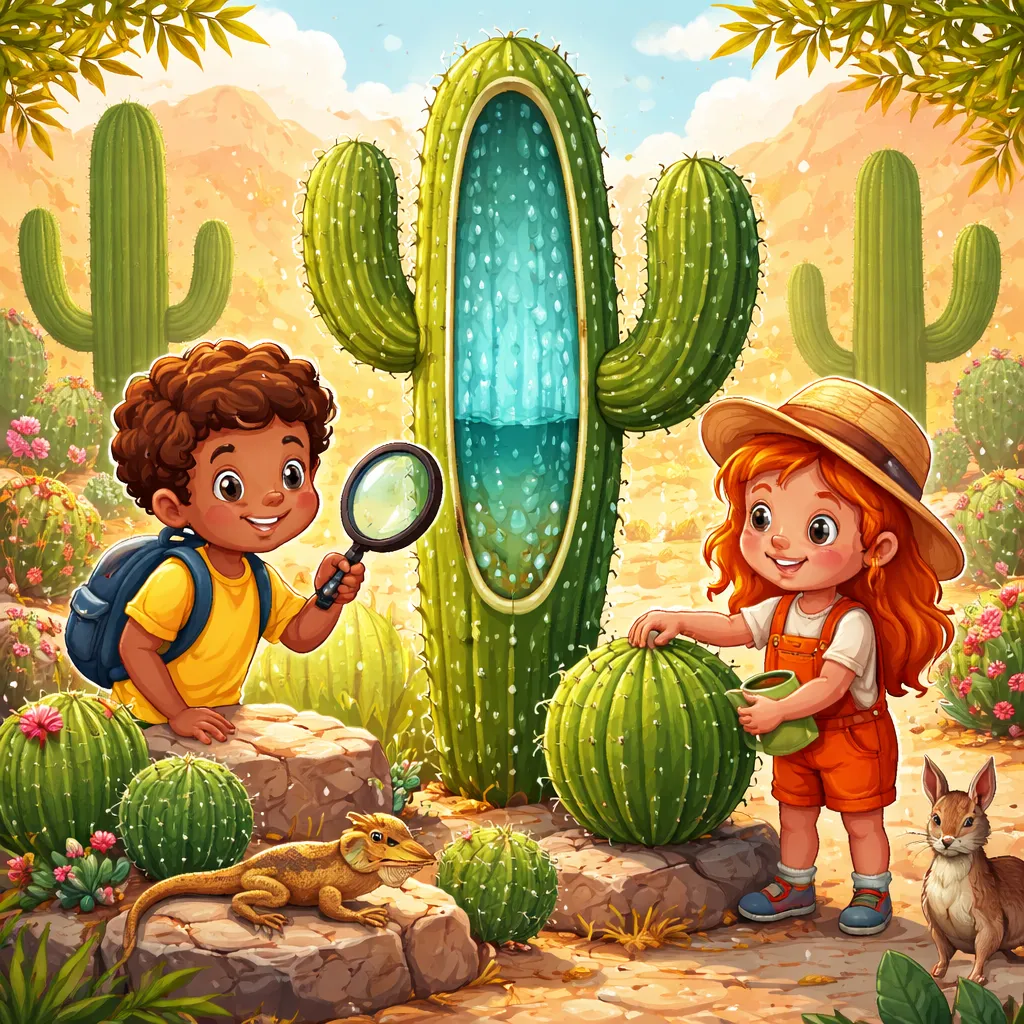
The cactus plant is a remarkable survivor that lives in some of the driest places on Earth. It comes in many shapes and sizes. Some cacti are tall and column-like. Others are round and ball-shaped. Some are flat like pancakes. Others have trailing stems. Most cacti have spines instead of leaves. The spines can be long, short, soft, or sharp. They protect the plant from animals. The thick, fleshy stems store water. This allows the cactus to survive long droughts. Many cacti have beautiful flowers. The flowers are often large and colorful. They bloom in spring or summer. For children, cacti are like plants with armor. The spines are like shields. The thick stems are like water bottles. Parents can grow cacti in pots. Children love the strange shapes and the tough spines. This plant teaches children about survival, patience, and the beauty of adaptation.
English Learning About This Plant
The English name “cactus” comes from the Greek word “kaktos.” It means spiny plant. The pronunciation is “kak-tus.” The International Phonetic Alphabet (IPA) is /ˈkæktəs/. The word has two syllables. Children can say it: kak-tus. The plural is cacti or cactuses. When we learn about cactus plant, we learn words for its parts. The stem is the thick, fleshy part that stores water. The spine is the sharp, pointed part that protects the plant. The areole is the small, fuzzy spot where spines and flowers grow. The flower is the colorful, showy blossom. The root is the part underground that takes in water. These words help children describe this tough, amazing plant.
There is a famous saying about cacti. They are symbols of endurance. Another saying goes, “The cactus blooms in the desert, proving that beauty can survive anywhere.” Parents can share these words with their child. They become gentle lessons about strength and finding beauty in hard places. Cacti are native to the Americas.
Plant Facts and Scientific Knowledge
The cactus plant belongs to the family Cactaceae. There are over 1,700 species. Cacti are native to the Americas. They grow in deserts, mountains, and rainforests. They are adapted to dry conditions. They are succulents. They store water in their stems.
Cactus stems are thick and fleshy. They are covered with a waxy coating. This coating prevents water loss. The stems are green. They perform photosynthesis. Cacti have no true leaves. The spines are modified leaves. They protect the plant from animals. They also provide shade for the stem.
Cacti have areoles. These are small, fuzzy spots on the stem. Spines, flowers, and new stems grow from areoles. This is a unique feature of cacti. No other plants have areoles.
Cactus flowers are often large and showy. They come in many colors. Red, pink, yellow, orange, and white are common. The flowers bloom for a short time. Some cacti bloom at night. They are pollinated by bats and moths.
Cacti have symbolic meaning. They represent endurance, protection, and resilience. They are plants of the desert. They thrive where other plants cannot.
How to Grow and Care for This Plant
Growing a cactus plant is easy for families. Choose a sunny spot. Cacti need bright light. They can grow indoors or outdoors. They need well-drained soil. Use cactus soil or mix sand with potting soil.
Plant cactus in a pot with drainage holes. Place the plant in the pot. Fill with soil. Wear gloves to protect from spines. Children can help with adult supervision. Use tongs to handle spiny cacti.
Water cactus when the soil feels dry. Do not overwater. Cacti rot in wet soil. Water deeply, then let the soil dry completely. In winter, water very little. Most cacti rest in winter.
Cacti need little fertilizer. Feed once in spring with cactus fertilizer. Do not overfeed. Too much fertilizer makes them weak.
Cacti are slow-growing. They need patience. They may take years to bloom. But they are very forgiving. They survive neglect.
Benefits of Growing This Plant
Growing a cactus plant brings many gifts to a family. First, cacti are fascinating. The strange shapes and sharp spines capture children’s attention. Second, cacti are very easy to care for. They survive when other plants die. This builds confidence.
Cacti teach about adaptation. Children learn how plants survive in harsh conditions. They learn about water storage and protection.
Cacti also teach about patience. They grow slowly. Children learn that good things take time.
Cacti produce beautiful flowers. When they bloom, it is a special event. Children learn to appreciate rare beauty.
What Can We Learn From This Plant
A cactus plant teaches children about resilience. It survives in harsh conditions. It stores water for dry times. Children learn that they can be resilient too. They can prepare for hard times.
Cacti also teach about protection. The spines protect the plant. Children learn that it is okay to have boundaries. They can protect themselves.
Another lesson is about beauty in harsh places. The cactus blooms in the desert. Children learn that beauty can exist anywhere. They can find joy even in hard places.
Cacti also teach about patience. They grow slowly. Children learn that growth takes time. They can be patient with themselves.
Fun Learning Activities
There are many simple activities to help children learn about cactus plant. One activity is a shape study. Look at different cacti. Find tall ones, round ones, flat ones. Count the shapes. This builds observation.
Another activity is a spine study. Look at cactus spines. Some are long. Some are short. Some are soft. Some are sharp. Use a magnifying glass. This builds careful observation.
A nature journal works well for cacti. Draw the thick, fleshy stem. Draw the spines. Draw the areoles. Draw the flower. Label the parts: stem, spine, areole, flower. Write the date when the cactus bloomed.
For art, try painting cacti. Use green paint for the stems. Add brown or white for the spines. Add bright colors for the flowers. This creates a desert picture.
Vocabulary games are fun too. Write the words cactus, stem, spine, areole, flower, and desert on cards. Say each word. Ask your child to point to the part on the plant. Practice saying cactus together. Clap the syllables: kak-tus.
Finally, try a resilience activity. Talk about how cacti survive in the desert. Ask your child about a time they were strong. Celebrate their resilience. This connects the plant to personal strength.
Through these activities, children build a deep connection with a plant that survives in the harshest places. They learn new words, study spines, and discover the joy of resilience. The cactus plant becomes a symbol of strength and patience. Each time they see a cactus, children remember that they can be strong. They remember that beauty can grow in hard places. This spiky survivor opens a world of desert wonder, careful observation, and the lasting lesson that resilience and patience are the keys to thriving in any environment.