
What Is This Plant?
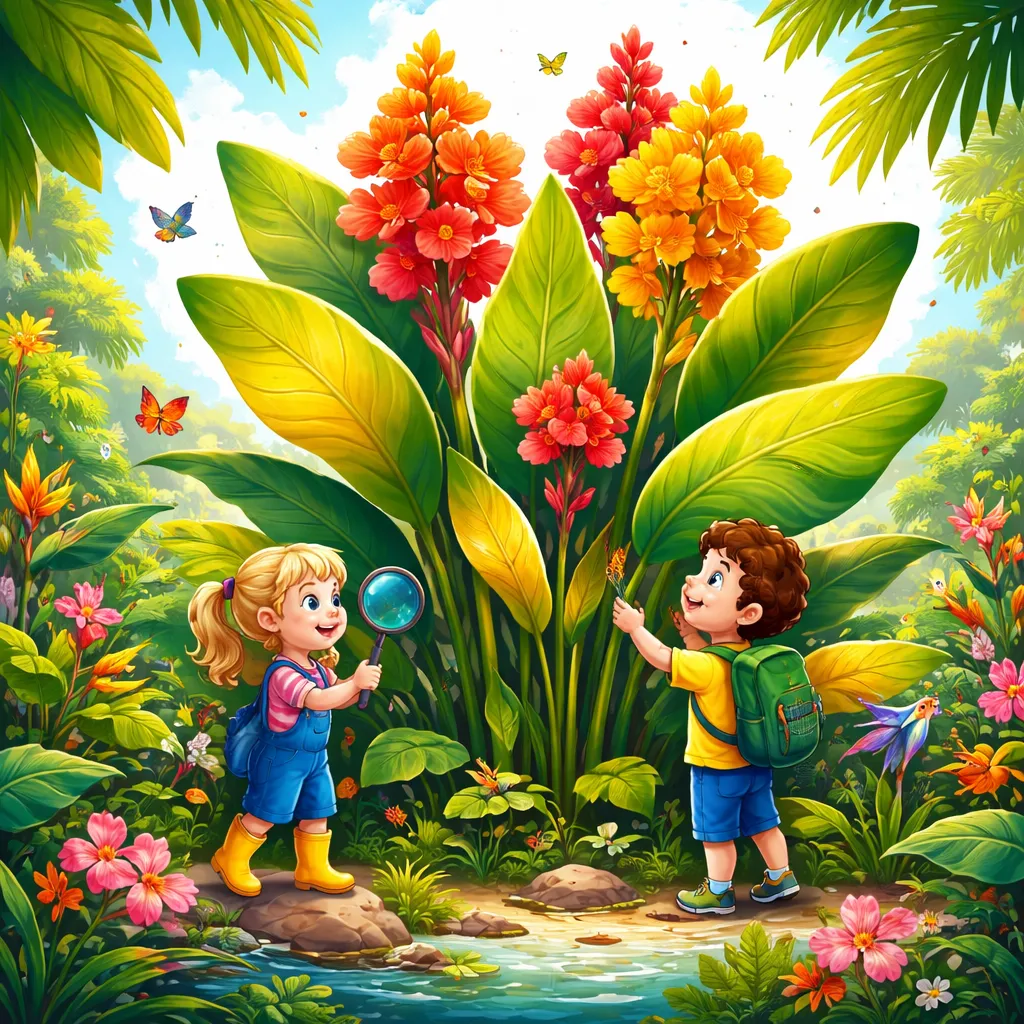
The canna plant is a bold, tropical-looking plant that grows tall and proud in the garden. It grows from a thick root called a rhizome. The stems are tall and sturdy. They can reach three to six feet or more. The leaves are enormous. They are broad and banana-like. They come in shades of green, bronze, purple, and striped patterns. The leaves are the first thing you notice. They make a dramatic statement. From the center of the leaves, tall flower spikes rise. The flowers are bright and showy. They come in red, orange, yellow, pink, and sometimes bi-colors. The flowers bloom from mid-summer until frost. For children, cannas are like plants from a jungle. The leaves are big enough to hide behind. The flowers are bright and easy to spot. Parents can plant canna rhizomes in spring. Children watch the giant leaves unfurl. The plant grows taller than them. This plant makes children feel like they have their own tropical jungle.
English Learning About This Plant
The English name “canna” comes from the Greek word for reed. The plants look like tall reeds. The pronunciation is “kan-a.” The International Phonetic Alphabet (IPA) is /ˈkænə/. The word has two syllables. Children can say it: kan-a. When we learn about canna plant, we learn words for its parts. The rhizome is the thick, underground root that stores food. The stem is the tall, sturdy part. The leaf is the large, broad, banana-like part. The flower spike is the tall stem that holds the flowers. The flower is the bright, showy blossom. These words help children describe this tropical plant.
There is a saying about cannas. It goes, “Cannas bring the tropics to your backyard.” Another saying says, “A canna leaf is nature’s umbrella.” The leaves are so large that children can pretend they are umbrellas. Parents can share these words with their child. They become gentle lessons about imagination and bringing beauty to your own space.
Plant Facts and Scientific Knowledge
The canna plant belongs to the genus Canna. There are about 10 species. Cannas are native to tropical and subtropical regions of the Americas. They are members of the family Cannaceae. Cannas have been grown for thousands of years. The Aztecs and other indigenous peoples grew cannas for food and ornament.
Canna leaves are large and broad. They can grow up to two feet long. The leaves have prominent veins running from the center. Some cannas have green leaves. Others have bronze, purple, or variegated leaves. The colorful leaves are as beautiful as the flowers.
Canna flowers grow on tall spikes. Each flower has three petals and three petal-like structures. The flowers come in bright colors. Red, orange, and yellow are most common. The flowers attract hummingbirds. They are pollinated by birds and bees.
Canna seeds are round and hard. They are black and shiny. They can be used as beads. The seeds are very tough. They need to be nicked or soaked before they will germinate.
Cannas have symbolic meaning. They represent confidence, majesty, and tropical beauty. In the language of flowers, cannas mean “brilliance” and “strength.” They are flowers that stand tall and make a statement.
How to Grow and Care for This Plant
Growing a canna plant is exciting for children. Plant the rhizomes in spring after the last frost. Choose a sunny spot. Cannas need at least six hours of sunlight each day. They like rich, moist soil.
Dig a hole about four to six inches deep. Place the rhizome horizontally. Cover with soil. Water well. Children can help by placing the rhizomes in the holes. The rhizomes look like fat fingers. Children love touching them.
Water cannas regularly. They like consistent moisture. They are water-loving plants. In hot weather, water deeply several times a week. Mulch around the base keeps the soil moist.
Cannas grow fast. They need fertilizer. Feed every few weeks with a balanced fertilizer. This helps them produce large leaves and many flowers. Remove dead flowers. This encourages more blooms.
In fall after frost, cut the stems back. Dig up the rhizomes in cold climates. Let them dry. Store them in a cool, dry place. In warm climates, they can stay in the ground. Children can help by brushing off the soil from the rhizomes.
Benefits of Growing This Plant
Growing a canna plant brings many gifts to a family. First, the plant creates a tropical feel. The huge leaves and bright flowers transform any garden. Second, cannas attract hummingbirds. Children love watching these tiny birds visit the flowers. This teaches about pollination and wildlife.
The leaves are so large that children can use them for play. They can pretend the leaves are umbrellas or fans. This builds imagination and connection to the plant.
Cannas are excellent for adding height to the garden. They stand above other flowers. Children can stand next to them and see how tall they grow. This builds measurement and observation skills.
The plant also teaches about rhizomes and how plants store food. Children learn that the thick roots hold energy for the plant.
What Can We Learn From This Plant
A canna plant teaches children about standing tall. The plant grows tall and proud. It does not hide. Children learn that they can stand tall too. They can be confident and take up space.
Cannas also teach about making a statement. The bold leaves and bright flowers get noticed. Children learn that it is okay to be noticed. They can share their gifts with the world.
Another lesson is about providing shelter. The large leaves create shade for smaller plants. Children learn that they can provide shelter for others. They can protect and care for those who are smaller or younger.
Cannas also teach about tropical beauty. They remind us that beauty comes in many forms. Some plants are small and delicate. Some are large and bold. Children learn that both are beautiful.
Fun Learning Activities
There are many simple activities to help children learn about canna plant. One activity is a leaf measurement. Measure the canna leaves. How long are they? How wide are they? Compare them to other leaves in the garden. This builds measurement skills.
Another activity is a hummingbird watch. Place a chair near the canna flowers. Sit quietly. Watch for hummingbirds. Count how many visits you see. Draw the hummingbird in a journal. This builds patience and observation.
A nature journal works well for cannas. Draw the large, banana-like leaves. Draw the flower spike with bright flowers. Label the parts: rhizome, stem, leaf, flower spike. Write the date when the first flower opened. Measure the height of the plant each week.
For art, try painting cannas. Use bright red, orange, and yellow paint. Paint the large, broad leaves. Paint the tall flower spikes. Paint the bright flowers. This creates a tropical summer picture.
Vocabulary games are fun too. Write the words canna, rhizome, stem, leaf, flower spike, and tall on cards. Say each word. Ask your child to point to the part on the plant. Practice saying canna together. Clap the syllables: kan-a.
Finally, try a rhizome storage activity. In fall, help your child dig up canna rhizomes. Let them brush off the soil. Place the rhizomes in a box with peat moss. Store them in a cool place. In spring, let them plant the rhizomes again. This teaches about the cycle of growth and care.
Through these activities, children build a deep connection with a plant that brings tropical drama to the garden. They learn new words, watch hummingbirds, and discover the joy of standing tall. The canna plant becomes a symbol of confidence and bold beauty. Each time they see cannas, they remember that they can stand tall. They remember that boldness is beautiful. This tropical giant opens a world of imagination, wildlife watching, and the lasting joy of growing plants that tower above them.