
What Is This Plant?
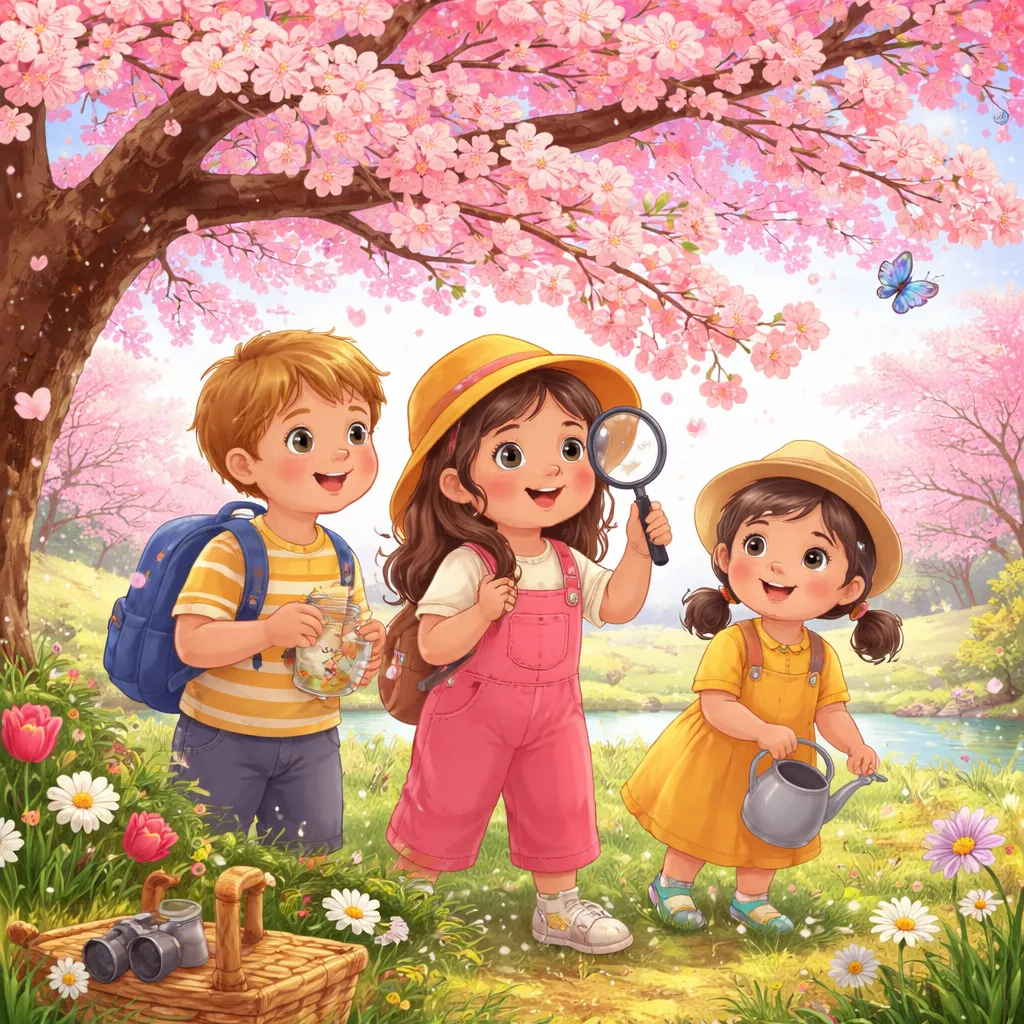
The cherry blossom plant is a flowering tree that transforms the landscape each spring. It is not a small plant but a graceful tree with spreading branches. Before the leaves appear, the branches become covered in clusters of delicate flowers. The blossoms are soft pink or white. Each flower has five petals. When many flowers open together, the tree looks like a fluffy pink cloud. The flowers last only a short time. They bloom for about one to two weeks. Then the petals fall like gentle snow. After the flowers fade, green leaves appear. Some cherry trees also produce small fruits called cherries. For children, cherry blossoms feel like magic. The trees burst into color overnight. Parents can take children to see cherry blossoms in parks or gardens. Walking under the flowering branches becomes a special spring tradition.
English Learning About This Plant
The English name “cherry blossom” combines two words. Cherry comes from the fruit the tree produces. Blossom means a flower, especially on a fruit tree. The pronunciation is “cher-ee blos-om.” The International Phonetic Alphabet (IPA) is /ˈtʃeri ˈblɒsəm/. The words have three syllables together. Children can say it: cher-ee blos-om. When we learn about cherry blossom plant, we learn words for its parts. The trunk is the main woody stem of the tree. The branch is the arm-like part that holds the flowers. The bark is the outer covering of the trunk and branches. The flower is the delicate pink or white blossom with five petals. The petal is the soft part that falls like snow. These words help children describe this graceful tree.
There is a beautiful Japanese proverb about cherry blossoms. It says, “Cherry blossoms are the breath of spring.” This means the flowers bring life and warmth after winter. Another famous saying comes from the poet Matsuo Bashō. He wrote about cherry blossoms and said, “In the cherry blossom’s shade, there is no such thing as a stranger.” This means cherry blossoms bring people together. Everyone shares the joy of the flowers. Parents can share these words with their child. They become gentle lessons about connection and the changing seasons.
Plant Facts and Scientific Knowledge
The cherry blossom plant belongs to the genus Prunus. This is the same family that includes peaches, plums, and almonds. Most ornamental cherry trees are varieties of Prunus serrulata and other species. They are native to East Asia, particularly Japan, Korea, and China.
Cherry blossoms have five petals in most varieties. Some cultivated varieties have many more. These are called double blossoms. The flowers can be white, pale pink, or deep pink. They grow in clusters called inflorescences. Each cluster contains several flowers.
Cherry trees bloom in early to mid-spring. The timing depends on the weather. Warm spring days bring earlier blooms. A cold spell can delay them. The flowers last only about one to two weeks. The petals fall at the peak of beauty. This short bloom time is part of their special meaning.
Cherry blossoms are the national flower of Japan. The tradition of flower viewing is called hanami. People gather under the trees to celebrate spring. They have picnics and enjoy the beauty. Cherry blossoms also grow in many other countries. Washington, D.C., has thousands of cherry trees given as a gift from Japan.
Cherry blossoms symbolize renewal, hope, and the fleeting nature of life. They remind people to appreciate beauty while it lasts. In the language of flowers, cherry blossoms represent a gentle heart.
How to Grow and Care for This Plant
Growing a cherry blossom plant is a long-term family project. These are trees that grow for many years. Choose a sunny spot. Cherry trees need at least six hours of direct sunlight each day. The soil should be well-drained. Cherry trees do not like standing water.
Plant a young cherry tree in spring or fall. Dig a hole twice as wide as the root ball. Place the tree in the hole. The graft union, which looks like a bump near the base, should be above the soil. Fill with soil. Water well. Children can help by holding the tree straight while you fill the hole.
Water the young tree regularly. Deep watering once a week helps the roots grow strong. In dry weather, water more often. Mulch around the base keeps the soil moist.
Prune cherry trees in late winter or early spring. Remove dead or crossing branches. This keeps the tree healthy and lets light reach the flowers. Children can help by collecting the pruned branches.
Cherry trees need little fertilizer. A light feeding in spring is enough. Too much fertilizer creates leaves but fewer flowers.
Protect the tree from pests. Birds love the buds and blossoms. You can use netting if birds become a problem. In cold areas, choose a variety suited to your climate.
Benefits of Growing This Plant
Growing a cherry blossom plant brings many gifts to a family. First, it creates a spectacular spring display. The tree becomes the centerpiece of the garden. Neighbors and passersby stop to admire it. Second, cherry blossoms attract bees and other pollinators. Children can watch the bees buzzing among the flowers.
The tree provides shade in summer. After the blossoms fall, the green leaves create a cool spot. Families can sit under the tree and read or play. In autumn, the leaves turn gold and red. The tree gives beauty in every season.
Cherry blossoms also connect families to traditions. Parents can share stories about hanami and other cultural celebrations. The tree becomes a way to learn about different cultures and their love for nature.
The short bloom time teaches appreciation. Because the flowers last only a short time, families learn to enjoy them fully. They go outside to look at the blossoms. They take photos. They make memories.
What Can We Learn From This Plant
A cherry blossom plant teaches children about the beauty of fleeting moments. The flowers bloom for only a short time. They do not last forever. Children learn to appreciate things while they have them. A beautiful day, a visit from a friend, a special moment—all are like cherry blossoms.
Cherry blossoms also teach about renewal. Every spring, the tree blooms again. Even after winter, even after the petals fall, the tree returns. Children learn that endings are also beginnings. After winter comes spring. After sadness can come joy.
Another lesson is about gathering together. People come together to see cherry blossoms. They share food, laughter, and wonder. Children learn that beauty is often shared. Enjoying something with others makes it even more special.
Cherry blossoms also teach about letting go. The petals fall at the height of their beauty. They do not cling. Children learn that sometimes letting go is part of life. We can appreciate something and then let it go with grace.
Fun Learning Activities
There are many simple activities to help children learn about cherry blossom plant. One activity is a blossom count. When the tree blooms, go outside together. Pick one branch. Count how many flowers are on it. Count the petals on one flower. This builds observation and counting skills.
Another activity is a petal shower. On a windy day, stand under the cherry tree. Watch the petals fall. Let the petals land on your hands and hair. Describe how it feels. Is it like snow? Is it like confetti? This builds sensory language.
A nature journal works well for cherry blossoms. Draw the tree in spring with its pink flowers. Draw the leaves in summer. Draw the fall colors. Draw the bare branches in winter. Label the parts: trunk, branch, flower, petal. This shows the tree through all seasons.
For art, try painting cherry blossoms. Use pink and white paint. Paint the branches first. Then use a cotton swab to dot the flowers onto the branches. This creates a beautiful picture that captures the soft, clustered blooms.
Vocabulary games are fun too. Write the words cherry blossom, trunk, branch, flower, petal, and spring on cards. Say each word. Ask your child to point to the part on the tree. Practice saying cherry blossom together. Clap the syllables: cher-ry blos-som.
Finally, try a hanami picnic. Spread a blanket under the cherry tree. Bring simple snacks. Sit together and look at the flowers. Talk about how they make you feel. This connects the plant to family tradition and appreciation of beauty.
Through these activities, children build a deep connection with a tree that marks the arrival of spring. They learn new words, observe nature, and discover the joy of fleeting beauty. The cherry blossom plant becomes a symbol of renewal and togetherness. Each time they see cherry blossoms, they remember that beautiful moments are precious. They remember that spring always returns. This graceful tree opens a world of cultural understanding, seasonal wonder, and gentle lessons about appreciating life’s most beautiful moments.