
What Is This Plant?
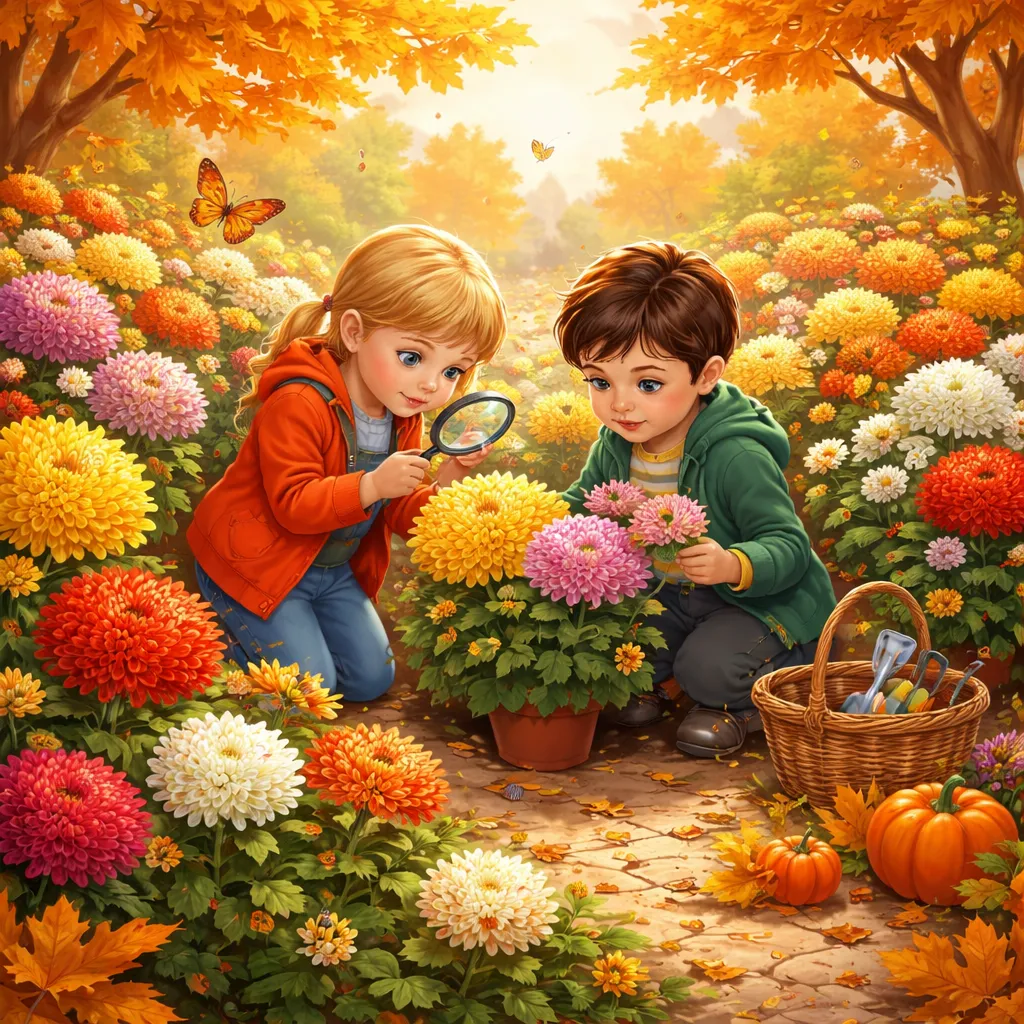
The chrysanthemum plant is a cheerful flower that blooms in autumn. It grows as a bushy plant with many branches. At the end of each branch, a flower head opens. The flowers come in many shapes. Some look like pom-poms. Others have long, thin petals that curl like spoons. Some look like daisies with a bright center. The colors are rich and warm. You can find yellow, white, pink, purple, red, and bronze chrysanthemums. The leaves are deep green with soft edges. They have a distinct smell when you touch them. For children, chrysanthemums signal that autumn has arrived. They appear when the weather cools and the days grow shorter. Parents can take children to a garden in fall to see these flowers in full bloom. The many shapes and colors make them fun to explore. This plant offers a gentle way to learn about seasons and nature.
English Learning About This Plant
The English name “chrysanthemum” is a long and beautiful word. It comes from Greek words. “Chrysos” means gold, and “anthemon” means flower. The pronunciation is “kri-san-thuh-mum.” The International Phonetic Alphabet (IPA) is /krɪˈsænθəməm/. The word has four syllables. Children can learn it slowly: kri-san-thuh-mum. When we learn about chrysanthemum plant, we discover useful words for its parts. The flower head is the round part with many petals. The petal is the colorful part that makes the flower look full. The stem is the green part that holds the flower. The leaf is the green, lobed part that grows along the stem. The root is the part underground that takes in water. These words help children describe this detailed plant.
There is a famous proverb about chrysanthemums. It says, “Chrysanthemums bloom in the frost.” This means they are strong flowers. They bloom when other flowers have faded. They do not fear the cold. This teaches children about resilience. Another lovely idea comes from the poet Li Qingzhao. She wrote about chrysanthemums in autumn. She described how they fill the garden with color when everything else turns brown. Parents can share these words with their child. They become small lessons about finding strength in difficult times.
Plant Facts and Scientific Knowledge
The chrysanthemum plant belongs to the genus Chrysanthemum. It is part of the daisy family, Asteraceae. Chrysanthemums are native to Asia and northeastern Europe. People have grown them for over 2,500 years. In ancient China, they were cultivated for their beauty and for medicine.
A chrysanthemum flower is not one flower. Like daisies, it is a composite flower. The center contains many tiny disk flowers. The outer petals are ray flowers. Some varieties have hundreds of petals. They create large, rounded blooms.
Chrysanthemums are short-day plants. This means they bloom when the nights grow longer in autumn. They need cooler temperatures to form flowers. They come in many colors except blue. Breeders have created over 20,000 varieties.
Chrysanthemums have strong symbolism. In many cultures, they represent joy, optimism, and long life. In Japan, the chrysanthemum is a symbol of the emperor. The Imperial Seal of Japan features a chrysanthemum. In Europe, chrysanthemums often represent autumn and remembrance. They are flowers of celebration and reflection.
How to Grow and Care for This Plant
Growing a chrysanthemum plant is a lovely autumn project. You can buy small plants from a garden store in spring or summer. Choose a sunny spot. Chrysanthemums need at least six hours of sunlight each day. The soil should be rich and well-drained.
Dig a hole twice as wide as the root ball. Place the plant in the hole. Fill with soil. Water well. Children can help with this step. They can pat the soil gently around the plant.
Water regularly. Chrysanthemums like consistent moisture. Water at the base. Avoid wetting the leaves. This helps prevent disease. Mulch around the plant keeps the soil moist.
Pinching is important for bushy growth. When the plant is about six inches tall, pinch off the growing tips. This makes the plant branch out. Children can help pinch the tips with their fingers. It is a simple task that builds connection.
In autumn, the flowers appear. They last for weeks. After the flowers fade, cut the plant back. In cold areas, add mulch to protect the roots over winter. In spring, new shoots appear. The plant will grow again.
Benefits of Growing This Plant
Growing a chrysanthemum plant brings many gifts. First, it adds rich color to the garden when summer flowers fade. The bright yellows, reds, and purples lift the mood. Second, chrysanthemums attract late-season pollinators. Bees and butterflies visit them before winter. Children can watch these busy visitors.
Chrysanthemums are also excellent for cutting. You can bring flowers inside for a vase. They last a long time in water. Children feel proud when their flowers decorate the home. This builds a sense of contribution.
The plant offers educational value. Children learn about seasons. They see that different flowers bloom at different times. They learn that autumn is not the end of growth. It is a time of its own beauty.
Chrysanthemums also teach about cultural traditions. Parents can share stories about how people celebrate chrysanthemums in different countries. This connects gardening to history and the wider world.
What Can We Learn From This Plant
A chrysanthemum plant teaches children about resilience. It blooms in autumn when temperatures drop. Other flowers have faded. But the chrysanthemum stands strong. Children learn that they too can find strength when things get hard. They can bloom even in difficult times.
Chrysanthemums also teach about timing. They do not rush to bloom in spring. They wait for their season. Children learn that everyone has their own timing. Some things come early. Some come later. Both are right.
Another lesson is about fullness. Chrysanthemums have many petals. They are full and rich. Children learn that life is richer when we embrace many things. A single petal is nice, but many together create something spectacular.
Chrysanthemums also teach about the beauty of change. Autumn is a season of change. Leaves fall. The air cools. Yet chrysanthemums bring color and joy. Children learn that change can bring new beauty. They do not need to fear the changing seasons of life.
Fun Learning Activities
There are many simple activities to help children learn about chrysanthemum plant. One activity is a flower dissection. Pick one chrysanthemum flower. Look at it closely. Count how many petals you can see. Gently pull apart a few petals. Look at the tiny center flowers. Use a magnifying glass if you have one. This builds close observation.
Another activity is a color hunt. Visit a garden with chrysanthemums. Look for different colors. How many yellow ones can you find? How many purple? How many white? Count and compare. This builds observation and counting skills.
A nature journal works well for chrysanthemums. Draw the flower. Pay attention to the shape of the petals. Some are straight. Some curl. Some are thin. Some are wide. Write down the colors you see. Draw the leaves too. Label the parts.
For art, try making paper chrysanthemums. Use colored paper. Cut many thin strips. Curl the strips with a pencil. Glue them in layers to make a full flower. This creates a beautiful decoration. It also teaches about the layered structure of the flower.
Vocabulary games are fun too. Write the words chrysanthemum, petal, stem, leaf, root, and autumn on cards. Say each word slowly. Ask your child to find the part on the plant. Practice saying the long word chrysanthemum together. Break it into parts: chry-san-the-mum.
Finally, try a seasonal calendar. Mark when your chrysanthemum plant first shows buds. Mark when the first flower opens. Note how long the flowers last. Compare with other plants in your garden. This teaches children about the rhythm of the seasons.
Through these activities, children build a deep appreciation for autumn and its gifts. They learn new words, observe closely, and develop patience. The chrysanthemum plant becomes a symbol of resilience and beauty. Each time they see chrysanthemums in autumn, they remember that strength comes in many forms. They remember that every season has its own special flowers. This plant opens a door to understanding change, timing, and the quiet joy of blooming in one's own time.