
What Is This Plant?
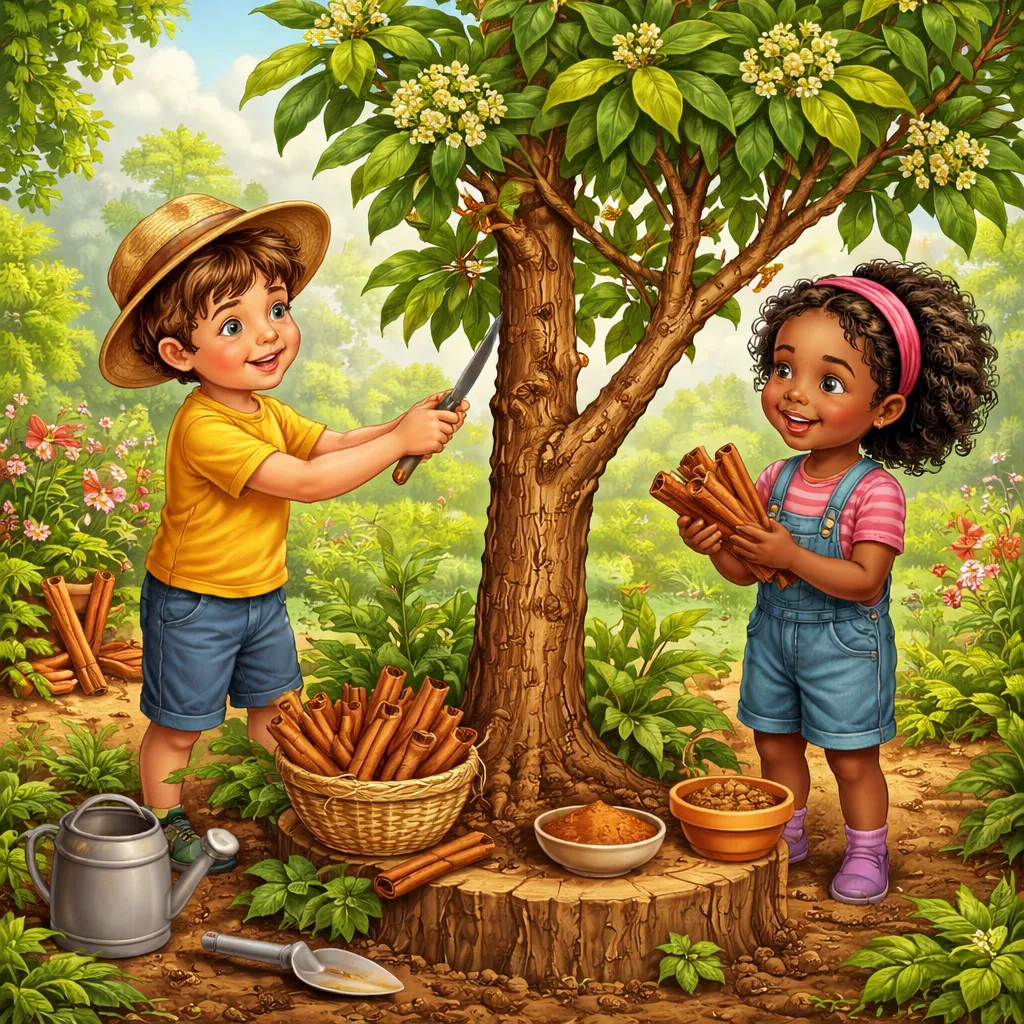
The cinnamon tree is a tropical evergreen tree that gives us the warm, sweet spice called cinnamon. It grows as a small to medium-sized tree with glossy, dark green leaves. The leaves are oval-shaped and leathery. They have a distinct smell when crushed. The tree produces small white or yellow flowers in clusters. After flowering, it produces small purple berries. The most important part is the bark. The inner bark is harvested, dried, and rolled into cinnamon sticks. It has a warm, sweet scent. It is used in cooking and baking. For children, the cinnamon tree is like a magic tree that gives us a special spice. The bark smells like cookies and apple pie. Parents can grow cinnamon trees in pots in warm climates or indoors. Children love the smell of the leaves and the story of how cinnamon is made. This plant teaches children about spices, where food comes from, and the wonder of growing your own flavor.
English Learning About This Plant
The English name “cinnamon” comes from the Greek word “kinnamomon.” The pronunciation is “sin-a-mon tree.” The International Phonetic Alphabet (IPA) is /ˈsɪnəmən triː/. Children can say it: sin-a-mon tree. When we learn about cinnamon tree plant, we learn words for its parts. The leaf is the oval, glossy, fragrant part. The bark is the outer layer of the trunk that becomes the spice. The flower is the small, white or yellow blossom. The berry is the small, purple fruit. The quill is the rolled-up piece of dried bark. These words help children describe this spice tree.
There is a famous saying about cinnamon. It is one of the oldest spices known to humans. Another saying goes, “Cinnamon sweetens the home with its scent.” Parents can share these words with their child. They become gentle lessons about the gifts of nature and the history of spices. Cinnamon is native to Sri Lanka and other parts of Southeast Asia.
Plant Facts and Scientific Knowledge
The cinnamon tree belongs to the species Cinnamomum verum. It is also called true cinnamon or Ceylon cinnamon. It is a member of the laurel family, Lauraceae. It is native to Sri Lanka. It has been used for thousands of years. Ancient Egyptians used cinnamon in embalming. It was once more valuable than gold.
Cinnamon tree leaves are oval and glossy. They are dark green on top and lighter underneath. When crushed, they smell like cinnamon. The leaves can grow 4 to 7 inches long. The tree can reach 30 to 50 feet tall in the wild. In pots, it stays smaller.
The flowers are small and white or yellow. They grow in clusters. After flowering, the tree produces small purple berries. The berries contain a single seed.
The cinnamon spice comes from the inner bark. Harvesters cut the stems. They scrape off the outer bark. The inner bark curls into quills as it dries. The quills are cut into sticks or ground into powder.
Cinnamon has symbolic meaning. It represents warmth, sweetness, and abundance. It is a spice of hospitality. It has been traded for centuries.
How to Grow and Care for This Plant
Growing a cinnamon tree requires a warm climate. It can be grown indoors in a pot. Choose a spot with bright, indirect light. It needs warmth and humidity. It needs well-drained soil.
Plant cinnamon tree in a pot with drainage holes. Place the tree in the pot. Fill with soil. Water well. Children can help by putting the tree in the pot and adding soil.
Water cinnamon tree when the top inch of soil feels dry. It likes consistent moisture. It does not like soggy soil. Mist the leaves to increase humidity. In winter, water less.
Cinnamon tree needs fertilizer. Feed once a month in spring and summer with balanced fertilizer. It grows slowly. Be patient. It may take several years to become large enough to harvest bark.
Benefits of Growing This Plant
Growing a cinnamon tree brings many gifts to a family. First, the leaves smell wonderful. Children can crush a leaf and smell the cinnamon scent. Second, the tree teaches where spice comes from. Children learn that cinnamon is bark.
Cinnamon trees are beautiful. The glossy leaves are attractive. The tree can be grown as a houseplant.
The plant teaches about history. Cinnamon was once very valuable. Children learn about trade and exploration.
Cinnamon trees also teach about patience. It takes years to harvest bark. Children learn that good things take time.
What Can We Learn From This Plant
A cinnamon tree teaches children about where food comes from. The spice comes from bark. Children learn that plants give us many gifts. They learn to appreciate the food they eat.
Cinnamon trees also teach about history. This spice was traded for centuries. Children learn that plants have stories. They can connect to the past.
Another lesson is about patience. The tree grows slowly. The bark takes time to harvest. Children learn that good things take time. They can be patient.
Cinnamon trees also teach about scent. The leaves and bark smell sweet. Children learn that scent can bring comfort. They can enjoy the smell of cinnamon.
Fun Learning Activities
There are many simple activities to help children learn about cinnamon tree plant. One activity is a scent test. Crush a cinnamon tree leaf. Smell it. Compare it to ground cinnamon. They smell similar. This builds sensory awareness.
Another activity is a cinnamon bark study. Look at a cinnamon stick. It is a rolled-up piece of bark. Unroll it carefully. See how thin it is. This builds observation.
A nature journal works well for cinnamon trees. Draw the oval, glossy leaves. Draw the small flowers. Draw the bark. Label the parts: leaf, flower, bark, quill. Write the date when you got the tree.
For art, try painting cinnamon trees. Use dark green paint for the glossy leaves. Use brown for the bark. Paint the small flowers. This creates a spice garden picture.
Vocabulary games are fun too. Write the words cinnamon tree, leaf, bark, quill, spice, and scent on cards. Say each word. Ask your child to point to the part on the tree. Practice saying cinnamon tree together. Clap the syllables: sin-a-mon tree.
Finally, try a baking activity. Use ground cinnamon to make cinnamon toast or cookies. Talk about how the spice comes from the tree. This connects the plant to food and tradition.
Through these activities, children build a deep connection with a tree that gives us a beloved spice. They learn new words, smell leaves, and discover the history of cinnamon. The cinnamon tree becomes a symbol of sweetness and patience. Each time they smell cinnamon, children remember that the spice comes from bark. They remember that good things take time. This spice tree opens a world of sensory wonder, historical discovery, and the lasting lesson that the simplest gifts from plants often bring the most warmth to our lives.