
What Is This Plant?
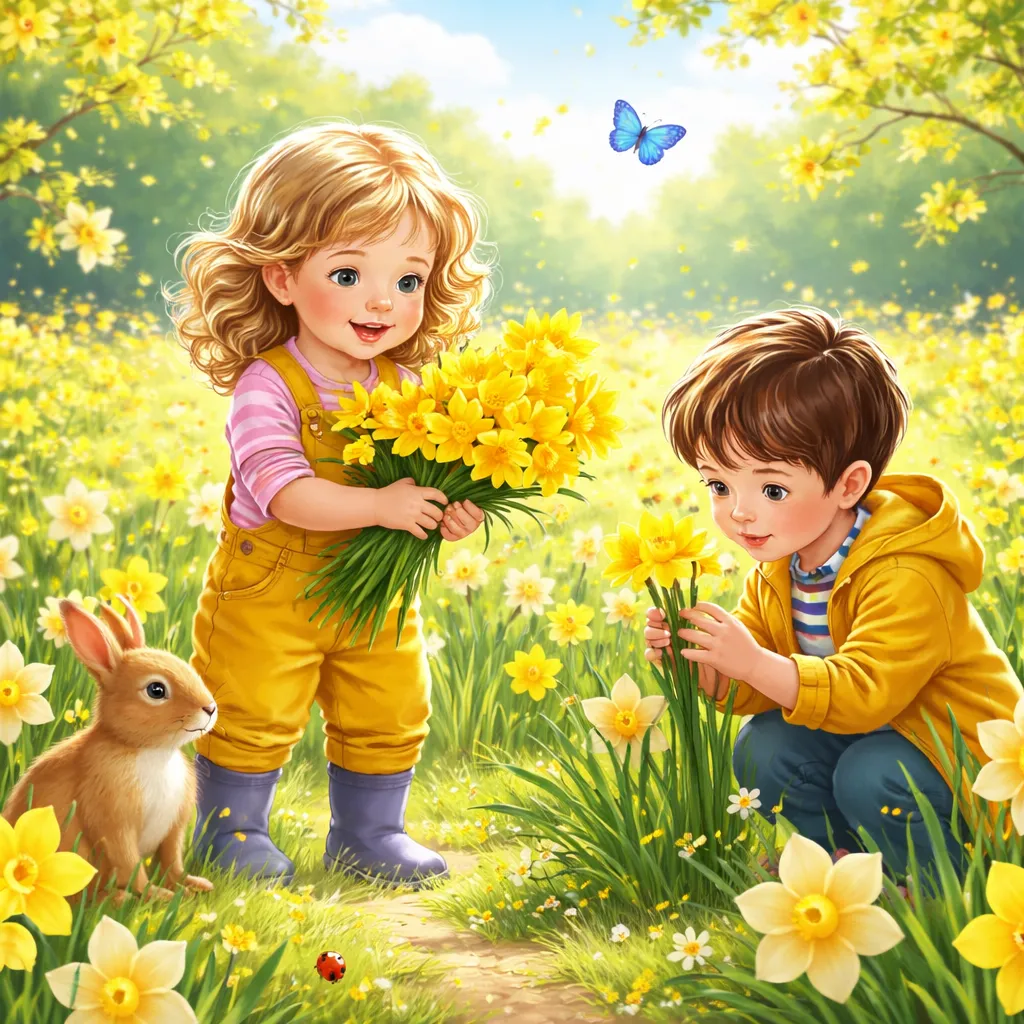
The daffodil plant is one of the first flowers to appear in spring. It grows from a bulb that sleeps underground all winter. When the weather warms, green shoots push through the soil. They look like pointed spears. The leaves are long and slender. They are a soft, grayish-green. From the center of the leaves, a tall stem rises. At the top, a single flower opens. The flower has a unique shape. In the center, a trumpet-shaped cup stands tall. Around it, six petals spread out like a star. Most daffodils are bright yellow. Some are white with yellow cups. Others are all white or all yellow. For children, daffodils are a happy sight. They appear when winter ends. Parents can plant daffodil bulbs in fall. In spring, children watch for the first green shoots. When the yellow flowers open, it feels like a celebration.
English Learning About This Plant
The English name “daffodil” comes from an old word. It is related to “asphodel,” a flower in Greek myths. The pronunciation is “daf-o-dil.” The International Phonetic Alphabet (IPA) is /ˈdæfədɪl/. The word has three syllables. Children can say it: daf-o-dil. When we learn about daffodil plant, we learn words for its parts. The bulb is the round part underground that stores food. The shoot is the green point that pushes through the soil. The leaf is the long, slender green part. The stem is the tall part that holds the flower. The trumpet is the cup-shaped center of the flower. The petal is the flat part around the trumpet. These words help children describe this cheerful spring flower.
There is a famous poem about daffodils. The poet William Wordsworth wrote, “I wandered lonely as a cloud that floats on high o’er vales and hills, when all at once I saw a crowd, a host of golden daffodils.” He wrote about how the flowers lifted his spirits. Another saying goes, “Daffodils are the first smile of spring.” This means they bring happiness after winter. Parents can share these words with their child. They become gentle lessons about finding joy in nature.
Plant Facts and Scientific Knowledge
The daffodil plant belongs to the genus Narcissus. There are about 50 species. Daffodils are native to Europe, North Africa, and West Asia. They have been cultivated for centuries. The name Narcissus comes from Greek mythology. A young man named Narcissus fell in love with his own reflection. The flower grew where he died.
Daffodils have a distinctive flower structure. The central trumpet is called the corona. The outer petals are called the perianth. The trumpet can be long or short. Some daffodils have double flowers with many petals. The flowers are usually yellow, white, or orange.
Daffodils bloom in early to mid-spring. They are perennial. This means they come back year after year. The bulb stores energy to produce flowers each spring. After flowering, the leaves stay green for several weeks. They make food for the next year’s flower.
Daffodils have special bulbs. They contain a compound that makes them unappealing to pests. Deer and rodents do not eat them. This makes daffodils good choices for gardens.
Daffodils have symbolic meaning. They represent rebirth, new beginnings, and hope. They are the flower for tenth wedding anniversaries. In Wales, daffodils are the national flower. They bloom around the time of St. David’s Day.
How to Grow and Care for This Plant
Growing a daffodil plant is one of the easiest gardening projects for families. Plant the bulbs in fall, before the ground freezes. Choose a sunny or partly sunny spot. Daffodils need at least four hours of sunlight each day. The soil should be well-drained.
Dig a hole about three times as deep as the bulb is tall. Place the bulb with the pointy end up. Cover with soil. Water well. Children can help by placing the bulbs in the holes. They can cover them with soil.
Water after planting. Then wait. Daffodils need little water during winter. In spring, when the shoots appear, water if the weather is dry. Do not overwater. Daffodil bulbs can rot in soggy soil.
After the flowers fade, do not cut the leaves. Let them turn yellow and wither. The leaves make food for the bulb. Children can help by gently removing the dead leaves when they are brown and dry.
Daffodils do not need fertilizer. A little compost in fall is enough. They will multiply over time. Every few years, you can dig up the bulbs and separate them. This gives you more flowers.
Benefits of Growing This Plant
Growing a daffodil plant brings many gifts to a family. First, it brings early color to the garden. The bright yellow flowers appear when most plants are still sleeping. Second, daffodils are very reliable. They come back year after year. Children learn that some things can be trusted to return.
Daffodils are also deer-resistant. Gardeners appreciate that. Children can enjoy the flowers without worrying about animals eating them.
The plant provides cut flowers for the home. Children can pick a few daffodils and put them in a small vase. They last well in water. This brings spring inside.
Daffodils also teach about bulbs and underground growth. Children learn that a dry, brown bulb holds a whole flower inside. This builds wonder about how plants work.
What Can We Learn From This Plant
A daffodil plant teaches children about hope. The bulbs wait underground all winter. Nothing seems to happen. But when spring comes, they push through and bloom. Children learn that hope is like a bulb. It stays with us even when we cannot see it.
Daffodils also teach about patience. The flowers do not rush. They wait for the right time. Children learn that things happen in their own time. They do not need to hurry.
Another lesson is about being first. Daffodils bloom when the world is still waking up. They are brave to come out early. Children learn that they can be first sometimes. They can try new things even when others are not ready.
Daffodils also teach about simplicity. They are bright and cheerful without being complicated. Children learn that simple things can bring great joy.
Fun Learning Activities
There are many simple activities to help children learn about daffodil plant. One activity is bulb planting. In fall, give your child a daffodil bulb. Let them hold it. Feel the dry outer skin. Explain that this small bulb will become a flower. Plant it together. Mark the spot. This builds anticipation.
Another activity is a spring watch. When the weather warms, check the spot each day. Look for the first green shoot. Count the days from planting to first shoot. Draw the shoot in a journal. Watch it grow taller.
A nature journal works well for daffodils. Draw the bulb. Draw the shoot. Draw the leaves. Draw the flower with its trumpet and petals. Label the parts: bulb, shoot, leaf, stem, trumpet, petal. Write the date when the flower opens.
For art, try painting daffodils. Use bright yellow paint. Paint the trumpet first. Then paint the six petals around it. Add long green leaves. This creates a cheerful spring picture.
Vocabulary games are fun too. Write the words daffodil, bulb, shoot, leaf, stem, trumpet on cards. Say each word. Ask your child to point to the part on the plant. Practice saying daffodil together. Clap the syllables: daf-o-dil.
Finally, try a poetry activity. Read Wordsworth’s poem about daffodils. Ask your child to imagine seeing a field of yellow flowers. How would they feel? Let them draw or write about it. This connects the plant to language and emotion.
Through these activities, children build a deep connection with a flower that brings joy after winter. They learn new words, observe growth, and discover the magic of bulbs. The daffodil plant becomes a symbol of hope and new beginnings. Each time they see daffodils, they remember that spring always returns. They remember that even after a long wait, something bright and cheerful can appear. This golden flower opens a world of seasonal wonder, simple joy, and the gentle lesson that hope grows quietly underground before it bursts into bloom.