
What Is This Plant?
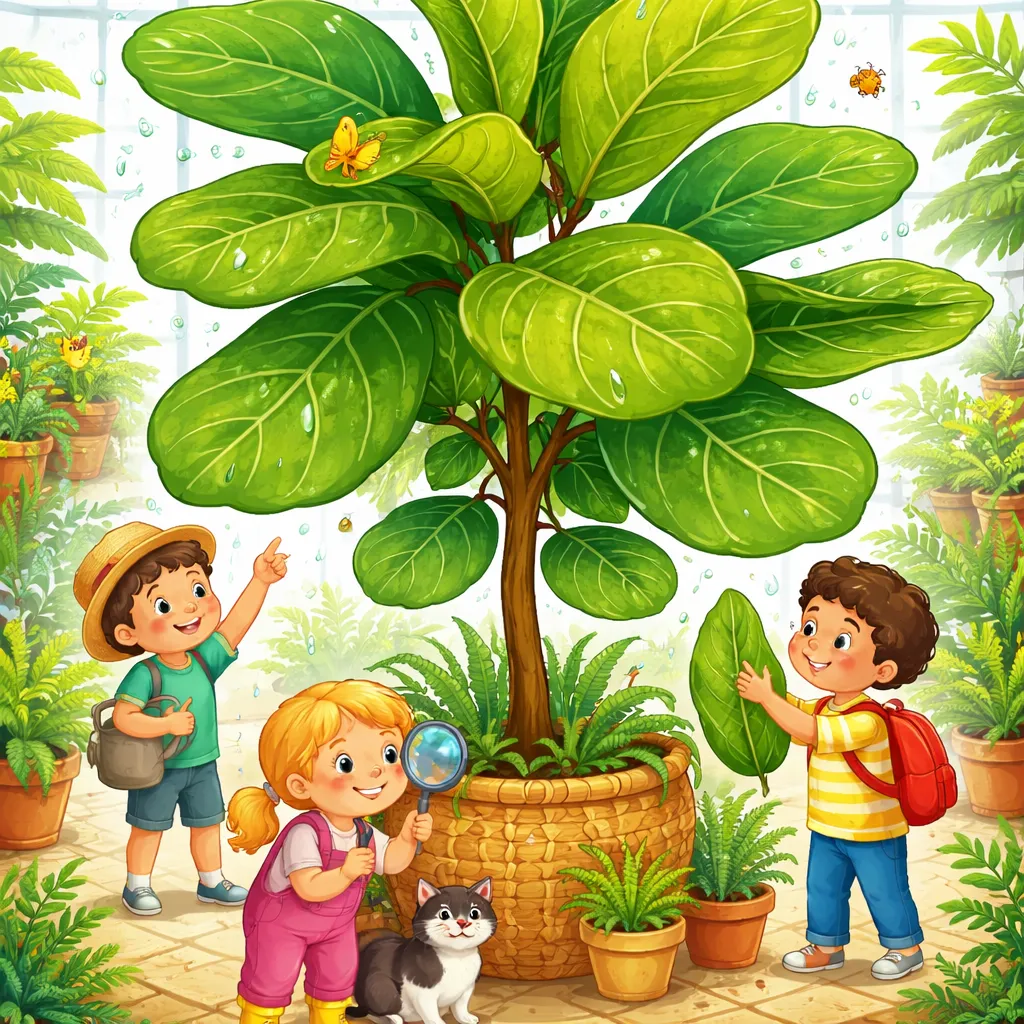
The fiddle leaf fig plant is a stunning indoor tree with huge, glossy leaves shaped like violins or fiddles. It grows as a tall, upright tree with a single trunk. The leaves are enormous. They can grow over a foot long. They are thick and leathery. They have a waxy shine. The leaf shape is unique. It is wide in the middle and narrow at the ends. It looks like a violin. That is how the plant got its name. The leaves are bright green. They have prominent veins. The plant can grow 6 to 10 feet tall indoors. It makes a dramatic statement in any room. For children, the fiddle leaf fig is like a tree with giant leaves. The leaves are bigger than their hands. Parents can grow fiddle leaf figs in pots. Children love the violin-shaped leaves. This plant teaches children about growth, patience, and the beauty of big leaves.
English Learning About This Plant
The English name “fiddle leaf fig” comes from the leaf shape. It looks like a fiddle or violin. The pronunciation is “fid-dul leef fig.” The International Phonetic Alphabet (IPA) is /ˈfɪdl liːf fɪɡ/. Children can say it: fid-dul leef fig. When we learn about fiddle leaf fig plant, we learn words for its parts. The leaf is the large, violin-shaped, glossy part. The vein is the line that runs through the leaf. The trunk is the tall, woody stem. The node is the bump on the stem where leaves grow. The sap is the milky liquid that comes out when a leaf is cut. These words help children describe this dramatic tree.
There is a famous saying about fiddle leaf figs. They are one of the most popular indoor trees. Another saying goes, “A fiddle leaf fig brings the jungle indoors.” Parents can share these words with their child. They become gentle lessons about growth and the beauty of nature indoors. Fiddle leaf figs are native to West Africa.
Plant Facts and Scientific Knowledge
The fiddle leaf fig plant belongs to the species Ficus lyrata. It is a member of the fig family, Moraceae. It is native to West Africa. It grows in tropical forests. In the wild, it can reach 40 feet tall. Indoors, it grows 6 to 10 feet tall.
Fiddle leaf fig leaves are large and violin-shaped. They can be 12 to 18 inches long. The leaves are thick and leathery. They have prominent veins. The leaves are bright green and glossy. They grow alternately on the stem.
The plant has a single trunk. It grows slowly. It can be pruned to keep it bushy or to encourage branching. The plant produces a milky sap. The sap can irritate skin.
Fiddle leaf figs need bright, indirect light. They do not like direct sun. They like consistent moisture but do not like soggy soil. They are sensitive to changes. They may drop leaves if stressed.
Fiddle leaf figs have symbolic meaning. They represent growth, abundance, and prosperity. They are often used in interior design. They bring a tropical feel to any room.
How to Grow and Care for This Plant
Growing a fiddle leaf fig plant requires attention. Choose a spot with bright, indirect light. It needs light to grow. It does not like direct sun. It needs well-drained soil. Use potting soil with perlite for drainage.
Plant fiddle leaf fig in a pot with drainage holes. Place the plant in the pot. Fill with soil. Water well. Children can help by putting the plant in the pot and adding soil.
Water fiddle leaf fig when the top inch of soil feels dry. It likes consistent moisture but does not like soggy soil. Water thoroughly, then let the soil dry slightly. In winter, water less. The plant will tell you when it needs water. The leaves will droop.
Fiddle leaf fig needs fertilizer. Feed once a month in spring and summer with balanced fertilizer. Do not overfeed. Wipe the leaves with a damp cloth to keep them shiny. Children can help with this.
The plant is sensitive. Avoid moving it. It may drop leaves if stressed. Be patient. It will adjust.
Benefits of Growing This Plant
Growing a fiddle leaf fig plant brings many gifts to a family. First, the giant leaves are spectacular. They are bigger than a child’s hand. Second, the plant becomes a focal point. It makes the room feel like a jungle.
Fiddle leaf figs clean the air. They remove toxins. Children learn that plants help us breathe better.
The plant teaches about patience. It grows slowly. Children learn that good things take time.
Fiddle leaf figs also teach about care. They need consistent care. Children learn to be attentive.
What Can We Learn From This Plant
A fiddle leaf fig plant teaches children about patience. The plant grows slowly. New leaves take time. Children learn that growth takes time. They can be patient.
Fiddle leaf figs also teach about sensitivity. The plant drops leaves when stressed. Children learn that they can be sensitive too. They can pay attention to how they feel.
Another lesson is about stability. The plant likes to stay in one place. Children learn that stability is good. They can find a place where they feel safe.
Fiddle leaf figs also teach about big leaves. The leaves are giant. Children learn that big things are beautiful. They can take up space.
Fun Learning Activities
There are many simple activities to help children learn about fiddle leaf fig plant. One activity is a leaf measurement. Measure a fiddle leaf fig leaf. How long is it? How wide is it? Compare it to your hand. This builds observation and math skills.
Another activity is a leaf tracing. Place a piece of paper over a leaf. Trace the violin shape. Color it. This builds art skills and appreciation for the shape.
A nature journal works well for fiddle leaf figs. Draw the large, violin-shaped leaves. Draw the prominent veins. Draw the trunk. Label the parts: leaf, vein, trunk. Write the date when a new leaf appears.
For art, try painting fiddle leaf figs. Use dark green and light green paint. Paint the large, violin-shaped leaves with veins. Add the trunk. This creates a jungle tree picture.
Vocabulary games are fun too. Write the words fiddle leaf fig, leaf, vein, trunk, grow, and patience on cards. Say each word. Ask your child to point to the part on the plant. Practice saying fiddle leaf fig together. Clap the syllables: fid-dul leef fig.
Finally, try a patience activity. Watch for a new leaf. Count the days from when it appears until it unfurls. Mark the calendar. When it opens, celebrate. This teaches about patience and anticipation.
Through these activities, children build a deep connection with a tree that grows giant violin-shaped leaves. They learn new words, measure leaves, and discover the joy of patience. The fiddle leaf fig plant becomes a symbol of steady growth and beauty. Each time they see the giant leaves, children remember that growth takes time. They remember that they can be patient. This dramatic tree opens a world of tropical wonder, careful care, and the lasting lesson that the biggest leaves come from the most patient growth.