
What Is This Plant?
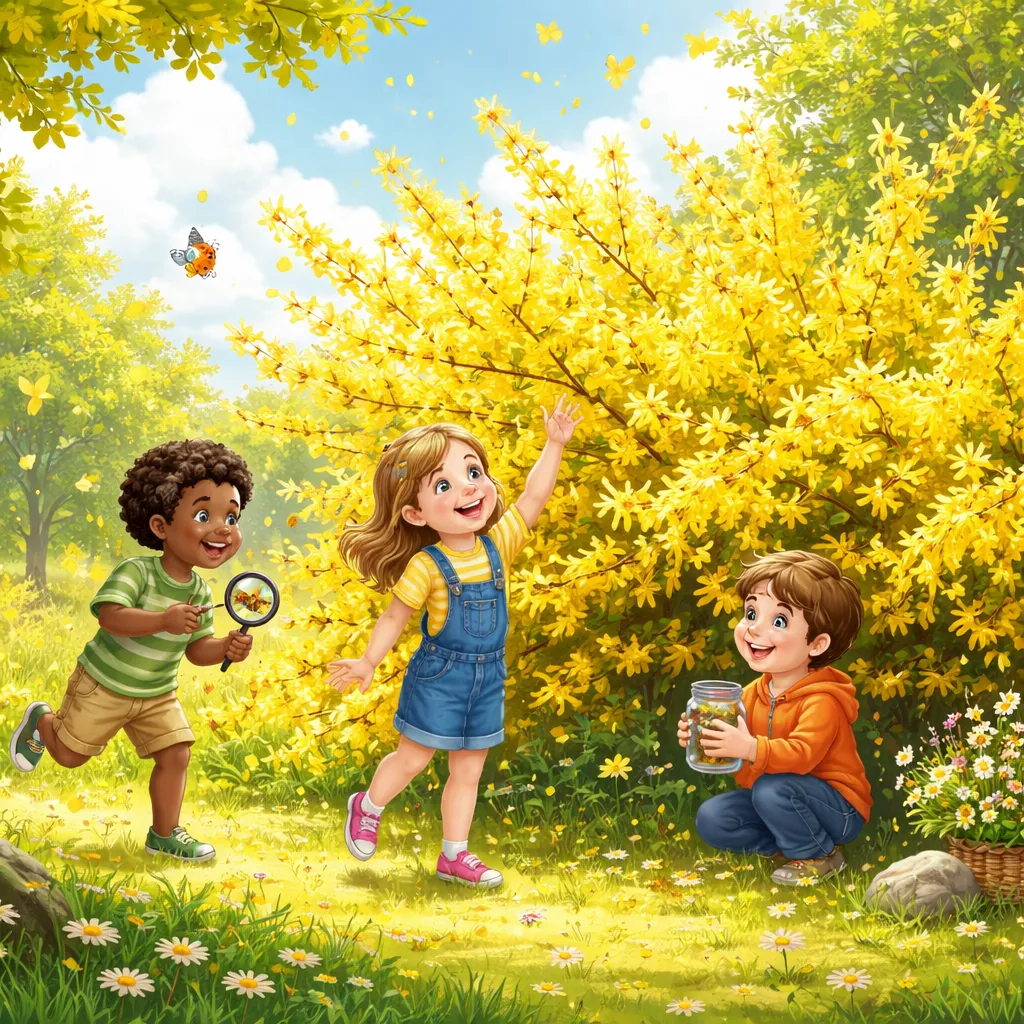
The forsythia plant is a flowering shrub that announces spring with a burst of brilliant yellow flowers. It grows as a fountain-shaped shrub with many arching branches. The branches are long and slender. They point upward and then curve down. In early spring, before any leaves appear, the branches become completely covered in bright yellow flowers. The flowers are small and bell-shaped. They grow in clusters along the stems. The effect is a golden waterfall of color. The flowers appear so early that they often bloom while snow is still on the ground. For children, forsythia is like a celebration. One day the shrub is bare. The next day it is covered in yellow. Parents can plant forsythia where children can see it from the window. The bright color lifts the spirits after winter. This plant teaches children that spring arrives with a burst of joy.
English Learning About This Plant
The English name “forsythia” honors the Scottish botanist William Forsyth. He was a founder of the Royal Horticultural Society. The pronunciation is “for-sith-ee-a.” The International Phonetic Alphabet (IPA) is /fərˈsɪθiə/. The word has four syllables. Children can say it: for-sith-ee-a. When we learn about forsythia plant, we learn words for its parts. The stem is the long, arching, slender part. The branch is the woody part that holds the flowers. The flower is the bright yellow, bell-shaped blossom. The petal is the yellow part of the flower. The leaf is the green part that appears after the flowers. These words help children describe this golden spring shrub.
There is a famous saying about forsythia. It goes, “Forsythia is the sunshine of the spring garden.” Another saying says, “When forsythia blooms, winter is finally over.” Parents can share these words with their child. They become gentle lessons about joy and the end of hard times. Forsythia is one of the first shrubs to bloom in spring.
Plant Facts and Scientific Knowledge
The forsythia plant belongs to the genus Forsythia. There are about 11 species. Forsythias are native to East Asia and southeastern Europe. They are members of the olive family, Oleaceae. The most common garden forsythia is Forsythia × intermedia.
Forsythia flowers have four petals. They are bright yellow. The petals are long and narrow. They form a bell or trumpet shape. The flowers grow in clusters along the stems. They appear before the leaves. This allows the flowers to get all the attention.
Forsythia leaves appear after the flowers. They are green and oval-shaped. They have toothed edges. In fall, the leaves may turn purple or red.
Forsythias grow quickly. They can reach eight to ten feet tall and wide. They are very hardy. They can grow in many climates. They are often used as hedges or foundation plantings.
Forsythia has symbolic meaning. It represents anticipation, hope, and the coming of spring. It is a flower of excitement. The bright yellow color represents joy and energy.
How to Grow and Care for This Plant
Growing a forsythia plant is easy for families. Plant in spring or fall. Choose a sunny spot. Forsythia needs at least six hours of sunlight each day. It can grow in partial shade but flowers less. It needs well-drained soil.
Dig a hole twice as wide as the root ball. Place the plant in the hole. Fill with soil. Water well. Children can help by holding the plant straight while you fill the hole.
Water forsythia regularly during the first year. Once established, it is drought-tolerant. Water during long dry spells. Mulch around the base keeps the soil moist.
Prune forsythia right after flowering. Cut back the stems that have flowered. Remove about one-third of the oldest stems. This encourages new growth. Pruning later removes next year’s flowers. Children can help by collecting the pruned branches. The cut branches can be brought indoors. They will bloom in a vase.
Forsythia needs little fertilizer. A light feeding in spring is enough. Too much fertilizer creates leaves but fewer flowers.
Benefits of Growing This Plant
Growing a forsythia plant brings many gifts to a family. First, it provides the earliest spring color. The bright yellow flowers appear when the garden is still bare. Second, forsythia is very easy to grow. It tolerates neglect. This builds confidence in young gardeners.
Forsythia provides cut flowers. Children can cut branches in late winter. Put them in a vase indoors. They will bloom in a few days. This brings spring inside early.
The plant grows quickly. Children can see changes every year. They can watch it become a large shrub.
Forsythia also teaches about the seasons. It is one of the first signs of spring. Children learn to watch for the yellow flowers.
What Can We Learn From This Plant
A forsythia plant teaches children about joy. The bright yellow flowers are like sunshine. They bring joy after winter. Children learn that they can bring joy to others. A bright smile or kind word can lift spirits.
Forsythia also teaches about being early. It is one of the first to bloom. Children learn that being early is okay. They can start things. They can be leaders.
Another lesson is about anticipation. The flowers appear suddenly. They are a surprise. Children learn to anticipate good things. They learn to look forward to spring.
Forsythia also teaches about energy. The bright yellow color is full of energy. Children learn that energy is good. They can bring energy to their activities.
Fun Learning Activities
There are many simple activities to help children learn about forsythia plant. One activity is a bloom watch. In late winter, check the forsythia each day. Look for the first yellow flowers. Count the days from the first flower to full bloom. This builds observation and anticipation.
Another activity is a branch forcing activity. In late winter, cut a few forsythia branches. Bring them indoors. Put them in a vase with water. Watch them bloom in a few days. This teaches about how warmth and light affect plants.
A nature journal works well for forsythia. Draw the arching branches covered in yellow flowers. Draw the four-petaled flowers up close. Draw the leaves that appear later. Label the parts: stem, branch, flower, petal, leaf. Write the date when the first flower opened.
For art, try painting forsythia. Use bright yellow paint. Paint the arching branches covered in flowers. Add a blue sky background. This creates a joyful spring picture.
Vocabulary games are fun too. Write the words forsythia, branch, stem, flower, petal, and spring on cards. Say each word. Ask your child to point to the part on the plant. Practice saying forsythia together. Clap the syllables: for-sith-ee-a.
Finally, try a spring anticipation activity. Make a calendar in late winter. Mark the days until you expect forsythia to bloom. Check the plant each day. When the first flower opens, have a small celebration. This teaches about anticipation and the joy of waiting.
Through these activities, children build a deep connection with a shrub that brings the first burst of spring color. They learn new words, watch branches bloom indoors, and discover the joy of anticipation. The forsythia plant becomes a symbol of joy and early arrival. Each spring when the yellow flowers appear, children remember that joy comes after winter. They remember that they can be early and bright. This golden shrub opens a world of spring wonder, patient anticipation, and the lasting joy of watching the garden wake up with a burst of sunshine yellow.