
What Is This Plant?
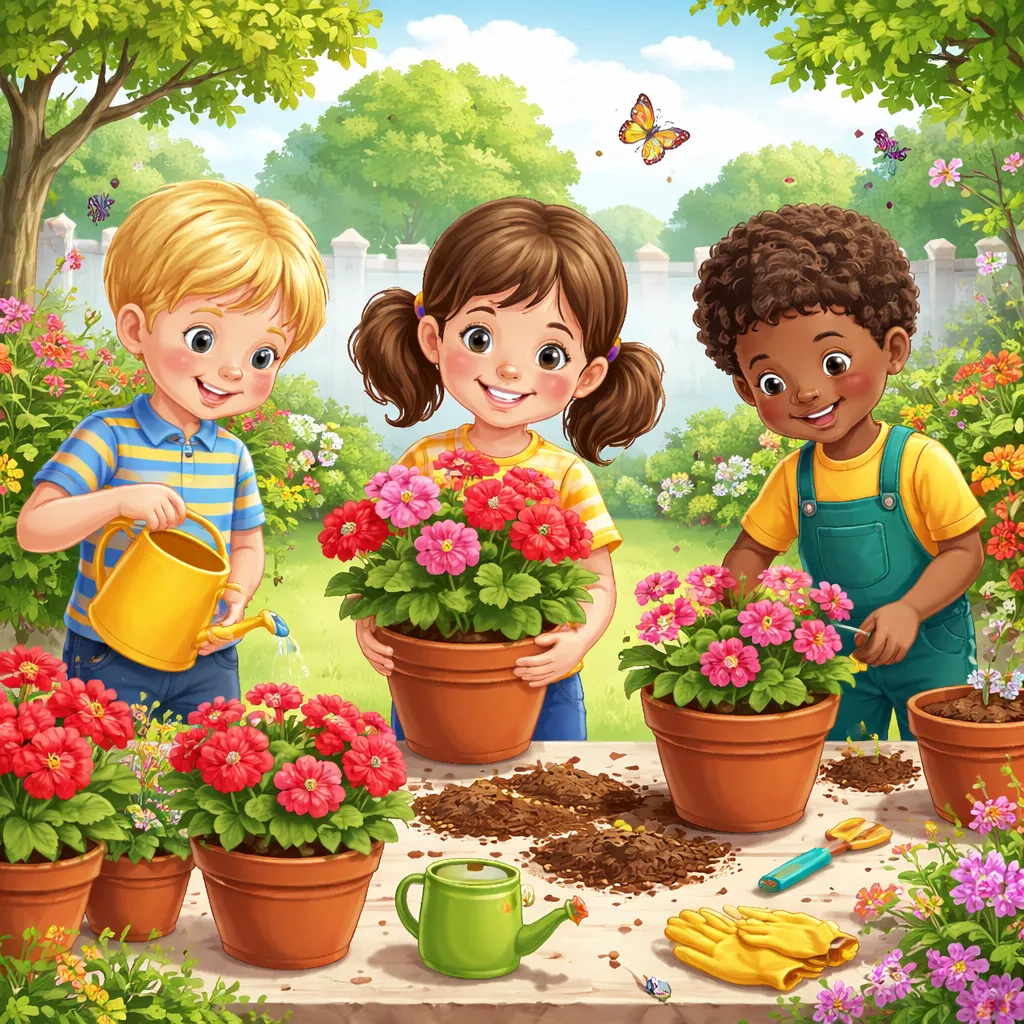
The geranium plant is a popular flowering plant that thrives in pots and garden beds. It grows as a bushy plant with sturdy stems. The leaves are round and often have a dark ring or pattern on them. They are soft and slightly fuzzy. When you touch the leaves, they release a fresh, pleasant scent. The flowers grow in clusters. Each cluster looks like a small bouquet. The flowers come in bright colors. You can find red, pink, white, orange, and purple geraniums. They bloom from spring until fall. They do not stop. For children, geraniums are easy friends. They are tough plants. They forgive mistakes. Parents can give children their own geranium in a pot. Children learn to water it and watch the flowers appear. The plant rewards care with constant color.
English Learning About This Plant
The English name “geranium” comes from the Greek word “geranos.” It means crane. The seed pod looks like a crane’s beak. The pronunciation is “jer-ay-nee-um.” The International Phonetic Alphabet (IPA) is /dʒəˈreɪniəm/. The word has four syllables. Children can say it: jer-ay-nee-um. When we learn about geranium plant, we learn words for its parts. The stem is the sturdy, green part. The leaf is the round, soft part with a dark ring. The flower cluster is the group of flowers at the top. The petal is the colorful part of the flower. The bud is the small, unopened flower. These words help children describe this cheerful plant.
There is a famous saying about geraniums. It goes, “Geraniums are the faithful friends of the garden.” They bloom all season. They ask for little. Another saying says, “A geranium on the windowsill brings cheer to any room.” Parents can share these words with their child. They become gentle lessons about reliability and bringing joy to others.
Plant Facts and Scientific Knowledge
The geranium plant we grow in gardens is actually a Pelargonium. True geraniums are different plants. But gardeners call them geraniums. They are native to South Africa. They were brought to Europe in the 1600s. They are members of the family Geraniaceae.
There are many types of garden geraniums. Zonal geraniums have dark rings on their leaves. Ivy geraniums have trailing stems. They are good for hanging baskets. Scented geraniums have leaves that smell like rose, lemon, or mint. Regal geraniums have large, showy flowers.
Geranium flowers grow in clusters. Each cluster has many small flowers. The flowers can be single or double. Single flowers have five petals. Double flowers have many petals. The colors are bright and cheerful. Red is the most common.
Geraniums bloom from spring until frost. They are tender perennials. In warm climates, they live year-round. In cold climates, people grow them as annuals or bring them indoors for winter.
Geraniums have symbolic meaning. They represent comfort, friendship, and positive emotions. In the language of flowers, a geranium means “you are silly” or “preference.” But in modern times, they simply mean cheerfulness and reliability.
How to Grow and Care for This Plant
Growing a geranium plant is perfect for children. Choose a sunny spot. Geraniums need at least six hours of sunlight each day. They grow well in pots or garden beds. Pots are best for children. The plant is easy to move and care for.
Buy small geranium plants from a garden store. Choose healthy plants with green leaves and buds. Fill a pot with potting soil. Dig a small hole. Place the plant in the hole. Cover with soil. Water well. Children can do all these steps themselves.
Water geraniums when the soil feels dry. Stick your finger in the soil. If it feels dry, water. If it feels wet, wait. Geraniums do not like soggy soil. Overwatering can harm them. Children learn to check before watering.
Remove dead flowers. This is called deadheading. Pinch off the faded flower clusters. This makes the plant produce more flowers. Children can do this with their fingers. It is easy and satisfying.
Fertilize geraniums every two weeks. Use a balanced fertilizer. Regular feeding keeps them blooming. In fall before frost, bring potted geraniums indoors. Place them in a sunny window. They will bloom inside or rest until spring.
Benefits of Growing This Plant
Growing a geranium plant brings many gifts to a family. First, it provides constant color. The flowers keep coming all summer. Second, geraniums are very forgiving. If a child forgets to water, the plant usually recovers. This builds confidence.
Geraniums have a pleasant scent. The leaves smell fresh when touched. Children love to rub the leaves and smell their fingers. This engages the sense of smell.
The plant is good for pots. Children can have their own pot. They learn responsibility by caring for their own plant. They see the results of their care.
Geraniums also repel some insects. The scent keeps certain pests away. This makes them good companions for other plants. Children learn about companion planting.
What Can We Learn From This Plant
A geranium plant teaches children about reliability. The plant blooms all summer. It does not stop. Children learn that they can be reliable too. They can show up and do their best every day.
Geraniums also teach about thriving with simple care. They do not need complicated care. Just sun, water, and food. Children learn that simple things can create great results.
Another lesson is about resilience. Geraniums can be cut back and they grow again. They survive being moved. Children learn that they can bounce back. They can handle changes and challenges.
Geraniums also teach about giving. The plant gives flowers all season. It gives scent when touched. It asks for little. Children learn that giving does not require having a lot.
Fun Learning Activities
There are many simple activities to help children learn about geranium plant. One activity is a scent test. Rub a geranium leaf. Smell your fingers. Describe the scent. Is it fresh? Is it spicy? Compare different types of geraniums. This builds sensory language.
Another activity is a deadheading race. See who can find the most faded flower clusters to remove. Make it a game. This teaches care while being fun.
A nature journal works well for geraniums. Draw the round leaves with dark rings. Draw the flower clusters. Label the parts: stem, leaf, flower cluster, petal, bud. Write the date when the first flower opened. Count how many flowers are in each cluster.
For art, try painting geraniums. Use bright red, pink, or white paint. Paint the round leaves with dark rings. Paint the clusters of small flowers. Paint a terracotta pot around them. This creates a classic summer picture.
Vocabulary games are fun too. Write the words geranium, stem, leaf, flower cluster, petal, and scent on cards. Say each word. Ask your child to point to the part on the plant. Practice saying geranium together. Clap the syllables: jer-ay-nee-um.
Finally, try a propagation activity. Take a cutting from a geranium plant. Cut a stem about four inches long. Remove the lower leaves. Place it in a cup of water. In a few weeks, roots will grow. Then plant it in soil. This shows children how plants make new plants.
Through these activities, children build a deep connection with a plant that rewards care with constant color. They learn new words, practice responsibility, and discover the joy of reliability. The geranium plant becomes a symbol of friendship and persistence. Each time they see geraniums, they remember that simple care leads to beautiful results. They remember that they can be reliable friends to the plants they grow. This cheerful plant opens a world of sensory discovery, simple responsibility, and the lasting joy of watching a faithful friend bloom all summer long.