
What Is This Plant?
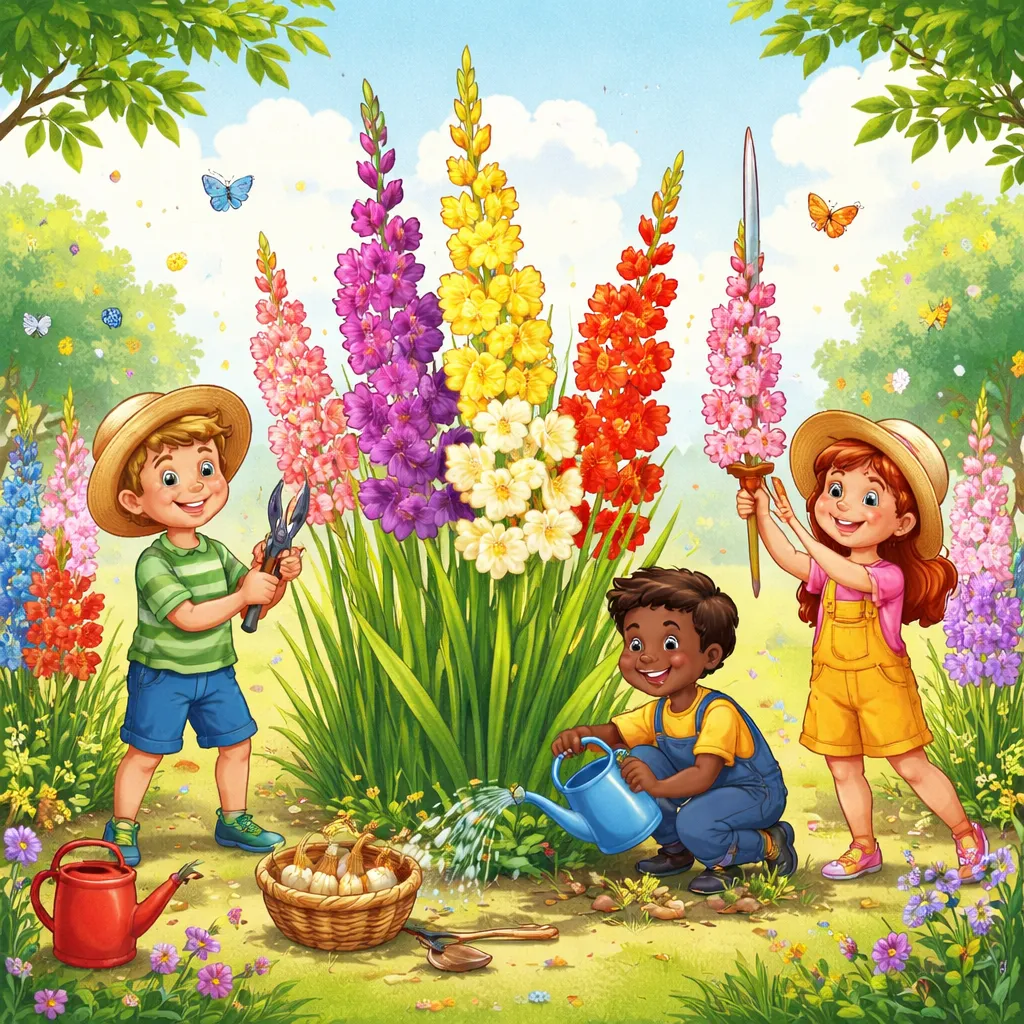
The gladiolus plant is a tall, dramatic flower that grows from a bulb-like structure called a corm. It sends up a tall spike of sword-shaped leaves. From the center, a flower spike rises even higher. The flowers open from the bottom of the spike upward. Each flower is trumpet-shaped with six petals. They come in almost every color. You can find gladiolus in red, pink, orange, yellow, purple, white, and green. Some have bi-colors or ruffled edges. The flowers bloom in summer. The plant can reach three to five feet tall. For children, gladiolus is like a tower of flowers. The flowers open one by one. It is exciting to watch the next flower open. Parents can plant gladiolus corms in spring. Children watch the tall spike grow. When the first flower opens, they know more will follow. This plant teaches anticipation and patience.
English Learning About This Plant
The English name “gladiolus” comes from the Latin word “gladius.” It means sword. The leaves are shaped like swords. The pronunciation is “glad-ee-o-lus.” The International Phonetic Alphabet (IPA) is /ˌɡlædiˈoʊləs/. The word has four syllables. Children can say it: glad-ee-o-lus. When we learn about gladiolus plant, we learn words for its parts. The corm is the bulb-like part underground that stores food. The leaf is the long, sword-shaped green part. The stem is the tall, upright part. The flower spike is the tall stem that holds the flowers. The flower is the trumpet-shaped blossom. These words help children describe this tall, elegant plant.
There is a saying about gladiolus. It goes, “Gladiolus stands for strength of character.” The tall, straight spike represents standing strong. Another saying says, “The gladiolus pierces the sky.” Parents can share these words with their child. They become gentle lessons about strength and reaching high. Gladiolus are also the traditional flower for 40th wedding anniversaries.
Plant Facts and Scientific Knowledge
The gladiolus plant belongs to the genus Gladiolus. There are about 260 species. Gladiolus are native to Africa, Europe, and the Mediterranean. They are members of the iris family, Iridaceae. Gladiolus have been cultivated for centuries.
Gladiolus grow from corms. A corm is a swollen underground stem. It stores food for the plant. Each year, the old corm shrinks. A new corm forms on top of it. Small cormels form around the base. These can be planted to grow new plants.
Gladiolus leaves are sword-shaped. They grow in a fan. The leaves can be two to three feet long. The flower spike rises from the center. It can reach three to five feet tall.
Gladiolus flowers open from the bottom up. The bottom flowers open first. Each flower lasts several days. As the bottom flowers fade, the next ones open. A spike can have 10 to 20 flowers. The flowers come in many colors. Some have ruffled edges. Some have contrasting throats.
Gladiolus have symbolic meaning. They represent strength, integrity, and remembrance. In the language of flowers, a gladiolus means “I pierce the heart.” This comes from the sword shape. They are often used in funeral arrangements to represent strength of character.
How to Grow and Care for This Plant
Growing a gladiolus plant is exciting for children. Plant the corms in spring after the last frost. Choose a sunny spot. Gladiolus need at least six hours of sunlight each day. The soil should be well-drained.
Dig a hole about four to six inches deep. Place the corm with the pointed end up. Cover with soil. Space corms about six inches apart. Water well. Children can help by placing the corms in the holes. The corms look like flat bulbs.
Water gladiolus regularly. They like consistent moisture. Water when the soil feels dry. Tall gladiolus need support. Place a stake next to the plant. Tie the stem loosely to the stake. Children can help by holding the stake.
Fertilize when the shoots appear. Use a balanced fertilizer. Feed again when the flower spike appears. Remove dead flowers. This keeps the plant looking neat.
In fall after the leaves turn yellow, dig up the corms. Let them dry. Remove the old, shriveled corm. Store the new corms in a cool, dry place. Replant them next spring. Children can help by sorting the corms.
Benefits of Growing This Plant
Growing a gladiolus plant brings many gifts to a family. First, the tall spikes make a dramatic statement. They stand above other flowers. Second, gladiolus are excellent cut flowers. Children can cut the spikes when the bottom flowers open. They last a long time in a vase.
Gladiolus attract pollinators. Bees and butterflies visit the flowers. Children can watch them work their way up the spike.
The plant teaches about corms and how they renew each year. Children learn that the old corm gives energy to the new one. This shows how plants renew themselves.
Gladiolus also teach about sequencing. The flowers open in order. Children can watch the bottom flowers open first. They can predict which flower will open next.
What Can We Learn From This Plant
A gladiolus plant teaches children about strength. The tall spike stands straight. It does not bend. Children learn that they can stand strong. They can hold their head high.
Gladiolus also teach about reaching high. The plant reaches toward the sky. Children learn that they can reach for their goals. They can grow tall in their own way.
Another lesson is about order. The flowers open in sequence. They do not all open at once. Children learn that things happen in order. There is a time for everything.
Gladiolus also teach about renewal. The old corm shrinks. The new corm grows. Children learn that letting go of the old makes room for the new.
Fun Learning Activities
There are many simple activities to help children learn about gladiolus plant. One activity is a flower spike watch. Plant gladiolus corms. When the flower spike appears, watch it every day. Count the buds. See which flower opens first. Draw the spike and mark which flowers are open. This builds observation and prediction skills.
Another activity is a corm inspection. Show your child a gladiolus corm. Let them hold it. Feel the papery skin. Explain that this corm holds everything the plant needs. In fall, show them the new corm and the old shriveled one. This teaches about plant renewal.
A nature journal works well for gladiolus. Draw the sword-shaped leaves. Draw the tall flower spike. Draw the trumpet-shaped flowers. Label the parts: corm, leaf, stem, flower spike, flower. Write the date when the first flower opened.
For art, try painting gladiolus. Use bright colors like red, pink, and purple. Paint the tall flower spike with trumpet-shaped flowers. Paint the sword-shaped leaves around the base. This creates a dramatic vertical picture.
Vocabulary games are fun too. Write the words gladiolus, corm, leaf, stem, flower spike, and tall on cards. Say each word. Ask your child to point to the part on the plant. Practice saying gladiolus together. Clap the syllables: glad-ee-o-lus.
Finally, try a cut flower activity. When the gladiolus flowers open, help your child cut a spike. Put it in a tall vase. Watch how long it lasts. Count how many days until the last flower opens. This teaches about cut flower care and observation.
Through these activities, children build a deep connection with a plant that towers above them with sword-like leaves and colorful blooms. They learn new words, watch flowers open in sequence, and discover the joy of strength and renewal. The gladiolus plant becomes a symbol of standing tall and reaching high. Each time they see gladiolus, they remember that they can be strong. They remember that things happen in their own time. This elegant flower opens a world of vertical beauty, patient observation, and the lasting joy of watching a tower of flowers unfold from the bottom up.