
What Is This Plant?
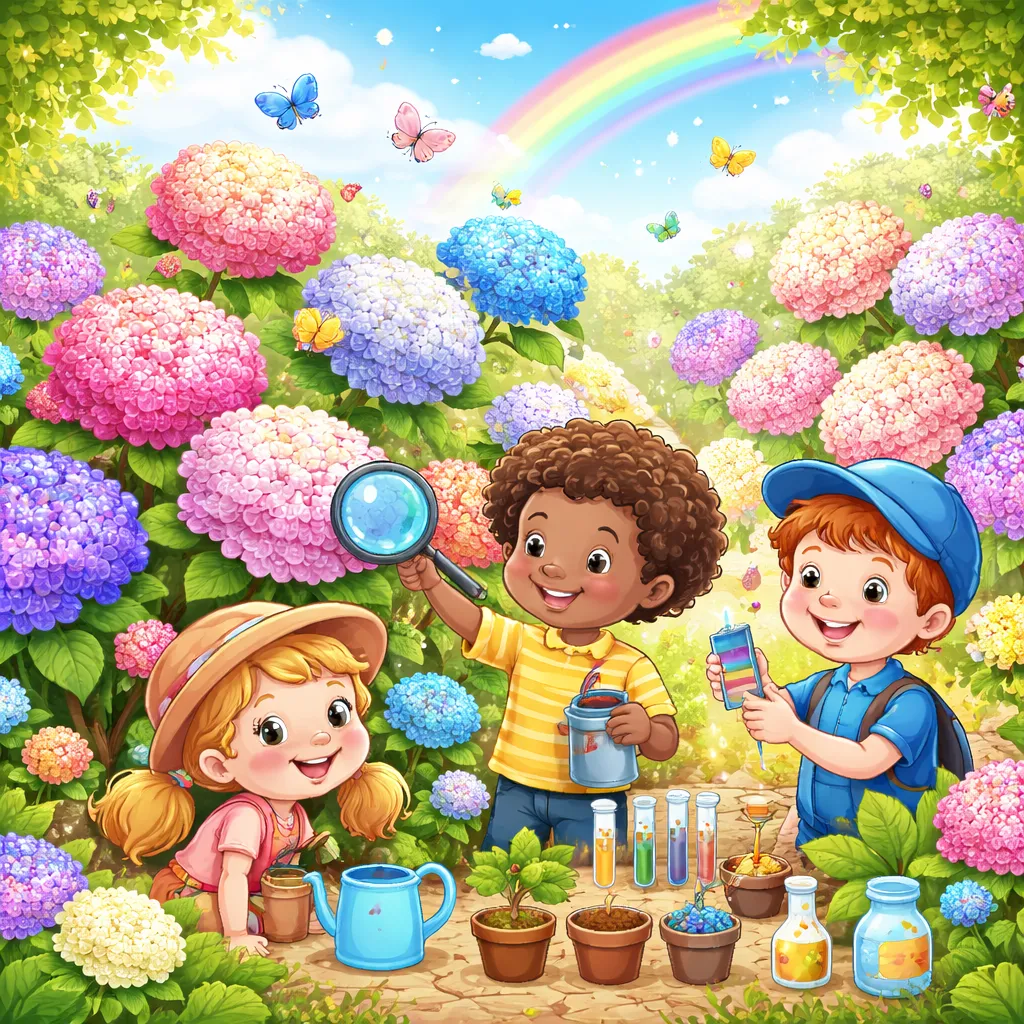
The hydrangea plant is a flowering shrub known for its enormous clusters of flowers. It grows as a rounded shrub with many branches. The leaves are large and oval-shaped. They are bright green and slightly rough. The flowers are the main attraction. They grow in huge, round clusters that can be as big as a child’s head. The clusters are made of many tiny flowers. Some hydrangeas have flowers that change color. The same plant can have pink, purple, or blue flowers depending on the soil. White hydrangeas stay white. The flowers bloom in summer and last for weeks. For children, hydrangeas are like magic. The giant flower clusters are soft and full. The color change is fascinating. Parents can plant hydrangeas in the garden. Children watch the flowers appear. They can experiment with soil to change the color.
English Learning About This Plant
The English name “hydrangea” comes from Greek words. “Hydor” means water, and “angos” means vessel. The plant needs lots of water. The pronunciation is “hy-dran-jee-a.” The International Phonetic Alphabet (IPA) is /haɪˈdreɪndʒə/. The word has three syllables. Children can say it: hy-dran-jee-a. When we learn about hydrangea plant, we learn words for its parts. The leaf is the large, oval, bright green part. The stem is the woody part that holds the leaves and flowers. The flower cluster is the huge, round group of tiny flowers. The floret is one small flower in the cluster. The petal is the colorful part of each tiny flower. These words help children describe this spectacular shrub.
There is a saying about hydrangeas. It goes, “Hydrangeas are the bouquets of the garden.” Another saying says, “The hydrangea teaches us that change can be beautiful.” The flowers change color with the soil. Parents can share these words with their child. They become gentle lessons about embracing change and finding beauty in transformation.
Plant Facts and Scientific Knowledge
The hydrangea plant belongs to the genus Hydrangea. There are about 75 species. Hydrangeas are native to Asia and the Americas. They are members of the family Hydrangeaceae. The most common garden hydrangea is Hydrangea macrophylla.
Hydrangea flowers grow in large clusters called inflorescences. The clusters can be round or flat. Round clusters are called mopheads. Flat clusters are called lacecaps. Each cluster contains many tiny flowers. Some flowers are showy with large petals. Others are small and fertile.
The color of hydrangea flowers depends on the soil. In acidic soil, flowers turn blue. In alkaline soil, flowers turn pink. This happens because aluminum in the soil affects the flower color. White hydrangeas do not change color. They stay white.
Hydrangea leaves are large and can grow up to six inches long. They are bright green. Some varieties have leaves that turn red or purple in fall.
Hydrangeas have symbolic meaning. They represent gratitude, grace, and heartfelt emotion. In the language of flowers, a hydrangea means “thank you for understanding.” They are often given as gifts to express appreciation.
How to Grow and Care for This Plant
Growing a hydrangea plant is a wonderful family project. Plant in spring or fall. Choose a spot with morning sun and afternoon shade. Hydrangeas need protection from hot afternoon sun. They need well-drained soil.
Dig a hole twice as wide as the root ball. Place the plant in the hole. Fill with soil. Water well. Children can help by holding the plant straight while you fill the hole.
Water hydrangeas regularly. They need consistent moisture. The name “hydrangea” means water. They are thirsty plants. Water deeply once or twice a week. Mulch around the base keeps the soil moist.
Fertilize hydrangeas in spring. Use a balanced fertilizer. Do not overfertilize. Too much fertilizer creates leaves but fewer flowers. To change flower color, add aluminum sulfate for blue flowers. Add lime for pink flowers. This takes time.
Prune hydrangeas after flowering. Some hydrangeas bloom on old wood. Some bloom on new wood. Know your type before pruning. Remove dead or crossing branches. Children can help by collecting the pruned branches.
Benefits of Growing This Plant
Growing a hydrangea plant brings many gifts to a family. First, the giant flower clusters are spectacular. They look like bouquets on the bush. Second, the color change fascinates children. They can experiment with the soil.
Hydrangeas attract few pests. They are reliable plants. The flowers last for weeks. They dry on the plant and can be used for dried arrangements.
The plant teaches about soil chemistry. Children learn that soil affects plant color. They can test soil and see the results.
Hydrangeas also provide cut flowers. Children can cut the large clusters and put them in a vase. They last a long time indoors.
What Can We Learn From This Plant
A hydrangea plant teaches children about change. The flowers change color based on the soil. Children learn that change can be beautiful. They can adapt to their environment.
Hydrangeas also teach about gratitude. The flowers represent thankfulness. Children learn to say thank you. They learn to appreciate others.
Another lesson is about abundance. The flower clusters are huge. They are full and generous. Children learn that abundance is beautiful. They can be generous with their gifts.
Hydrangeas also teach about water. The plant needs lots of water to thrive. Children learn that water is life. They learn to appreciate this resource.
Fun Learning Activities
There are many simple activities to help children learn about hydrangea plant. One activity is a color experiment. If you have a hydrangea that changes color, experiment with the soil. Add coffee grounds to make soil more acidic. Add lime to make it more alkaline. Watch the color change over time. This teaches about soil chemistry.
Another activity is a flower cluster measurement. When the hydrangea blooms, measure the flower clusters. How wide are they? How many tiny flowers are in one cluster? This builds measurement and observation skills.
A nature journal works well for hydrangeas. Draw the large, oval leaves. Draw the huge flower clusters. Draw the tiny flowers up close. Label the parts: leaf, stem, flower cluster, floret. Write the date when the first flower opened. Note the color.
For art, try painting hydrangeas. Use pink, blue, and purple paint. Paint the huge, round flower clusters. Add the large, oval leaves. This creates a beautiful summer picture.
Vocabulary games are fun too. Write the words hydrangea, leaf, stem, flower cluster, floret, and color on cards. Say each word. Ask your child to point to the part on the plant. Practice saying hydrangea together. Clap the syllables: hy-dran-jee-a.
Finally, try a dried flower activity. Let some hydrangea flowers dry on the plant. Cut them when they are dry. They will keep their color. Use them in a dried arrangement. This teaches about preserving beauty.
Through these activities, children build a deep connection with a plant that changes color and gives giant bouquets. They learn new words, experiment with soil, and discover the joy of change. The hydrangea plant becomes a symbol of gratitude and abundance. Each time they see hydrangeas, they remember that change can be beautiful. They remember to be thankful for the gifts they receive. This magnificent shrub opens a world of color chemistry, patient observation, and the lasting joy of watching giant flower clusters turn from pink to blue.