
What Is This Plant?
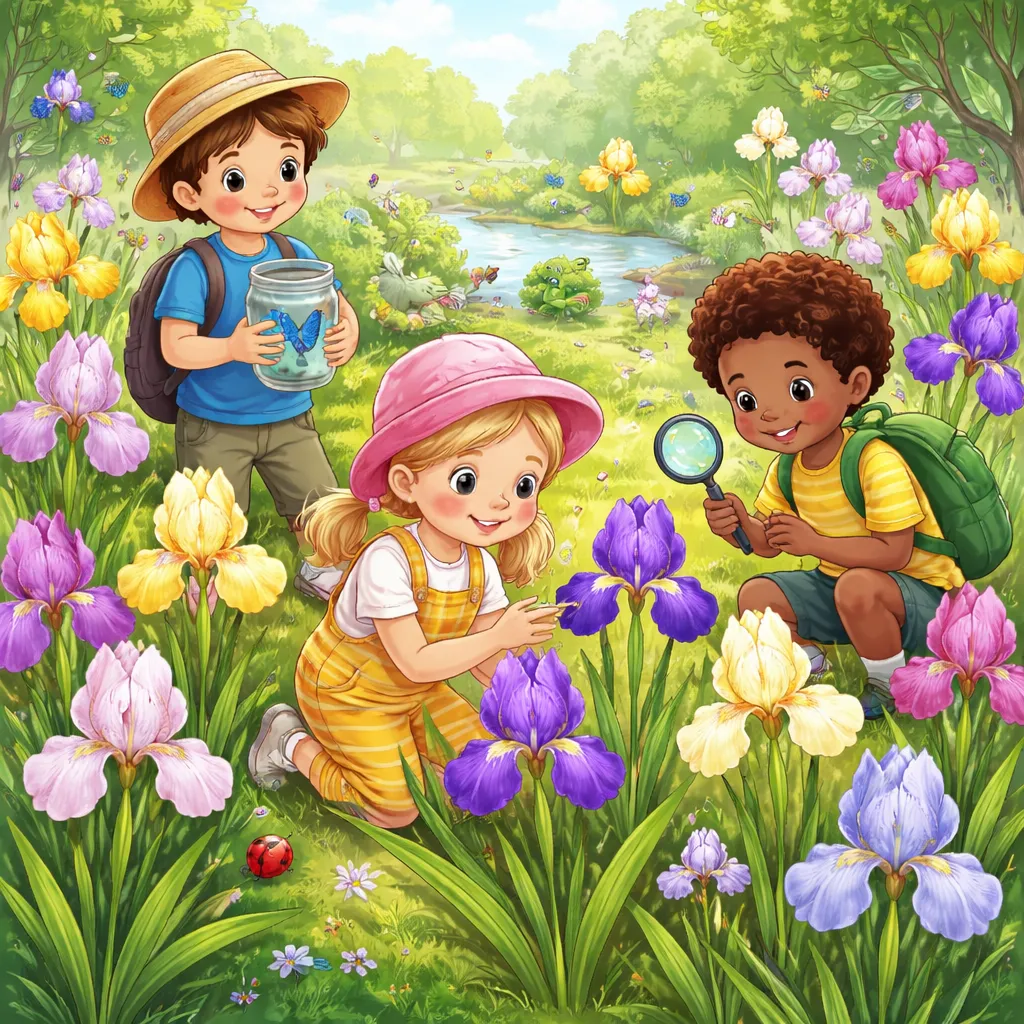
The iris plant is a graceful perennial that grows from thick roots called rhizomes. It has tall, sword-shaped leaves that stand upright. The leaves are flat and green. They grow in a fan-like shape. From the center of the fan, tall flower stems rise. At the top, one or more large flowers open. Iris flowers have a unique shape. Three petals stand upright. They are called standards. Three petals curve downward. They are called falls. The falls often have a fuzzy patch called a beard. The flowers come in nearly every color. You can find purple, blue, yellow, white, pink, and even brown irises. Some have patterns of multiple colors. For children, irises are like rainbows in the garden. The flowers stand tall and proud. Parents can plant irises in sunny spots. Children love the many colors. Each flower looks like it was painted by an artist.
English Learning About This Plant
The English name “iris” comes from Greek mythology. Iris was the goddess of the rainbow. She traveled on rainbows between heaven and earth. The flower was named for her because of its many colors. The pronunciation is “eye-ris.” The International Phonetic Alphabet (IPA) is /ˈaɪrɪs/. The word has two syllables. Children can say it: eye-ris. When we learn about iris plant, we learn words for its parts. The rhizome is the thick root that grows horizontally. The leaf is the long, sword-shaped green part. The stem is the tall part that holds the flower. The standard is the upright petal. The fall is the downward-curving petal. The beard is the fuzzy patch on the fall. These words help children describe this elegant flower.
There is a famous painting of irises by Vincent van Gogh. He painted them in a garden. He captured their purple petals and graceful leaves. Another saying goes, “The iris is the rainbow of the garden.” This means the flower brings all colors together. Parents can share the Greek myth with their child. It becomes a gentle story about color and beauty traveling between earth and sky.
Plant Facts and Scientific Knowledge
The iris plant belongs to the genus Iris. There are over 300 species. Irises are native to many parts of the world, including Europe, Asia, North America, and North Africa. They are members of the family Iridaceae.
There are two main types of irises. Bearded irises have a fuzzy patch on the falls. They grow from rhizomes. Beardless irises do not have beards. They include Siberian irises and Japanese irises. Some irises grow from bulbs. These are smaller and bloom earlier.
Iris flowers have six petals. Three are standards that stand up. Three are falls that curve down. The falls often have markings that guide bees to the center. The flowers come in many colors. Some irises change color as they age.
Iris leaves are shaped like swords. They grow in flat fans. The leaves stay green after the flowers fade. They make food for the rhizome for next year.
Irises have symbolic meaning. In many cultures, irises represent wisdom, hope, and faith. The fleur-de-lis, a symbol of French royalty, is based on the iris. In the language of flowers, purple irises mean wisdom. Blue irises mean faith. Yellow irises mean passion.
How to Grow and Care for This Plant
Growing an iris plant is a rewarding family project. Choose a sunny spot. Irises need at least six hours of sunlight each day. The soil should be well-drained. Irises do not like wet roots.
Plant irises in late summer or early fall. Dig a hole. Place the rhizome so it sits just below the soil surface. The top of the rhizome should be visible. Spread the roots downward. Cover with soil. Water well. Children can help by placing the rhizome and covering it with soil.
Water after planting. Then water regularly during the first year. Once established, irises are drought-tolerant. Do not overwater. Too much water causes the rhizomes to rot.
After the flowers fade, cut the flower stem. Leave the leaves. Let them turn yellow in fall. The leaves make food for the rhizome. In late summer, you can divide irises. Dig up the rhizomes. Cut them into sections. Each section should have leaves and roots. Replant them. Children can help by separating the sections.
Irises need little fertilizer. A light feeding in spring is enough. Too much fertilizer creates leaves but fewer flowers.
Benefits of Growing This Plant
Growing an iris plant brings many gifts to a family. First, it adds elegant color to the garden. The tall flowers stand above the leaves. They look like art. Second, irises attract bees and butterflies. Children can watch pollinators visit the flowers.
The plant offers beauty in late spring and early summer. It blooms after daffodils and tulips. This extends the flowering season. The sword-shaped leaves provide structure all summer.
Irises are also good for cutting. Children can cut a few flower stems and put them in a vase. They last several days. This brings garden beauty indoors.
The plant teaches about rhizomes and how plants spread. Children learn that underground parts can multiply. One iris becomes many over time.
What Can We Learn From This Plant
An iris plant teaches children about reaching high. The flowers stand tall on strong stems. They reach toward the sky. Children learn that they can reach for their goals. They can stand tall and be seen.
Irises also teach about diversity. They come in so many colors. Purple, blue, yellow, white, pink. Each is beautiful. Children learn that differences make the world beautiful. They do not need to be the same to be wonderful.
Another lesson is about structure. The iris flower has a special shape. The standards stand up. The falls curve down. Each part has a purpose. Children learn that everyone has a role. Some parts lift up. Some parts reach down. Together they make something beautiful.
Irises also teach about patience. They take time to establish. In the first year, they may not bloom much. But in later years, they become full and glorious. Children learn that good things take time.
Fun Learning Activities
There are many simple activities to help children learn about iris plant. One activity is a color hunt. When irises bloom, go outside. Look at all the colors. How many different colors can you find? Count them. This builds observation skills.
Another activity is a flower dissection. When an iris flower fades, take it apart. Find the three standards. Find the three falls. Find the beard. Look for the fuzzy patch. This builds close observation and vocabulary.
A nature journal works well for irises. Draw the sword-shaped leaves. Draw the tall stem. Draw the flower with its standards and falls. Label the parts: rhizome, leaf, stem, standard, fall, beard. Write the date when the first flower opens.
For art, try painting irises. Use purple, blue, yellow, or white paint. Paint the tall leaves first. Then paint the flower with three upright standards and three curved falls. Add the fuzzy beard in the center. This creates a beautiful picture.
Vocabulary games are fun too. Write the words iris, rhizome, leaf, stem, standard, fall on cards. Say each word. Ask your child to point to the part on the plant. Practice saying iris together. Clap the syllables: eye-ris.
Finally, try a mythology activity. Tell the story of Iris, the rainbow goddess. Ask your child to imagine traveling on a rainbow. What colors would they see? Let them draw their own rainbow iris. This connects the plant to story and imagination.
Through these activities, children build a deep connection with a flower that brings rainbow colors to the garden. They learn new words, observe structure, and discover the beauty of diversity. The iris plant becomes a symbol of reaching high and embracing differences. Each time they see irises, they remember that they can stand tall. They remember that every color has its place. This elegant flower opens a world of art, mythology, and the simple joy of watching a rainbow bloom in the garden.