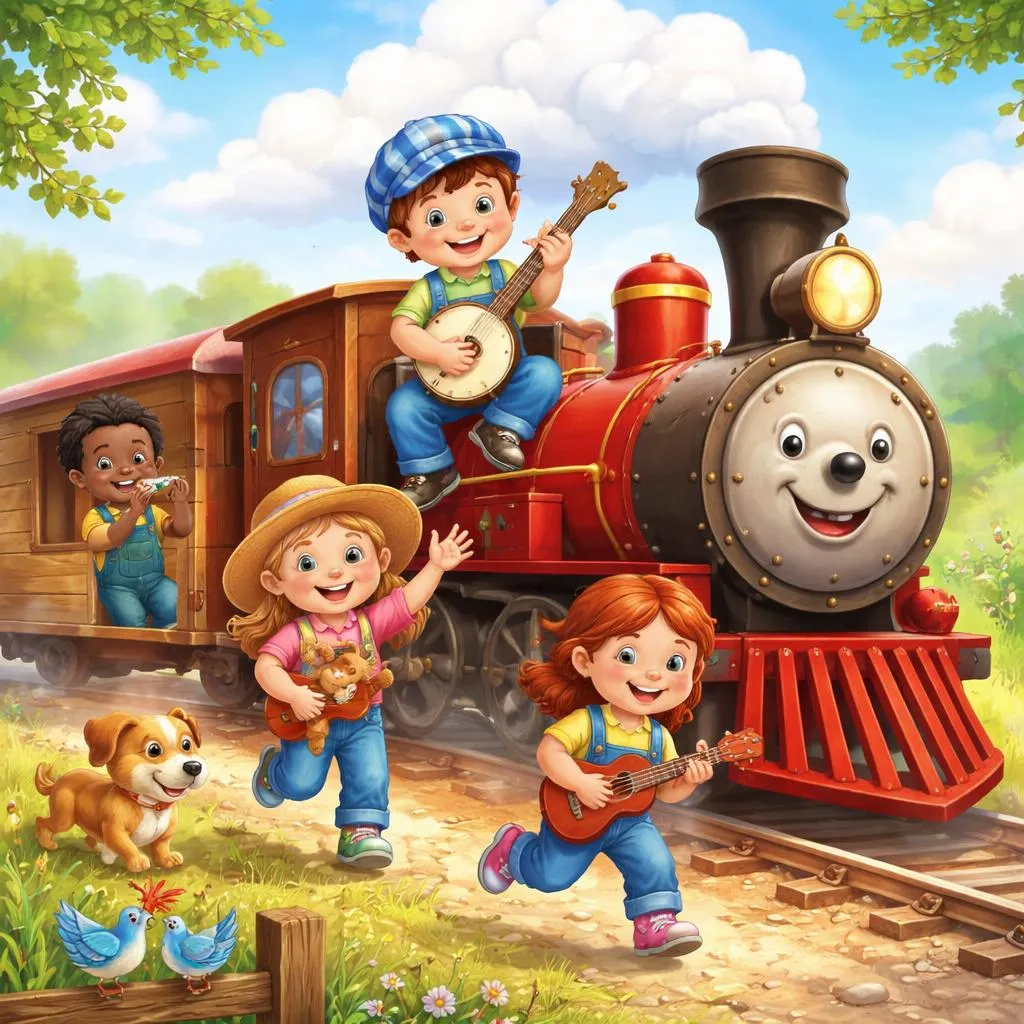

There are some songs that seem to live forever. They get passed down from generation to generation. The tune is catchy. The story is simple. The phrase "I've been working on the railroad" immediately brings a melody to mind. This classic American folk song offers more than just a pleasant tune. It gives us a window into history. It provides rich language opportunities. As teachers, we can use this song to teach vocabulary, contractions, and even a little bit of American culture. Let's explore how to bring this railroad worker's song into our classroom.
What is the "I've Been Working on the Railroad" Rhyme? This is a classic American folk song. It dates back to the late 19th century. The song tells the story of a railroad worker. He is tired from his long days of work. He hears the whistle blowing. He wishes he had more time.
The song has several verses. The most famous part is the chorus about Dinah, someone the worker is calling to. The phrase "I've been working on the railroad" sets the scene. It establishes the setting and the speaker's situation. The song has a steady, rhythmic feel, like the chugging of a train. This rhythm makes it easy for children to learn and sing along.
The Lyrics of the Nursery Rhyme Let's look at the most common version of the lyrics.
I've been working on the railroad, All the livelong day. I've been working on the railroad, Just to pass the time away.
Can't you hear the whistle blowing? Rise up so early in the morn. Can't you hear the captain shouting, "Dinah, blow your horn!"
Dinah, won't you blow? Dinah, won't you blow? Dinah, won't you blow your horn? Dinah, won't you blow? Dinah, won't you blow? Dinah, won't you blow your horn?
Someone's in the kitchen with Dinah, Someone's in the kitchen, I know. Someone's in the kitchen with Dinah, Strumming on the old banjo.
And singing, "Fee, fie, fiddle-ee-i-o, Fee, fie, fiddle-ee-i-o-o-o, Fee, fie, fiddle-ee-i-o, Strumming on the old banjo."
The phrase "I've been working on the railroad" opens the song and sets the tone for the worker's story.
Vocabulary Learning: Words from the Song This song introduces a rich variety of vocabulary.
Railroad: A track made of steel rails for trains to run on.
Livelong: An old-fashioned word meaning "whole" or "entire."
Whistle: A device that makes a loud, high sound. Trains have whistles.
Captain: A leader or boss. On the railroad, the captain gives orders.
Horn: Another word for the train's whistle. "Blow your horn" means sound it.
Kitchen: A room where food is prepared.
Banjo: A musical instrument with a round body and a long neck.
Strumming: Playing a stringed instrument by brushing the strings.
These words paint a picture of life long ago. They describe work, music, and daily activities. The opening line "I've been working on the railroad" introduces the central theme of labor and the industrial age.
Phonics Points: Sounds in the Song The song offers many opportunities for phonics practice.
The "R" Sound: "Railroad" has a strong /r/ sound. So does "rise." We practice this sound. We feel how our tongue curls back.
The "W" Sound: "Working" starts with the /w/ sound. "Whistle" and "won't" also start with /w/. We practice making our lips round like a circle.
The Long "O" Sound: "Blow" has the long /o/ sound. So does "know" and "old." We can feel how our mouth opens and rounds.
The "F" Sound: "Fee, fie, fiddle-ee-i-o" is full of the /f/ sound. This is a fun, bouncy sound to practice.
The repetition in the song gives us many chances to hear these sounds. The phrase "I've been working on the railroad" gives us practice with the /r/ and /w/ sounds right at the beginning.
Grammar Patterns: Language in the Song The song contains several useful grammar patterns.
Contractions: The title uses "I've," which is a contraction of "I have." We explain that we put words together to speak faster. "I have" becomes "I've." We can find other contractions. "Can't" is "cannot." "Won't" is "will not."
Present Perfect Continuous Tense: "I've been working" is a complex tense. It shows an action that started in the past and is still happening. For young learners, we simply explain that it means the worker started working a long time ago and is still working now.
Questions: "Can't you hear?" is a question. We can practice forming questions. We change the word order. "You can hear" becomes "Can you hear?"
Commands: "Blow your horn!" is a command. It tells someone to do something. We practice giving simple commands. "Stand up!" "Clap your hands!"
The opening line "I've been working on the railroad" is a perfect example of the present perfect continuous tense, though we teach it simply as a phrase.
Learning Activities: Bringing the Song to Life Here are some activities to deepen the learning experience.
Activity 1: Train Rhythm Game We form a line like a train. We march around the room. We chant the song with a steady beat. The "engine" leads the way. The "cars" follow. This kinesthetic activity connects the song to the feeling of a moving train.
Activity 2: Whistle Sounds We talk about train whistles. We practice making whistle sounds with our voices. We learn that train whistles use patterns. Long, long, short, long. We practice these patterns. We connect it to the line "Can't you hear the whistle blowing?"
Activity 3: Kitchen Band We talk about the verse with Dinah in the kitchen. We create a "kitchen band" using simple percussion instruments or even pots and spoons. We strum like we are playing the banjo. We sing the "Fee, fie, fiddle-ee-i-o" part together.
Activity 4: Railroad Worker Discussion We talk about what it means to work on the railroad. What jobs did people do? Why was the work hard? Why might someone sing while they work? This connects the song to social studies and history.
Printable Materials: Visuals for the Classroom Printables support the lesson and provide independent practice.
Vocabulary Cards: We create flashcards for key words. Railroad, whistle, captain, horn, kitchen, banjo. Pictures help children remember the meanings.
Sequence Cards: We create cards showing different scenes from the song. The worker on the railroad. The captain shouting. Dinah in the kitchen. Someone playing the banjo. Students put the cards in order as they sing.
Coloring Page: We provide a coloring page showing a train, a railroad track, and a worker. Students can color the scene. They can practice writing the key phrase "I've been working on the railroad" at the bottom.
Educational Games: Making Learning Playful Games turn the song into an interactive experience.
Game 1: Whistle Guessing We make different whistle sounds with our voices or with a real whistle. Students close their eyes. They guess what each sound means. Is it the train coming? Is it time to go? Is it a warning? This builds listening skills.
Game 2: Dinah Says This is a variation of Simon Says using the song. "Dinah says touch your nose." "Dinah says pat your head." "Blow your horn!" (without Dinah says) means students should not move. This game uses the character from the song.
Game 3: Kitchen Band Show Students form small groups. They create their own verse about being in the kitchen. What are they doing? What instrument are they playing? They perform their verse for the class. This encourages creativity and language production.
Game 4: Railroad Obstacle Course We set up a simple obstacle course in the classroom or playground. Students pretend to be trains going through tunnels, over bridges, and around mountains. They chant "I've been working on the railroad" as they move. This combines gross motor skills with the song.
By using these strategies, we transform a historical folk song into a rich learning experience. We explore vocabulary, grammar, phonics, and culture. The worker's song becomes our song. It connects us to the past while building language skills for the future.