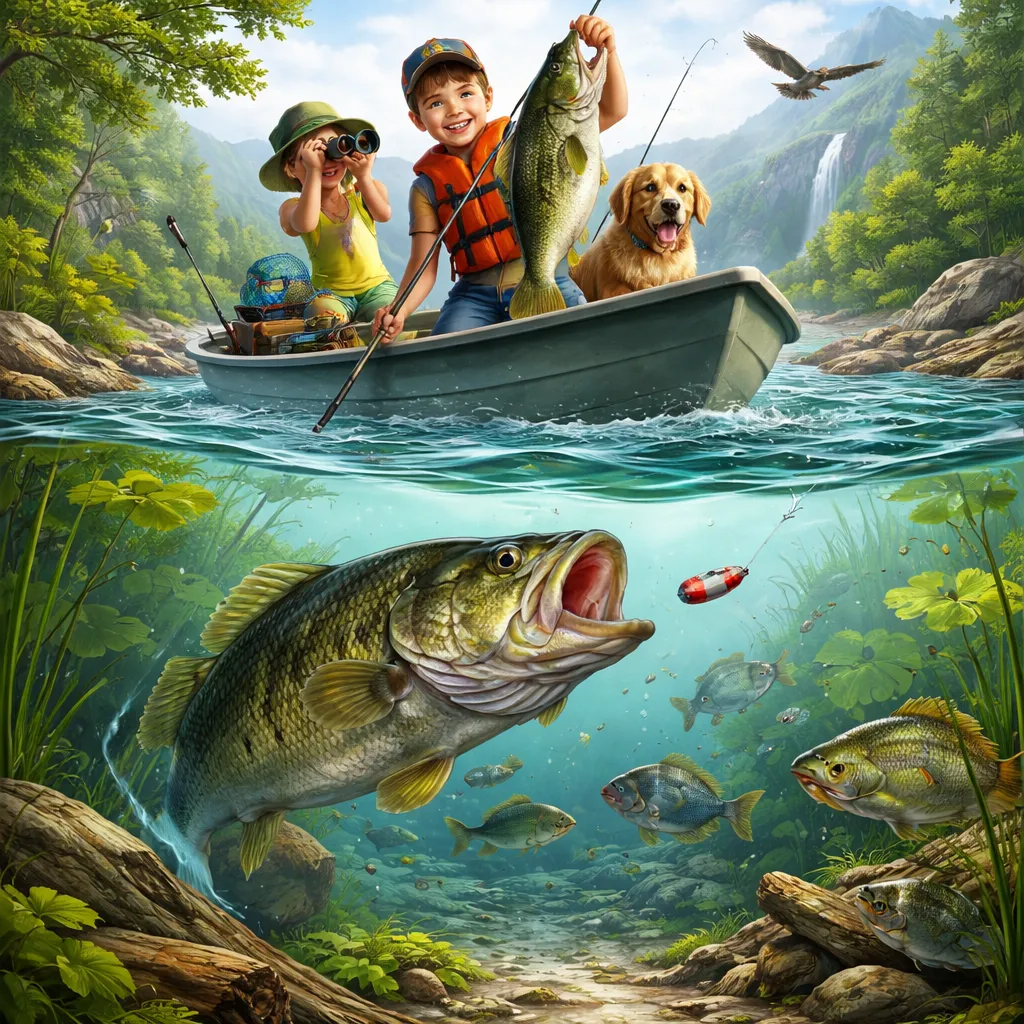

Some fish hide in deep waters. Others swim near the surface. The bass does both. It waits quietly. Then it strikes with speed. For children, learning about Bass opens a window to lakes, rivers, and the art of patience. Parents and children can explore this clever fish together. No fishing pole is needed. Just curiosity and a willingness to watch closely.
The bass is one of the most recognized freshwater fish. It lives in many places. It adapts to different waters. Let us begin our discovery.
What Is This Animal?
A bass is a fish with a sturdy body and a large mouth. Its shape is strong and muscular. Most bass have greenish or brownish backs with dark stripes or spots. Their bellies are lighter. This coloring helps them hide among rocks, plants, and shadows.
Bass live in freshwater lakes, rivers, and ponds. They prefer warm, clear water with plenty of hiding places. Fallen trees, underwater plants, and rocky areas are their favorite spots. They stay near structures where they can wait for food.
Children often connect with bass because of its reputation. Anglers seek it. Nature lovers watch it. Learning about Bass becomes a study of patience, observation, and quiet strength.
English Learning About This Animal
Let us start with the word “bass.” It is pronounced /bæs/. It rhymes with “grass” and “pass.” This is different from the musical word “bass,” which rhymes with “face.” When talking about the fish, the vowel sound is short. Say it together: b-a-ss. A quick, clear sound.
When learning about Bass in English, we meet useful words. Here are a few to explore.
Largemouth – a type of bass with a wide mouth that extends past its eyes.
Structure – an object in the water where fish gather, like logs or rocks.
Ambush – a surprise attack from a hidden position.
Spawning – the time when fish lay and fertilize eggs.
Use these words in simple sentences. “The largemouth bass hides near structure.” “It uses ambush to catch prey.” These sentences help children connect words to real behaviors.
Here is a proverb that fits the bass. “Patience is not simply the ability to wait. It is how we behave while waiting.” Bass wait for hours. They do not move. They watch. This teaches children that waiting can be active. You observe. You prepare. You stay ready.
Another meaningful quote comes from naturalist Henry David Thoreau. He said, “Many men go fishing all of their lives without knowing that it is not fish they are after.” Learning about Bass is not just about facts. It is about connecting with nature. It is about slowing down and noticing small things.
Animal Facts and Science Knowledge
Bass are ray-finned fish. They belong to the family Centrarchidae, which includes sunfish and crappie. The two most common types are largemouth bass and smallmouth bass. Largemouth bass prefer warmer, slower water. Smallmouth bass like cooler, faster rivers.
Bass are carnivores. They eat smaller fish, insects, crayfish, and frogs. Young bass eat tiny aquatic insects. As they grow, they hunt larger prey. Bass use ambush. They hide in cover and wait. When prey comes close, they strike with a fast, powerful motion.
Bass have excellent vision. Their eyes can see in murky water. They also detect vibrations through their lateral line. This system of sensory cells runs along their sides. It helps them feel movement in the water.
Most bass live alone. They are territorial. During spawning season, males build nests in shallow water. They guard the eggs and young fry. This parental care is unusual among fish. It shows a strong protective instinct.
Bass can live for over ten years in the wild. Their growth depends on water temperature and food availability. In warm, rich waters, they grow faster. In cooler waters, they grow slower but often live longer.
How to Interact With This Animal Safely
In the wild, bass are not dangerous to humans. They do not attack people. If you see a bass while wading or swimming, stay calm. The fish will swim away. Do not try to catch it with your hands. Its gill plates have sharp edges.
If your family enjoys fishing, teach children how to handle bass with care. Use wet hands to hold the fish. Support the body. Avoid squeezing. Remove hooks gently. Release the fish back into the water as soon as possible. This helps the fish survive after catch.
Teach children not to touch bass nests during spawning season. Male bass guard their eggs fiercely. Disturbing a nest can harm the next generation. Observing from a distance teaches respect for wildlife.
In areas where bass are common, avoid throwing trash into lakes or rivers. Fishing line, plastic, and other waste can harm bass and other animals. Leaving nature cleaner than you found it is a good habit for young learners.
What Can We Learn From This Animal
Bass teach us the value of patience. They wait in one spot for long periods. They do not chase. They let food come to them. Children can learn that waiting does not mean being idle. You can watch, think, and prepare while you wait.
Bass also show us the importance of knowing your surroundings. They stay near structures where they can hide and hunt. They use their environment wisely. Children can learn to notice details around them. Paying attention to where you are helps you make good choices.
Another lesson is protection. Male bass guard their nests. They stay close to their young. This teaches children that caring for others is a form of strength. Helping a sibling, protecting a friend, or standing by family matters.
Bass are also adaptable. They live in lakes, rivers, and ponds. They adjust to different conditions. This reminds children that flexibility is useful. New situations become easier when we stay calm and adapt.
Fun Learning Activities
Turn learning about Bass into playful exploration. Here are a few simple ideas.
Build a Hidden Bass
Draw a bass shape on paper. Color it green or brown with darker stripes. Cut it out. Hide it behind a book or under a cushion. Let your child find it. Explain that bass hide near structures in the water. This game teaches observation.
Create an Ambush Story
Ask your child to imagine being a bass hiding under a log. What do you see swimming by? What do you wait for? Write or draw the story together. Use new words like ambush, structure, and spawning.
Play the Waiting Game
Set a timer for two minutes. Sit together in silence. Watch a plant, a window, or a pet. After the time ends, talk about what you noticed. Explain that bass wait patiently too. This builds focus and calm observation.
Make a Paper Plate Bass
Cut a paper plate into an oval shape. Let your child paint it green or brown. Add a large mouth with paper. Draw an eye. Talk about how the largemouth bass got its name.
Watch and Wonder
Find a short video of bass swimming in a lake or river. Watch together. Pause and ask open questions. “What do you notice about how it moves?” “Why do you think it stays near that log?” Let your child lead the conversation.
Learning about Bass takes us into quiet waters. It is a world where patience wins and observation matters. This fish does not rush. It watches. It waits. It acts when the time is right. As parents and children explore together, they build language, knowledge, and a shared sense of calm. The bass rests near the fallen log, still and alert. And in that quiet moment, young learners discover something lasting—that sometimes the best way to move forward is to wait and watch.