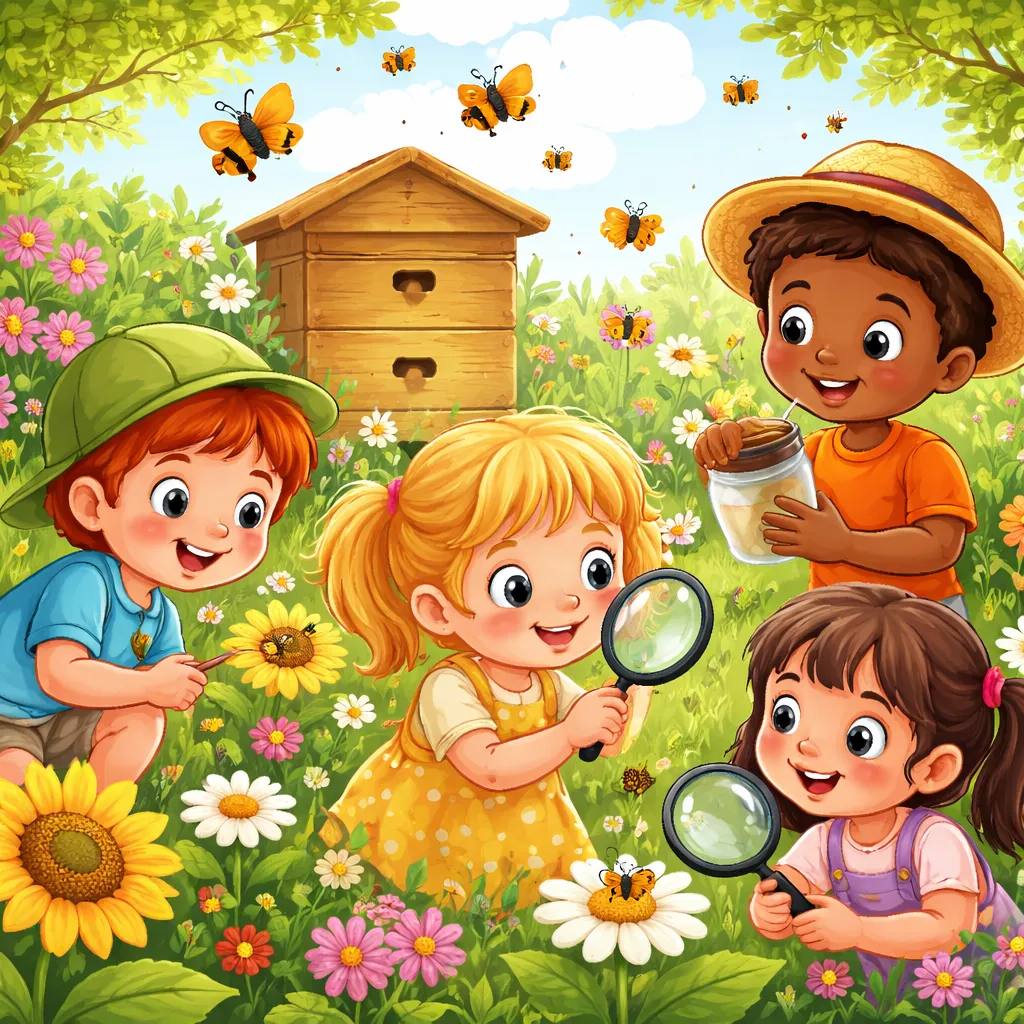

What Is This Animal?
A bee is a small insect that flies from flower to flower. It has six legs and four wings. Its body is fuzzy and often yellow with black stripes. Bees make a buzzing sound when they fly. This sound comes from their wings moving very fast.
Bees are known for making honey. They collect nectar from flowers. They take this nectar back to their home. Inside the hive, they turn it into honey. Honey is food for the bee colony. People also enjoy eating honey. Bees work together as a team.
There are many kinds of bees. Honeybees live in large groups. Bumblebees are bigger and fuzzier. Some bees live alone. They do not make honey. But all bees help flowers grow. They carry pollen from one flower to another. This process is called pollination.
Bees are important for the world. They help plants make fruits and seeds. Without bees, we would have fewer apples, berries, and vegetables. For children, bees are fascinating creatures. They show us how small animals can do big things.
English Learning About This Animal
Let us learn the English word bee. We say it like this: /biː/. The sound is long and clear. It sounds exactly like the letter B. The b starts with the lips together. The ee comes from the front of the mouth. Say it together: bee. Now say it three times. Bee. Bee. Bee.
Now let us learn words about a bee’s body. The head holds the eyes and antennae. The antennae help the bee feel and smell. The thorax is the middle part where wings and legs attach. The abdomen is the striped back part. The stinger is at the end of the abdomen. The wings are thin and clear.
There is a wise English saying about bees. It goes, “The bee is more honored than other animals, not because she labors, but because she labors for others.” This means working to help others is a special thing. Another simple proverb is, “A bee is never as busy as it seems.” This reminds us that even when we are busy, we can still find time for what matters.
These English words give children language to explore nature. When they say antennae, they learn a precise word. When they say stinger, they understand a part of the bee. Parents can practice these words while looking at pictures. Point to each part. Say the word together. This builds vocabulary and curiosity.
Animal Facts and Science Knowledge
Bees belong to the insect group called Hymenoptera. This group also includes ants and wasps. Bees are insects. They have three body parts. They have six legs. They have two pairs of wings. Their bodies are covered in tiny hairs. These hairs collect pollen.
Bees live in colonies. A honeybee colony has three types of bees. The queen is the largest. She lays all the eggs. Worker bees are female. They do all the work. They collect food, build the hive, and care for young bees. Drones are male. Their job is to mate with the queen. A single hive can hold up to sixty thousand bees.
Bees communicate with each other. They perform a dance called the waggle dance. A worker bee dances to show others where to find flowers. The direction of the dance tells the location. The speed tells the distance. This is one of the most amazing ways animals share information.
Bees eat nectar and pollen. Nectar gives them energy. Pollen provides protein. Bees collect nectar with their long tongue. They store it in a special honey stomach. Back at the hive, they pass it to other bees. The bees fan their wings to evaporate water. This turns nectar into honey.
Bees have special abilities. They can see ultraviolet light. This helps them find patterns on flowers that humans cannot see. They also remember where good flowers are. A bee can visit up to two thousand flowers in one day. Their wings beat about two hundred times per second. This creates the familiar buzzing sound.
How to Interact With This Animal Safely
Bees are wild insects. They usually do not sting unless they feel scared. If you see a bee, stay calm. Do not wave your arms. Do not try to swat it. The bee is looking for flowers. It is not looking for people. If you stay still, the bee will fly away.
Teach children to watch bees from a distance. Observe them on flowers. Notice how they move from one bloom to the next. Do not try to catch bees. Do not put them in jars. Bees need to return to their hive. If a bee lands on you, stay very still. It will leave when it realizes you are not a flower.
If a child is allergic to bee stings, take extra care. Keep an allergy kit nearby when playing outside. Teach children to tell an adult immediately if a bee lands on them. Staying calm is the best way to avoid a sting.
If a bee is inside the house, open a window. Turn off the lights. The bee will fly toward the light. Do not try to kill it. Bees are important for nature. Killing one bee can harm the whole colony. If you find a bee on the ground that looks tired, you can help. Mix a little sugar with water. Place a drop near the bee. Let it drink and rest.
Wear shoes when walking in grass. Bees sometimes visit clover flowers. Stepping on a bee can cause a sting. By being careful, we can share space with bees safely. This teaches children to respect small creatures.
What Can We Learn From This Animal
Bees teach us about teamwork. Every bee in the hive has a job. They work together to feed the colony and raise young bees. No single bee can do everything alone. Children can learn this lesson. In families, at school, and in games, working together makes things better. Everyone has something to offer.
Bees teach us to be hardworking. Worker bees fly thousands of miles in their lifetime. They collect nectar one flower at a time. Small efforts add up to something big. Children learn that doing a little every day leads to great results. Practicing a skill, helping with chores, or being kind each day builds good habits.
Bees teach us to share. Bees bring food back to the hive. They share it with others. They do not keep it all for themselves. Children can learn to share with friends and family. Sharing makes the whole group stronger. It builds trust and friendship.
Bees teach us to appreciate nature. Bees help flowers grow. Flowers give us beauty and food. When we protect bees, we protect the earth. Children learn that even small creatures matter. Every living thing has a role. Caring for bees means caring for the world around us.
Fun Learning Activities
Let us make learning about bee fun. One activity is the bee buzz game. Ask your child to fly around like a bee. Make buzzing sounds with your voice. Land on flowers you draw on paper. Say “bee buzzes” and “bee lands on a flower.” This builds movement and sound awareness.
Another activity is making a bee hotel. Take a small box. Fill it with hollow sticks or bamboo pieces. Place it in a quiet spot outside. Solitary bees will use it to rest and lay eggs. Check it together. See if any bees visit. This teaches children about caring for insects.
Draw a bee and label its parts. Draw the head, antennae, thorax, abdomen, wings, and legs. Write the words next to each part. Say them aloud. For younger children, draw the bee first. Let them point to the parts as you say the words.
Create a simple story about a bee’s day. Ask your child where the bee goes. What flowers does it visit? Does it tell other bees about the flowers? Write a few sentences together. Let your child draw pictures for the story. Read it aloud.
Taste different kinds of honey together. Talk about where honey comes from. Explain that bees make honey from flower nectar. Use words like “nectar,” “hive,” and “honey.” This sensory activity connects language to real experience.
Through these simple activities, children build language and understanding. Learning about bee becomes a shared adventure. Each fact, each observation, and each gentle interaction adds to a child’s growing world. Bees, with their busy lives and gentle teamwork, leave a lasting lesson about working together, caring for nature, and finding joy in small, meaningful efforts.