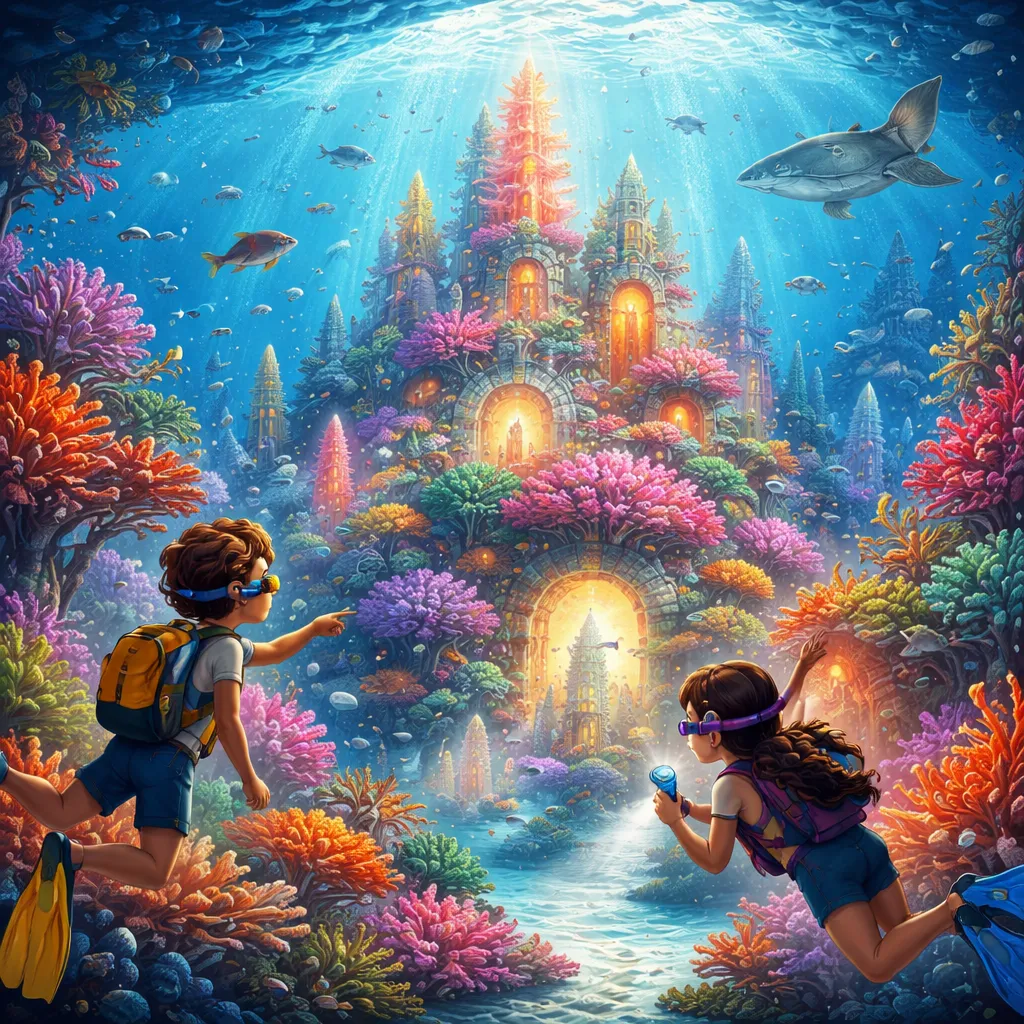

Some animals move through the ocean. Others build cities. Coral builds. It creates structures so large they can be seen from space. For children, learning about Coral opens a window to one of the most remarkable partnerships in nature. Parents and children can explore this living architecture together. No snorkel is required. Just curiosity about the tiny animals that build the ocean’s busiest neighborhoods.
Coral looks like rock. It feels like rock. But it is alive. Let us begin our journey into the world of these incredible builders.
What Is This Animal?
Coral is not a single animal. It is a colony of tiny animals called polyps. Each polyp is soft and small, no bigger than a grain of rice. Thousands of polyps live together. They build hard skeletons around themselves. These skeletons pile up over time. They create massive structures called coral reefs.
Coral polyps look like tiny sea anemones. They have a ring of tentacles around their mouth. They use these tentacles to catch food at night. During the day, they pull their tentacles in and look like small bumps on the reef.
Children often find coral fascinating because it looks like both rock and living creature. Learning about Coral becomes an exploration of how tiny animals work together to create something enormous.
English Learning About This Animal
Let us begin with the word “coral.” It is pronounced /ˈkɔːrəl/. Say it with your child: cor-al. Two syllables. The first part rhymes with “door.” The second part sounds like “al” in “pal.” The word comes from ancient Greek and Latin roots meaning “small stone.”
When learning about Coral in English, we meet words about building and partnership. Here are a few to share.
Polyp – a tiny individual coral animal.
Reef – a ridge of coral rock near the water surface.
Symbiosis – a close, long-term partnership between different species.
Zooxanthellae – tiny algae that live inside coral polyps.
Use these words in simple sentences. “Each coral polyp is a tiny animal.” “Zooxanthellae give coral its color.” These sentences help children understand the complex life of coral.
Here is a proverb that fits coral’s way of life. “United we stand, divided we fall.” Coral polyps live together. They build together. Alone, a single polyp cannot build a reef. Together, they create cities. This teaches children that teamwork creates what one cannot build alone.
Another meaningful thought comes from marine biologist Sylvia Earle. She said, “No water, no life. No blue, no green.” Coral reefs depend on clean water. They support countless other species. This reminds children that everything in nature connects.
Animal Facts and Science Knowledge
Corals belong to the phylum Cnidaria. This group includes jellyfish and sea anemones. Corals are animals, not plants. They are related to creatures that have stinging cells. Coral polyps use stinging cells to catch tiny prey.
Most reef-building corals have a symbiotic relationship with zooxanthellae. These are microscopic algae that live inside the coral’s tissues. The algae make food through photosynthesis. They share this food with the coral. The coral provides the algae with a safe home. This partnership allows coral to build reefs in clear, sunlit water.
Corals eat tiny animals called zooplankton. At night, polyps extend their tentacles. They sting passing plankton. They pull the food into their mouths. Some corals also absorb nutrients from the water.
Corals reproduce in two ways. They can reproduce sexually by releasing eggs and sperm into the water. This usually happens once a year, often after a full moon. The fertilized eggs become larvae that drift before settling. Corals also reproduce asexually by budding. New polyps grow from existing ones. This builds the colony.
Coral reefs are the largest living structures on Earth. The Great Barrier Reef stretches over 1,400 miles. It is visible from space. Reefs cover less than one percent of the ocean floor. Yet they support twenty-five percent of all marine species. They are the cities of the sea.
Coral comes in many colors. The colors come from the zooxanthellae. When water gets too warm, corals expel these algae. They turn white. This is called bleaching. If the water cools, the algae may return. If not, the coral can die.
How to Interact With This Animal Safely
Corals are living animals. They are very fragile. Even a light touch can damage them. If you visit a coral reef while snorkeling or diving, never touch the coral. Do not stand on it. Do not kick it with fins. Coral polyps have thin skin over hard skeleton. Touching them kills the polyps.
If your family visits the beach near a reef, wear reef-safe sunscreen. Some chemicals in sunscreen harm coral. Look for mineral-based sunscreens that are safe for marine life.
Never break off pieces of coral to take home. Coral is a protected species in many places. Removing it damages the reef. Take only pictures. Leave only bubbles.
If you cannot visit a reef, you can still appreciate coral. Many public aquariums have coral exhibits. Observe from a distance. Do not tap the glass. Ask questions. Learn how aquariums care for these delicate animals.
Teach children that coral reefs need our protection. Climate change, pollution, and overfishing threaten reefs worldwide. Small actions matter. Reduce plastic use. Conserve water. Choose sustainable seafood. Every choice helps.
What Can We Learn From This Animal
Coral teaches us about the power of partnership. Polyps and algae live together. Each gives something. Each receives something. Children can learn that working together creates strength. Sharing skills and helping others benefits everyone.
Coral also shows us that small things can build great things. A single polyp is tiny. Millions together build mountains. Children can learn that their small actions matter. Kind words, helpful deeds, and steady effort add up over time.
Another lesson is resilience. Corals face storms, predators, and changing water. They can recover if conditions improve. Children can learn that challenges come. Recovery is possible. Rest and care help healing.
Coral teaches us about home. Reefs provide shelter for countless creatures. A quarter of ocean species live in these structures. Children can learn that creating safe spaces for others is important. Being a place where others feel safe is a gift.
Fun Learning Activities
Turn learning about Coral into creative discovery. Here are a few simple ideas.
Make a Coral Colony
Cut small pieces of paper or use playdough to create polyps. Arrange them in clusters. Glue or press them together. Talk about how many polyps build one colony.
Create a Reef Story
Ask your child to imagine being a tiny coral polyp. You build a skeleton. More polyps join. Soon, fish arrive. What happens next? Write or draw the story together. Use new words like polyp, reef, and symbiosis.
Play the Partnership Game
Pair up with your child. One person pretends to be a coral polyp. The other pretends to be algae. Move together. Talk about what each gives to the other. This movement game builds understanding through play.
Draw a Coral City
Use crayons or markers to draw an underwater city made of coral. Add fish, crabs, and other animals. Talk about why so many creatures live in reefs.
Watch and Wonder
Find a short video of a coral reef teeming with life. Watch together. Pause and ask open questions. “What do you notice about the shapes?” “Why do you think so many fish live here?” Let your child share observations freely.
Learning about Coral takes us to the busiest neighborhoods in the ocean. It is a world of tiny animals building giant structures. Polyps work together. Algae share food. Fish find shelter. This underwater city thrives on partnership. As parents and children explore together, they build language, knowledge, and a shared appreciation for the architects of the sea. The coral polyp extends its tentacles in the night, feeding, building, growing. And in that tiny act, young learners discover something profound—that great things begin with small ones, and the strongest cities are built by those who work together.