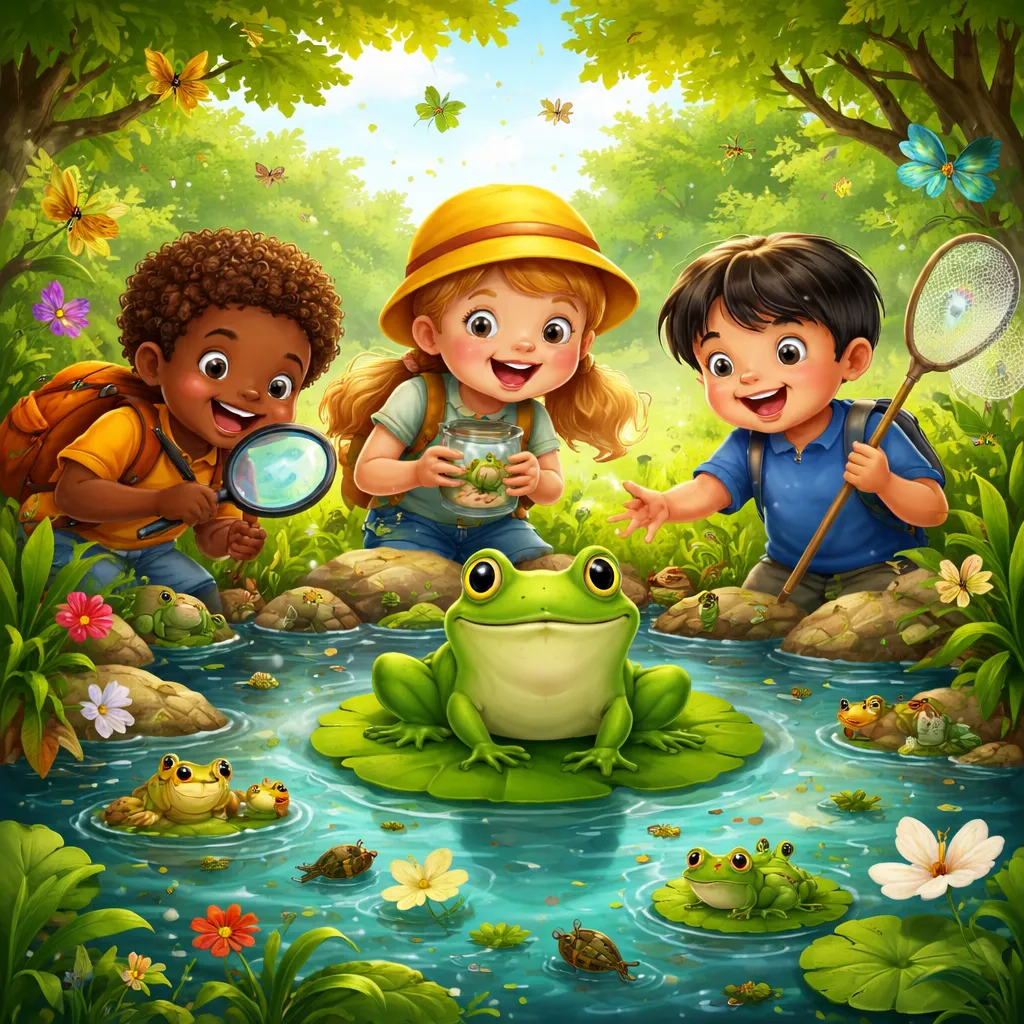

What Is This Animal?
A frog is a small animal that lives in water and on land. It has smooth, wet skin. It does not have a tail. Frogs have strong back legs. They use these legs to jump very far. Frogs also have big eyes. Their eyes sit on top of their heads. This helps them see above water when they swim.
Frogs are amphibians. This word comes from Greek. It means “double life.” Frogs begin life in the water. Later, they grow and live on land. This makes them special. Many children first meet frogs in ponds or gardens. Frogs are gentle. They do not chase people. They prefer to hide.
Frogs come in many colors. Some are green or brown. Others are bright red, blue, or yellow. Bright colors warn other animals to stay away. Frogs are found all over the world. They live in forests, swamps, and even near houses. For children, frogs are one of nature’s most interesting friends.
English Learning About This Animal
Let us learn the English word frog. We say it like this: /frɒɡ/ or /frɔːɡ/. The sound fr uses your lips and teeth. The o is short, like in “hot.” The g is a hard sound. You can practice by saying “f-r-o-g” slowly. Then say it faster. Try three times: frog, frog, frog.
Now let us learn words about a frog’s body. The head holds its eyes and mouth. The eyes are large and round. The legs are long and strong. The feet have webbing. Webbing is skin between the toes. It helps frogs swim. The skin is smooth and wet. The belly is often soft and light in color.
There is a famous English saying about frogs. It comes from Aesop’s Fables. The story says, “The frog in the well knows nothing of the great ocean.” This means some people only see a small part of the world. It reminds us to stay curious. We can learn about things beyond our home. Another simple sentence is, “A frog does not drink up the pond in which it lives.” This teaches us to use what we need and respect our home.
These English words and sentences help children build language. When children say these words, they connect sounds to meaning. Learning about frog vocabulary makes English feel natural. Parents can say the words together. Point to pictures. Repeat the sounds. This creates a gentle learning moment.
Animal Facts and Science Knowledge
Frogs belong to the animal group called amphibians. This group also includes toads and salamanders. Amphibians are vertebrates. They have a backbone. They are cold-blooded. Their body temperature changes with the air or water around them.
Frogs live near water. They need moisture to keep their skin wet. Most frogs live in forests or wetlands. Some live in trees. Others live underground. Frogs eat insects. They catch flies, mosquitoes, and spiders. A frog uses its sticky tongue. The tongue snaps out fast. It pulls the food back into its mouth. Frogs do not chew. They swallow their food whole.
A frog’s life cycle has four stages. It starts as an egg. The egg floats in water. A tadpole hatches from the egg. The tadpole has a tail and lives only in water. It breathes with gills. Then legs begin to grow. The tail gets smaller. Finally, the froglet becomes an adult frog. It can now live on land. This process is called metamorphosis.
Frogs have special abilities. They can jump twenty times their body length. Their eyes help them swallow. When a frog eats, its eyes pull down into its mouth. This pushes the food down. Frogs also breathe through their skin. This is called cutaneous respiration. They can stay underwater longer because of this.
Some frogs make sounds. Male frogs call to attract females. Each frog species has a unique call. Some sound like chirps. Others sound like deep croaks. Children love listening to frog sounds at night. It is one way to know frogs are nearby.
How to Interact With This Animal Safely
Frogs are gentle creatures. Children often want to touch them. It is important to be safe and kind. If you see a frog outside, watch it quietly. Do not chase it. Frogs get scared easily. Running after a frog can hurt it. The frog might drop to the ground in fear.
If a child wants to hold a frog, an adult should help first. Only hold a frog if your hands are clean and wet. Dry hands can harm a frog’s skin. Frogs absorb things through their skin. Soap or lotion can make them sick. Hold the frog gently. Do not squeeze. Let it sit in your open palm. Watch it for a short time. Then return it to where you found it.
Never take a wild frog home. Frogs need their natural home to live. They need the right food and water. Keeping a wild frog can make it very sad and sick. If your family wants a pet frog, learn about it first. Some frogs live well in tanks. But they need special care. They need the right temperature, food, and clean water.
Teach children to respect frogs. Do not throw things at them. Do not put them in closed containers. Frogs need air and space. If you find a frog in your yard, make sure it has a safe path to water. Do not use chemicals near its home. This keeps the frog healthy. Interacting with frogs teaches children responsibility. It shows them how to treat small creatures with care.
What Can We Learn From This Animal
Frogs teach us patience. A frog sits still for a long time. It waits for its food. It does not rush. Children can learn to wait calmly. Patience helps when learning new things. It helps when solving problems. Like a frog, we can watch and wait for the right moment.
Frogs also teach us about change. They start as eggs. Then they become tadpoles. Then they grow legs and lose their tails. Finally, they become adult frogs. This shows that change is natural. Growing up takes time. Each step is important. Children grow and learn new skills every day. The frog reminds us that change can be beautiful.
Frogs teach us to listen. A frog makes sounds to communicate. When we listen to frog calls, we learn about the world. Listening helps us understand others. It helps us learn in school and at home. When children listen carefully, they notice more things around them.
Frogs show us how to protect our planet. Frogs need clean water and air. When frogs are healthy, the environment is healthy. Scientists call frogs “indicator species.” They tell us if nature is doing well. By caring for frogs, we learn to care for Earth. Children can keep water clean and pick up trash. Small actions make a big difference.
Fun Learning Activities
Let us make learning about frog fun at home. One simple activity is frog jumping. Ask your child to squat down like a frog. Then jump forward. Count how many jumps it takes to reach a spot. While jumping, say “frog jumps high” or “frog jumps far.” This activity builds movement and language together.
Another activity is drawing a frog. Give your child paper and crayons. Ask them to draw a frog’s body parts. Label them together. Write “head,” “eyes,” “legs,” and “belly.” Say the words aloud while drawing. This helps with vocabulary and memory.
You can also make a frog story. Ask your child what the frog does all day. Where does it go? What does it eat? Write the story together. Use short sentences. Let your child draw pictures for each page. Reading the story aloud builds confidence.
Listen to frog sounds online or in nature. Ask your child to describe the sound. Is it loud or soft? Does it sound like a laugh or a chirp? Try to copy the sound together. This playful activity sharpens listening skills.
For a quiet activity, create a simple life cycle chart. Draw four circles. In each circle, draw an egg, a tadpole, a froglet, and an adult frog. Use arrows to connect them. Talk about each stage. Use words like “egg,” “tadpole,” and “frog.” This helps children understand change and growth.
These activities do not feel like lessons. They feel like play. But children learn English words, science facts, and gentle values along the way. Parents can join in. Laugh together. Ask questions. Let the child lead. This makes learning about frog a shared adventure.
Frogs give us many reasons to explore language and nature. Through careful observation, kind interaction, and creative play, children gain new knowledge. They grow in curiosity and respect for living things. Every small moment spent learning about frog becomes a step toward deeper understanding.