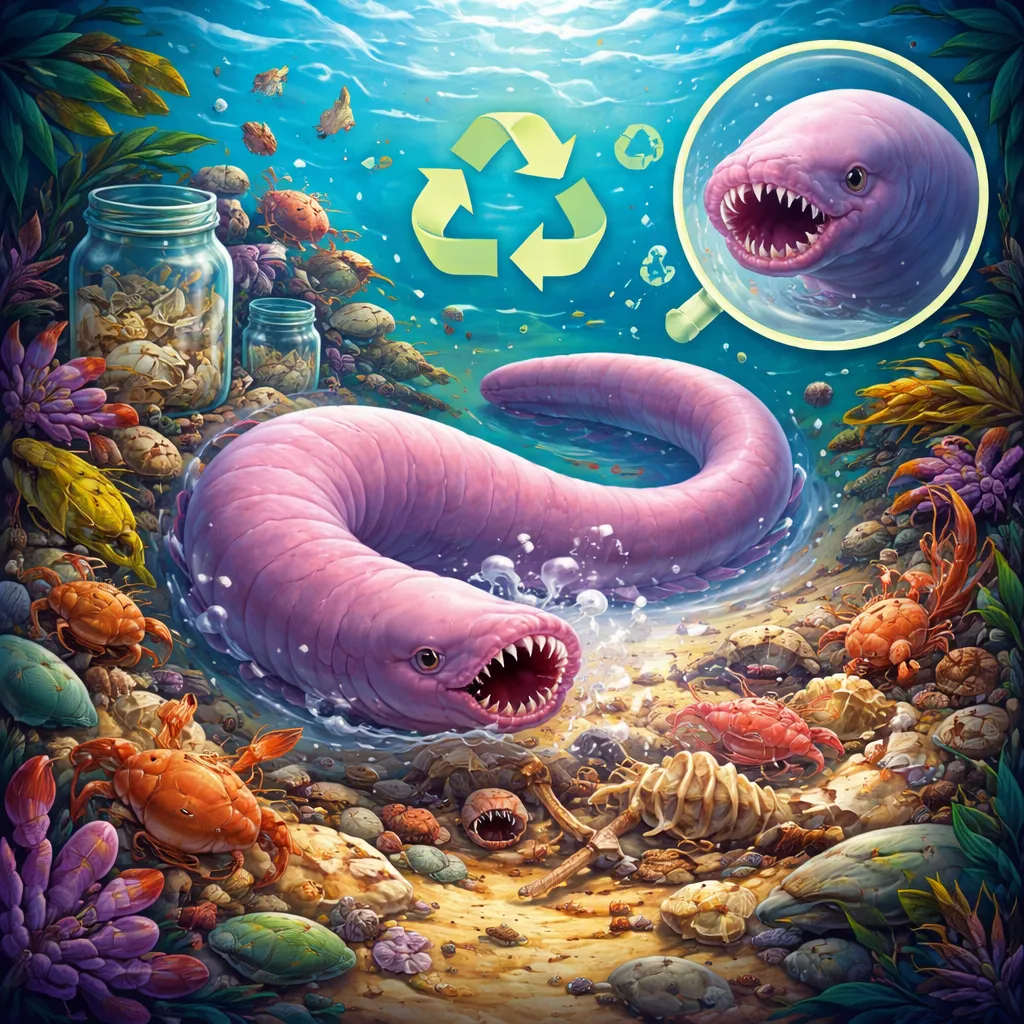

Some animals are famous for their speed. Others are known for their beauty. The hagfish is famous for something else. It cleans the ocean floor. It produces slime. It has survived for over 300 million years. For children, learning about Hagfish opens a window to one of the ocean’s most unusual and important creatures. Parents and children can explore this ancient recycler together. No deep-sea expedition is required. Just curiosity about an animal that does things its own way.
The hagfish is not pretty by human standards. But it plays a vital role. Let us begin our journey into the world of this extraordinary survivor.
What Is This Animal?
A hagfish is a long, slender fish with smooth, scaleless skin. Its body is pinkish, gray, or brown. It has no jaws. Instead, it has a tooth-like structure on its tongue for scraping food. Its mouth is surrounded by short tentacles that help it find food in the dark.
Hagfish live on the ocean floor. They inhabit cold waters around the world. They burrow into mud and sand. They are scavengers. They feed on dead and dying animals that sink to the seafloor. Without hagfish, the ocean floor would be covered in rotting carcasses.
Children often find hagfish strange and intriguing. Their ability to produce slime sets them apart from almost every other animal. Learning about Hagfish becomes a lesson in how even the most unusual creatures serve a purpose.
English Learning About This Animal
Let us begin with the word “hagfish.” It is pronounced /ˈhæɡfɪʃ/. Say it with your child: hag-fish. One word. Two syllables. The first part rhymes with “bag.” The second part rhymes with “dish.” The name combines “hag,” meaning an old or ugly woman, with “fish.” The name reflects the animal’s unusual appearance.
When learning about Hagfish in English, we meet words about recycling and defense. Here are a few to share.
Scavenger – an animal that eats dead or decaying matter.
Slime – a thick, slippery substance.
Knot – a loop formed by tying or twisting.
Detritus – waste or debris, especially from dead organisms.
Use these words in simple sentences. “Hagfish are scavengers of the deep.” “They tie themselves into knots to remove slime.” These sentences help children understand the fish’s unique behaviors.
Here is a proverb that fits the hagfish. “One man’s trash is another man’s treasure.” Hagfish feast on what other animals leave behind. They turn death into food. This teaches children that waste can become resource. Nothing in nature goes unused.
Another meaningful thought comes from naturalist John Muir. He said, “When we try to pick out anything by itself, we find it hitched to everything else in the universe.” Hagfish connect to everything on the ocean floor. Their work affects the whole ecosystem. This reminds children that all creatures are linked.
Animal Facts and Science Knowledge
Hagfish belong to the class Myxini. They are among the most primitive living vertebrates. Vertebrates are animals with backbones. Hagfish have a backbone made of cartilage. They have no true jaws. Their skeleton is simple. They have existed for over 300 million years. They swam in oceans before dinosaurs appeared.
Hagfish have a unique defense. When threatened, they release a protein that mixes with seawater. This creates massive amounts of slime. A single hagfish can fill a bucket with slime in minutes. The slime clogs the gills of predators. It suffocates attackers. The hagfish then ties its body into a knot. It slides the knot down its body to wipe off the slime. It can then swim away clean.
Hagfish are scavengers. They find dead fish, whales, and other animals that sink to the seafloor. They enter the body through any opening. They use their tooth-like tongue to scrape flesh. They can eat a dead whale from the inside out. This cleanup service keeps the ocean floor healthy.
Hagfish have four hearts. They have no stomach. Their digestion happens in their intestines. They can absorb nutrients directly through their skin. Their blood contains the same salt concentration as seawater. This helps them survive in deep ocean conditions.
Hagfish are blind. They have eyes but cannot form images. They rely on their sense of smell and touch. Their tentacles around the mouth sense chemical signals. They find dead animals from great distances.
How to Interact With This Animal Safely
Hagfish live on the deep ocean floor. Most people will never encounter one in the wild. They live at depths of hundreds to thousands of feet. Only deep-sea submersibles and fishing trawls bring them to the surface.
If you see hagfish in a public aquarium, observe from a distance. Some aquariums display them. Do not tap the glass. Do not put hands in the water. Their slime defense works quickly. Slime in an aquarium can harm other animals.
Hagfish are not pets. They require deep, cold water and specialized conditions. They are not suitable for home aquariums. Their feeding habits also make them difficult to keep. Most families should enjoy hagfish through videos, books, and aquarium visits.
In some parts of the world, people eat hagfish. They are called “slime eels” in some cultures. If you encounter hagfish as food, understand that they are harvested sustainably in some regions. Teaching children about food sources connects them to the ocean.
What Can We Learn From This Animal
Hagfish teach us that every creature has value. They are not beautiful. They are not fast. But they keep the ocean clean. Children can learn that importance is not about appearance. Doing necessary work matters more than being noticed.
Hagfish also show us the power of defense. They do not fight. They do not run fast. They have a unique protection that works. This teaches children that finding your own way to stay safe is important. You do not have to do what everyone else does.
Another lesson is resilience. Hagfish have survived for hundreds of millions of years. They endured mass extinctions that killed dinosaurs and many other animals. This teaches children that adaptability and simplicity can carry you through hard times.
Hagfish teach us about recycling. They turn death into life. They clean up what others leave behind. Children can learn that taking care of waste, helping clean up, and being responsible matter in their own communities.
Fun Learning Activities
Turn learning about Hagfish into creative discovery. Here are a few simple ideas.
Make Slime Craft
Mix cornstarch and water in a bowl. Let your child feel the mixture. Explain that hagfish slime is different but works as a defense. Talk about why slime helps them survive.
Create a Knot Game
Give your child a long ribbon or piece of yarn. Ask them to tie it in a knot. Then slide the knot along the ribbon. Explain that hagfish tie themselves in knots to remove slime. This activity builds fine motor skills.
Write a Cleanup Story
Ask your child to imagine being a hagfish finding a dead whale on the ocean floor. What happens next? How does the hagfish help the ocean? Write or draw the story together. Use new words like scavenger, slime, and detritus.
Play the Scavenger Game
Hide small objects around a room. Ask your child to find them. Explain that hagfish find dead animals in the dark ocean. Their sense of smell guides them. This movement game builds observation skills.
Watch and Wonder
Find a short video of hagfish feeding or producing slime. Watch together. Pause and ask open questions. “What do you notice about how it moves?” “Why do you think slime works as a defense?” Let your child share observations freely.
Learning about Hagfish takes us to the dark ocean floor. It is a world of scavengers and recyclers. This ancient fish has no jaws, no scales, no beauty by human standards. But it has survived for 300 million years. It cleans the ocean. It turns death into life. As parents and children explore together, they build language, knowledge, and a shared appreciation for nature’s unsung heroes. The hagfish burrows in the mud, waiting for the next carcass to fall from above. And in that patient waiting, young learners discover something profound—that every creature has a purpose, even those we do not admire at first glance, and the health of the whole depends on the work of the overlooked.