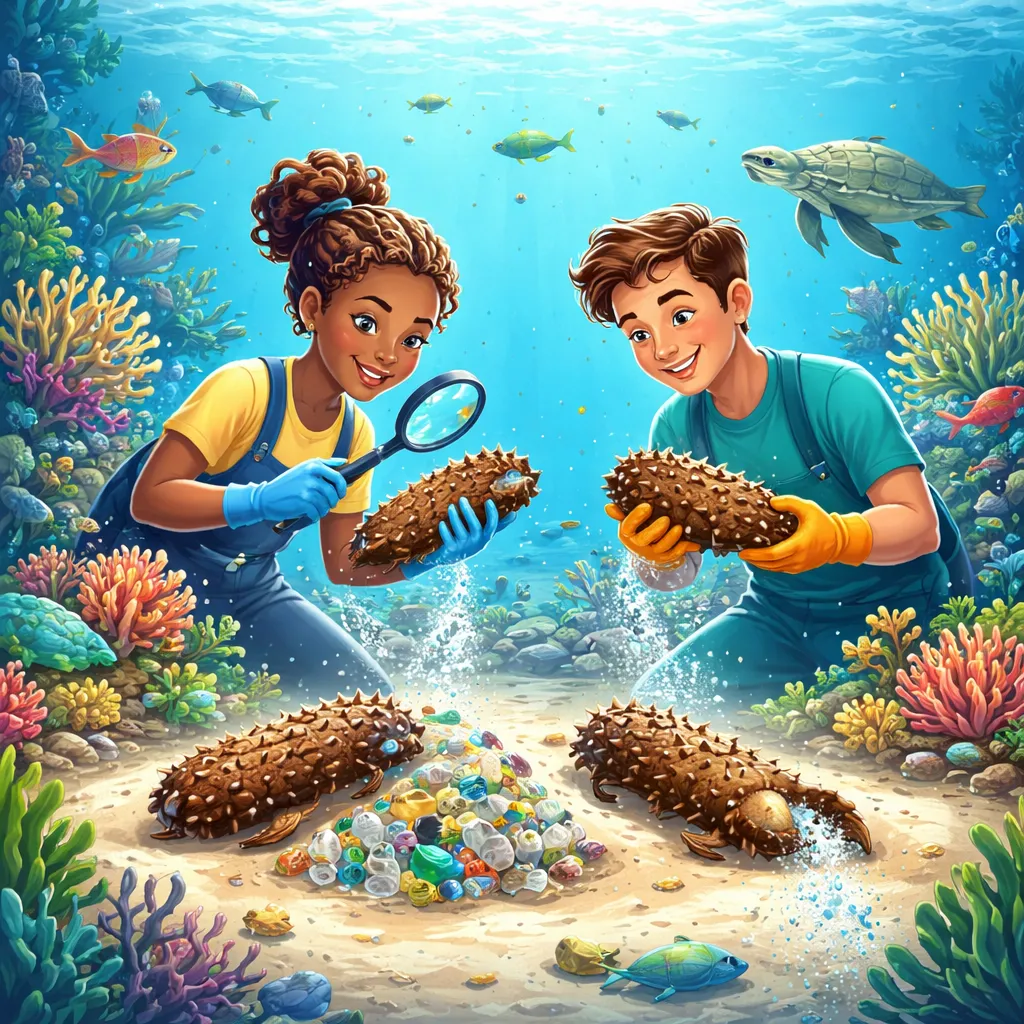

Some animals are admired for their beauty. Others are known for their speed. The sea cucumber is admired for something else. It cleans the ocean floor. It regenerates lost body parts. It moves slowly but serves a vital role. For children, learning about Sea Cucumber opens a window to the quiet workers of the sea. Parents and children can explore this humble creature together. No diving is needed. Just curiosity about one of the ocean’s most helpful animals.
The sea cucumber does not look like a cucumber. It looks like a soft, leathery tube. But its name comes from its shape. Let us begin our discovery.
What Is This Animal?
A sea cucumber is a soft-bodied animal with a long, cylindrical shape. Its skin is leathery and often covered in small bumps. Some species have tube feet. Others are smooth. Its mouth sits at one end. Its anus sits at the other. The body stretches and contracts as it moves.
Sea cucumbers live on the ocean floor. They inhabit shallow tide pools and deep seafloor alike. They crawl slowly across sand, mud, and rocks. Some species bury themselves in sediment. Others cling to reefs.
Children often find sea cucumbers strange and interesting. Their soft bodies and slow movement make them different from most sea creatures. Learning about Sea Cucumber becomes an exploration of how animals without shells or spines survive and contribute.
English Learning About This Animal
Let us begin with the name “sea cucumber.” It is pronounced /siː ˈkjuːkʌmbər/. Say it with your child: sea cu-cum-ber. Three syllables in cucumber. The name comes from the vegetable. Both have an oblong shape. But the sea cucumber is an animal, not a plant.
When learning about Sea Cucumber in English, we meet words about cleaning and regeneration. Here are a few to share.
Detritus – waste or debris, especially from dead organisms.
Regenerate – to grow back a lost or damaged body part.
Tentacle – a slender, flexible appendage used for feeding.
Eviscerate – to expel internal organs as a defense.
Use these words in simple sentences. “Sea cucumbers eat detritus from the ocean floor.” “They can regenerate lost organs.” These sentences help children understand the animal’s unique abilities.
Here is a proverb that fits the sea cucumber. “Many hands make light work.” Sea cucumbers are not fast or strong. But millions of them work together across the ocean floor. They keep the sea clean. This teaches children that many small efforts add up to big results.
Another meaningful thought comes from naturalist Rachel Carson. She wrote, “In nature, nothing exists alone.” Sea cucumbers connect to everything on the seafloor. Their cleaning work supports corals, fish, and other creatures. This reminds children that we are all connected.
Animal Facts and Science Knowledge
Sea cucumbers belong to the phylum Echinodermata. This group includes starfish, sea urchins, and sand dollars. The name means “spiny skin.” Sea cucumbers have soft skin, but they have tiny spines embedded in it. They are echinoderms without the obvious spines.
There are over 1,200 species of sea cucumbers. They live in oceans around the world. Most inhabit the seafloor from shallow waters to the deep abyss. Some species live in massive groups. Others live alone.
Sea cucumbers are detritivores. They eat decaying organic matter. They use tentacles around their mouths to sweep up sand and mud. They digest the nutrients. They expel clean sand. This process recycles nutrients and aerates the seafloor. A single sea cucumber can process over 100 pounds of sediment per year.
Sea cucumbers have a remarkable defense. When threatened, some species eviscerate. They expel their internal organs through the anus. The organs are sticky and entangle predators. The sea cucumber escapes. It regenerates the lost organs within weeks. This ability to regrow body parts fascinates scientists.
Some sea cucumbers breathe through their anus. Water enters the anus and flows over respiratory trees. These structures absorb oxygen. This unusual breathing method works well for bottom-dwelling animals.
Sea cucumbers reproduce by releasing eggs and sperm into the water. Some species reproduce by splitting in two. Each half grows into a new animal. This form of reproduction allows rapid population growth.
How to Interact With This Animal Safely
Sea cucumbers are harmless to humans. They do not bite or sting. Their defense mechanisms do not target people. However, handling them can cause stress. Do not pick up sea cucumbers in the wild. Their soft bodies are delicate.
If your family explores tide pools, observe sea cucumbers where they are. Look for them under rocks or in sandy patches. Watch how they move. Watch how they feed. Do not pull them from their hiding places. Do not poke them with sticks.
Some sea cucumbers have toxins in their skin. The toxins protect them from predators. These toxins can irritate human skin. After touching any tide pool animal, wash hands thoroughly. Do not touch your face or eyes before washing.
In public aquariums, you may see sea cucumbers in touch tanks. Follow staff guidance. Some aquariums allow gentle touching. Use one finger. Touch the body softly. Never pick up the animal. Always wash hands before and after.
Sea cucumbers are not pets. They require specialized saltwater tanks and specific diets. Most families should enjoy them through observation, not ownership.
What Can We Learn From This Animal
Sea cucumbers teach us about the importance of cleaning. They eat waste. They recycle nutrients. They keep the ocean floor healthy. Children can learn that cleaning matters. Picking up trash, organizing spaces, and caring for shared environments are valuable actions.
Sea cucumbers also show us the power of regeneration. They lose organs and grow them back. They do not give up. Children can learn that setbacks are not endings. You can heal. You can recover. You can grow again.
Another lesson is humility. Sea cucumbers are not flashy. They are not fast. They do not attract attention. But the ocean depends on them. Children can learn that you do not need to be the loudest or brightest to make a difference. Quiet, steady work matters.
Sea cucumbers teach us about letting go. When threatened, they release their organs. They let go to survive. Children can learn that sometimes letting go of things is necessary. Letting go of anger, fear, or possessions can free you to move forward.
Fun Learning Activities
Turn learning about Sea Cucumber into hands-on discovery. Here are a few simple ideas.
Make a Soft Body Craft
Roll a piece of brown or tan clay into a tube shape. Let your child add small bumps with a toothpick. Talk about why the sea cucumber has a soft, flexible body.
Create a Cleanup Story
Ask your child to imagine being a sea cucumber on the ocean floor. What do you find to eat? How do you help the reef? Write or draw the story together. Use new words like detritus, tentacle, and regenerate.
Play the Regeneration Game
Take turns pretending to lose something important. The other person helps you grow it back. Explain that sea cucumbers can regrow organs. This movement game builds understanding through imagination.
Do a Cleanup Walk
Go outside with a bag. Pick up litter in a park or neighborhood. Talk about how sea cucumbers clean the ocean. Explain that we can clean our land too.
Watch and Wonder
Find a short video of a sea cucumber feeding or eviscerating. Watch together. Pause and ask open questions. “What do you notice about how it eats?” “Why do you think it releases its organs?” Let your child share observations freely.
Learning about Sea Cucumber takes us to the soft, sandy ocean floor. It is a world of slow movement and quiet work. This humble creature has no shell. It has no sharp spines. It moves only inches per day. Yet it keeps the sea clean. It regenerates when harmed. It supports the entire ecosystem. As parents and children explore together, they build language, knowledge, and a shared appreciation for the quiet workers of the natural world. The sea cucumber inches across the sand, tentacles sweeping, cleaning as it goes. And in that slow, steady motion, young learners discover something beautiful—that you do not need to be fast or flashy to make the world a better place. Sometimes, the quietest workers do the most important work of all.