
What Is This Plant?
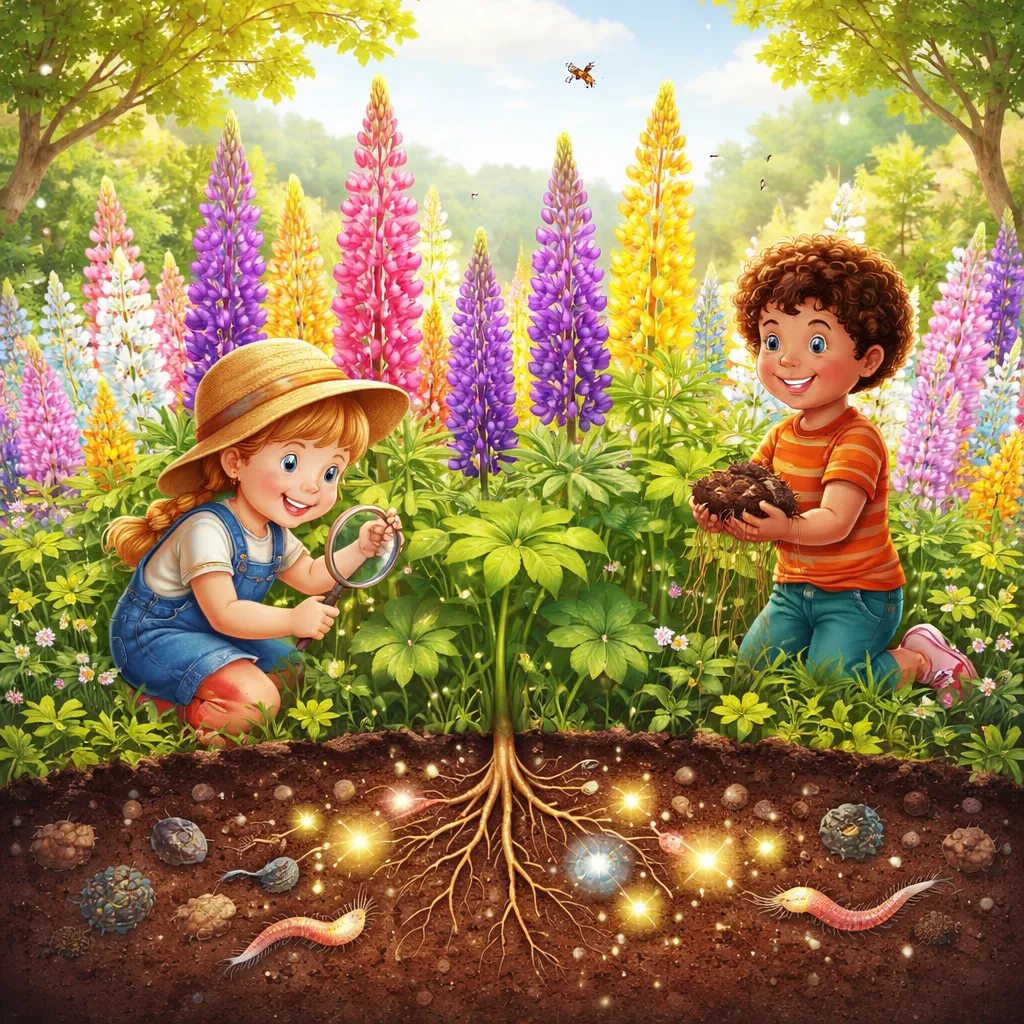
The lupin plant is a striking, spire-shaped flower that adds vertical color to the garden. It grows as a bushy plant with tall, upright flower spikes. The leaves are distinctive and beautiful. They are palm-shaped, like an open hand with fingers. Each leaf has many narrow leaflets arranged in a circle. The flowers grow on tall spikes that can reach one to three feet high. The flowers are pea-shaped and grow in dense rings around the spike. They come in a rainbow of colors. You can find lupins in blue, purple, pink, white, yellow, red, and bi-colors. The flowers bloom in late spring and early summer. For children, lupins are like colorful candles or towers. The tall spikes stand proudly above the leaves. The flowers open from the bottom up. Parents can plant lupin seeds or plants in spring. Children love watching the spike grow taller and the flowers open one by one. This plant teaches children about reaching high and the magic of soil enrichment.
English Learning About This Plant
The English name “lupin” comes from the Latin word “lupus,” meaning wolf. People once believed the plant stole nutrients from the soil. The pronunciation is “loo-pin.” The International Phonetic Alphabet (IPA) is /ˈluːpɪn/. The word has two syllables. Children can say it: loo-pin. When we learn about lupin plant, we learn words for its parts. The leaf is the palm-shaped part with many narrow leaflets. The stem is the tall, sturdy part that holds the flower spike. The flower spike is the tall tower of flowers. The flower is the pea-shaped, colorful blossom. The seed pod is the hairy, bean-like part that holds the seeds. These words help children describe this magnificent plant.
There is a famous saying about lupins. The author Beatrix Potter, who wrote Peter Rabbit, loved lupins. She wrote about them in her stories. Another saying goes, “Lupins are the skyscrapers of the flower garden.” Parents can share these words with their child. They become gentle lessons about reaching high and giving back. Lupins are also called bluebonnets in Texas.
Plant Facts and Scientific Knowledge
The lupin plant belongs to the genus Lupinus. There are over 200 species. Lupins are members of the pea family, Fabaceae. They are native to North and South America and the Mediterranean region. They have been cultivated for centuries for their beauty and their ability to improve soil.
Lupin flowers grow on tall spikes called racemes. The flowers are pea-shaped with five petals. The top petal is called the banner. The two side petals are called wings. The two lower petals are fused together to form the keel. The flowers come in many colors. Blue and purple are most common in wild species. Garden varieties include pink, white, yellow, red, and bi-colors.
The leaves are palmate, meaning hand-shaped. They have five to fifteen leaflets arranged in a circle. The leaves are soft and often have silvery hairs. They collect dew and morning moisture.
Lupins have a special superpower. They fix nitrogen in the soil. They form a partnership with bacteria in their roots. These bacteria take nitrogen from the air and turn it into food for the plant. When the plant dies, it leaves nitrogen in the soil for other plants. This makes lupins excellent for poor soils.
Lupins have symbolic meaning. They represent imagination, admiration, and happiness. They are flowers of the wild and symbols of the American West.
How to Grow and Care for This Plant
Growing a lupin plant requires patience. Plant seeds in spring or fall. Choose a sunny spot. Lupins need full sun for best blooms. They need well-drained soil. They do not like wet soil. They grow well in poor soil because they make their own nitrogen.
Lupin seeds have a hard coat. Soak them in water overnight before planting. This helps them sprout faster. Plant seeds about half an inch deep. Cover lightly with soil. Water gently. Children can help by soaking the seeds and planting them.
Water lupins regularly until established. Once established, they are drought-tolerant. Do not overwater. They need very little fertilizer. Too much fertilizer will make them grow leaves instead of flowers.
Lupins are perennials. They come back year after year. They may not bloom in their first year. They need time to establish their roots. In fall, let the seed pods dry on the plant. Collect the seeds for next year. The plants will also self-seed.
Benefits of Growing This Plant
Growing a lupin plant brings many gifts to a family. First, the tall flower spikes are spectacular. They add height and color to the garden. Second, lupins improve the soil. They add nitrogen that helps other plants grow. This is a secret superpower.
Lupins attract pollinators. Bees, butterflies, and hummingbirds love the flowers. Children can watch bees crawl deep into the pea-shaped blossoms to reach the nectar.
The plant provides cut flowers. Children can cut the tall spikes for bouquets. They last about a week in a vase.
Lupins also teach about soil science. Children learn that some plants can make the soil better. They learn about the partnership between plants and bacteria.
What Can We Learn From This Plant
A lupin plant teaches children about giving back. The plant adds nitrogen to the soil. It makes the earth richer for others. Children learn that they can give back too. They can help others grow.
Lupins also teach about reaching high. The tall spikes reach for the sky. Children learn that they can reach for their dreams. They can stand tall.
Another lesson is about patience. Lupins may not bloom in their first year. They need time to establish. Children learn that good things take time. They can wait for beauty.
Lupins also teach about partnerships. The plant works with bacteria to make nitrogen. Children learn that working together makes great things happen.
Fun Learning Activities
There are many simple activities to help children learn about lupin plant. One activity is a leaf study. Look at a lupin leaf. It looks like a hand with fingers. Count the leaflets. Trace your hand next to it. This builds observation and connection.
Another activity is a seed soaking activity. Soak lupin seeds overnight. See how they swell. Plant them. Watch them grow. This builds understanding of seed germination.
A nature journal works well for lupins. Draw the hand-shaped leaves. Draw the tall flower spike. Draw the pea-shaped flowers. Label the parts: leaf, stem, flower spike, flower. Write the date when the first flower opened.
For art, try painting lupins. Use blue, purple, and pink paint. Paint the tall, spiky towers of pea-shaped flowers. Add the hand-shaped leaves. This creates a beautiful garden picture.
Vocabulary games are fun too. Write the words lupin, leaf, stem, flower spike, flower, and nitrogen on cards. Say each word. Ask your child to point to the part on the plant. Practice saying lupin together. Clap the syllables: loo-pin.
Finally, try a soil science activity. Talk about how lupins add nitrogen to the soil. Plant lupins in a poor area. The next year, plant vegetables there. See how they grow better. This connects the plant to soil science and giving back.
Through these activities, children build a deep connection with a plant that reaches high and gives back to the earth. They learn new words, soak seeds, and discover the joy of patience. The lupin plant becomes a symbol of generosity and aspiration. Each spring when the tall spikes bloom, children remember that they can reach high. They remember that they can give back. This beautiful plant opens a world of garden wonder, soil science, and the lasting lesson that reaching for the sky and enriching the earth go hand in hand.