
What Is This Plant?
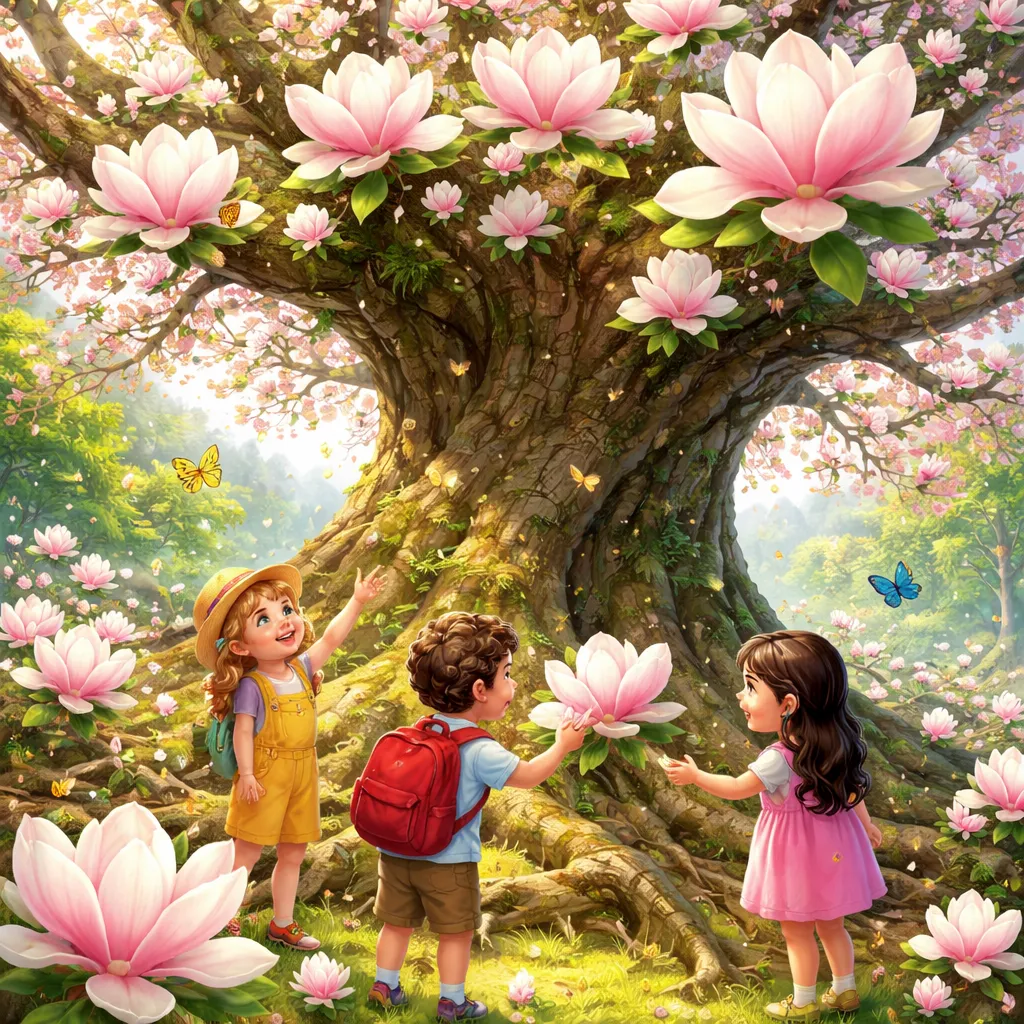
The magnolia plant is an ancient flowering tree that produces some of the largest and most beautiful flowers in the world. It grows as a tree or large shrub, depending on the type. Some magnolias are small shrubs. Others grow into majestic trees reaching thirty feet or more. The leaves are large and glossy. They are dark green and oval-shaped. The flowers are the main treasure. They appear in spring before the leaves. Some magnolias bloom in early spring on bare branches. Others bloom in late spring with the leaves. The flowers are enormous. They can be six to twelve inches across. They come in white, pink, purple, and yellow. The petals are thick and waxy. They open like cups or stars. For children, magnolias are like giant flowers from a fairy tale. The petals are soft and thick. The flowers are so large that one flower can fill a child’s hands. Parents can plant magnolias in the garden. Children watch the fuzzy buds swell. When the flowers open, they are amazed by the size and beauty.
English Learning About This Plant
The English name “magnolia” honors the French botanist Pierre Magnol. He developed plant classification. The pronunciation is “mag-nol-ya.” The International Phonetic Alphabet (IPA) is /mæɡˈnoʊliə/. The word has three syllables. Children can say it: mag-nol-ya. When we learn about magnolia plant, we learn words for its parts. The leaf is the large, glossy, dark green part. The stem is the woody part that holds the leaves and flowers. The bud is the fuzzy, furry part that will become a flower. The flower is the large, cup-shaped or star-shaped blossom. The petal is the thick, waxy, colorful part. These words help children describe this ancient tree.
There is a famous saying about magnolias. It goes, “Magnolias are the queens of spring.” Their flowers are so grand. Another saying says, “The magnolia flower is a cup of beauty.” Parents can share these words with their child. They become gentle lessons about ancient beauty and patience. Magnolias are among the oldest flowering plants on Earth. They existed before bees evolved. They are pollinated by beetles.
Plant Facts and Scientific Knowledge
The magnolia plant belongs to the genus Magnolia. There are over 200 species. Magnolias are native to Asia and the Americas. They are members of the family Magnoliaceae. Magnolias are ancient plants. They have existed for over 100 million years. They existed before bees. They are pollinated by beetles.
There are two main types of magnolias. Deciduous magnolias lose their leaves in winter. They bloom in early spring on bare branches. Examples are star magnolia and saucer magnolia. Evergreen magnolias keep their leaves all year. They bloom in late spring or summer. The southern magnolia is an example.
Magnolia flowers have many petals. They can have six to over thirty petals. The flowers are cup-shaped or star-shaped. They come in white, pink, purple, and yellow. Some magnolias have flowers that are fragrant. The scent is lemony or sweet.
Magnolia leaves are large and glossy. Some can be over eight inches long. The leaves are thick and leathery. They stay on the tree for several years.
Magnolia fruit is cone-shaped. It contains bright red seeds. The seeds are eaten by birds.
Magnolias have deep symbolic meaning. They represent dignity, nobility, and perseverance. In the language of flowers, a magnolia means “love of nature.” They are often associated with the American South.
How to Grow and Care for This Plant
Growing a magnolia plant requires patience. Plant in spring or fall. Choose a sunny spot. Magnolias need at least six hours of sunlight each day. They need well-drained soil. They do not like wet feet.
Dig a hole twice as wide as the root ball. Place the plant in the hole. Fill with soil. Water well. Children can help by holding the plant straight while you fill the hole. Magnolias have shallow roots. Do not plant too deep.
Water magnolias regularly during the first year. Once established, they need water during dry spells. Mulch around the base keeps the soil moist and cool. Do not dig near the roots. Magnolia roots are shallow and easily damaged.
Fertilize magnolias in spring. Use a balanced fertilizer. Do not overfertilize. Magnolias grow slowly. They need patience. They may take several years to bloom after planting.
Prune magnolias only when needed. Remove dead or crossing branches. Prune after flowering. Heavy pruning can harm the tree. Children can help by collecting the pruned branches.
Benefits of Growing This Plant
Growing a magnolia plant brings many gifts to a family. First, the flowers are spectacular. They are among the largest in the garden. Second, magnolias are ancient. They connect us to the distant past.
Magnolias attract birds. The red seeds in the cones are eaten by birds. Children can watch birds visit the tree.
The plant provides shade. Large magnolias create cool spots in summer. The glossy leaves are beautiful year-round.
Magnolias also teach about patience. They grow slowly. They may take years to bloom. Children learn that great things take time.
What Can We Learn From This Plant
A magnolia plant teaches children about ancient beauty. Magnolias existed with dinosaurs. They are survivors. Children learn that some things last a very long time. They can appreciate things that are old.
Magnolias also teach about patience. They grow slowly. They may not bloom for years. Children learn that good things come to those who wait.
Another lesson is about being grand. The flowers are huge and beautiful. They do not hide. Children learn that it is okay to be grand. They can take up space and be seen.
Magnolias also teach about softness. The petals are thick and soft. Children learn that strength can be soft. They can be strong and gentle at the same time.
Fun Learning Activities
There are many simple activities to help children learn about magnolia plant. One activity is a bud watch. In winter, look at the magnolia buds. They are large and fuzzy. They look like furry fingers. Count the buds. Watch them swell. Count the days until they open. This builds observation and patience.
Another activity is a petal study. When a magnolia flower falls, pick it up. Feel the thick, waxy petals. Count how many petals are on one flower. Use a magnifying glass to see the texture. This builds sensory awareness.
A nature journal works well for magnolias. Draw the fuzzy buds. Draw the large, cup-shaped flowers. Draw the glossy leaves. Label the parts: leaf, stem, bud, flower, petal. Write the date when the first flower opened.
For art, try painting magnolias. Use white, pink, or purple paint. Paint the large, cup-shaped flowers with thick petals. Add the glossy, dark green leaves. This creates a beautiful spring picture.
Vocabulary games are fun too. Write the words magnolia, leaf, stem, bud, flower, and petal on cards. Say each word. Ask your child to point to the part on the tree. Practice saying magnolia together. Clap the syllables: mag-nol-ya.
Finally, try a patience activity. Plant a magnolia tree together. Mark the date. Take a photo each year. Watch it grow. This teaches about patience and long-term care.
Through these activities, children build a deep connection with an ancient tree that rewards patience with spectacular blooms. They learn new words, watch fuzzy buds, and discover the joy of waiting for something grand. The magnolia plant becomes a symbol of ancient beauty and patient growth. Each spring when the magnolia blooms, children remember that great things take time. They remember that they can be grand and soft at the same time. This magnificent tree opens a world of ancient wonder, patient observation, and the lasting joy of watching a fuzzy bud unfold into a flower as big as a child’s hands.