
What Is This Plant?
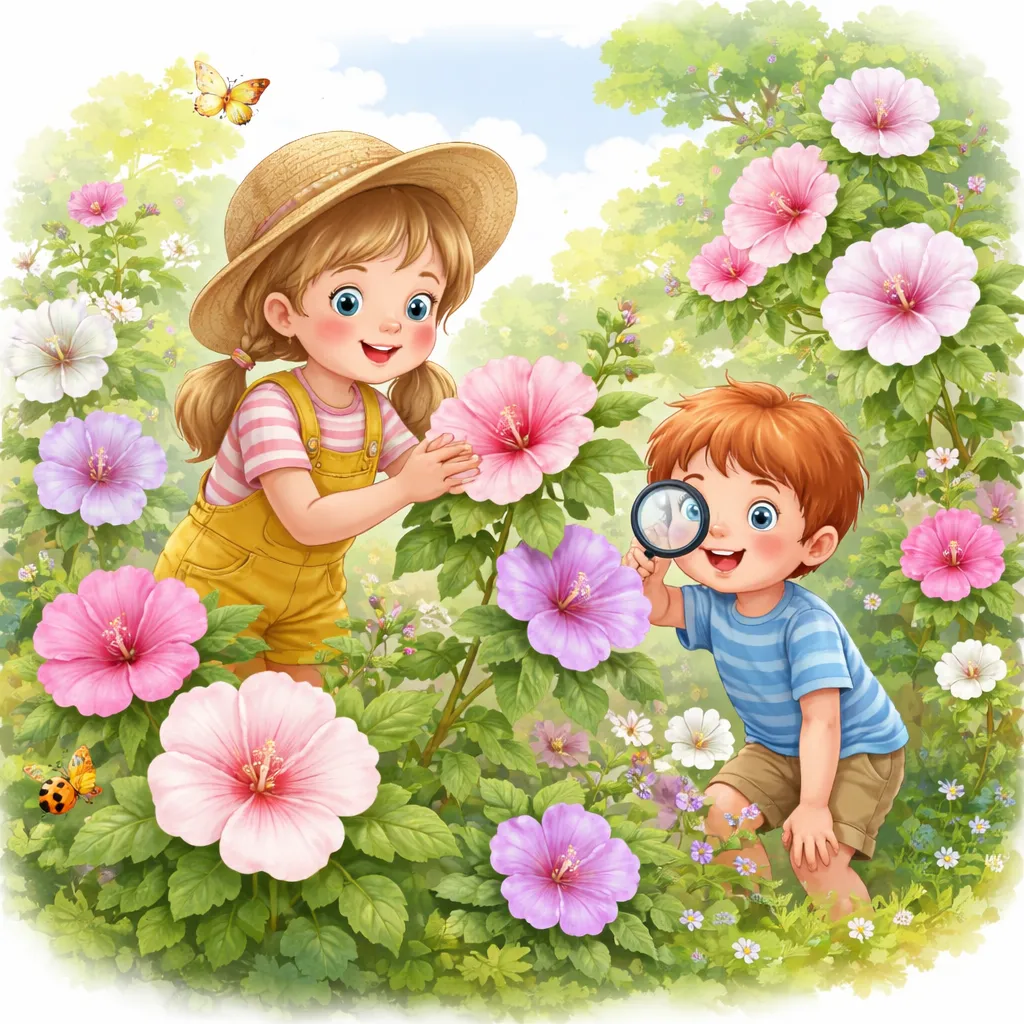
The mallow plant is a soft, velvety plant with cheerful flowers that look like small hibiscus blooms. It grows as a bushy plant with branching stems. The leaves are round and soft. They are covered with tiny hairs that make them feel like velvet. The flowers are the treasure. They are cup-shaped with five petals. The petals are often pink or purple with darker veins. Some mallows have white, red, or blue flowers. The flowers look like miniature hibiscus. They bloom from summer until fall. The plant also produces round, flat seed pods that look like little cheeses. That is why mallow is sometimes called “cheeses.” For children, mallow is like a plant with velvet leaves and cheese-shaped seeds. The soft leaves are fun to touch. The seed pods are fun to find. Parents can plant mallow seeds in spring. Children love the soft leaves and the little cheese seeds. This plant teaches children about softness and the joy of edible plants.
English Learning About This Plant
The English name “mallow” comes from the Latin word “malva.” It means soft. The leaves are soft. The pronunciation is “mal-oh.” The International Phonetic Alphabet (IPA) is /ˈmæloʊ/. The word has two syllables. Children can say it: mal-oh. When we learn about mallow plant, we learn words for its parts. The leaf is the round, soft, velvety part. The stem is the branching, slender part that holds the leaves and flowers. The flower is the cup-shaped, five-petaled blossom. The seed pod is the round, flat part that looks like a little cheese. The vein is the dark line on the flower petals. These words help children describe this soft, friendly plant.
There is a famous saying about mallow. It is one of the oldest cultivated plants. Another saying goes, “Mallow has leaves like velvet and flowers like tiny hibiscus.” Parents can share these words with their child. They become gentle lessons about softness and the gifts of common plants. Mallow has been used for food and medicine for thousands of years.
Plant Facts and Scientific Knowledge
The mallow plant belongs to the genus Malva. There are about 30 species. Mallows are members of the mallow family, Malvaceae. This is the same family as hibiscus, hollyhock, and cotton. Mallows are native to Europe, Asia, and North Africa. They have spread to many parts of the world.
Mallow flowers have five petals. The petals are often pink or purple with darker veins. The veins guide bees to the center. The flowers are cup-shaped. They bloom from summer until fall. The flowers close in the evening and open in the morning.
The leaves are round and soft. They are covered with tiny hairs. This makes them feel like velvet. The leaves are edible. They have a mild, pleasant taste. The seed pods are round and flat. They look like little cheeses. They are also edible.
Mallow plants grow one to three feet tall. They are annuals or perennials. They self-seed easily. They grow in sunny spots and tolerate poor soil.
Mallows have symbolic meaning. They represent softness, gentleness, and nourishment. They have been used for food and medicine since ancient times. The ancient Greeks and Romans ate mallow as a vegetable.
How to Grow and Care for This Plant
Growing a mallow plant is easy for families. Plant seeds in spring. Choose a sunny spot. Mallows need full sun. They need well-drained soil. They grow well in poor soil.
Scatter the seeds on the soil surface. Cover lightly with soil. Mallow seeds need light to germinate. Press them gently into the soil. Water gently. Children can help by scattering the seeds. The seeds are small and easy to handle.
Water mallows regularly until established. Once established, they are drought-tolerant. Do not overwater. They need little fertilizer. Too much fertilizer makes them grow leaves instead of flowers.
Mallows self-seed easily. Let some seed pods dry on the plant. They will scatter seeds for next year. In fall, cut the plants back. New plants will appear in spring.
Benefits of Growing This Plant
Growing a mallow plant brings many gifts to a family. First, the soft leaves are fun to touch. Children love the velvet texture. Second, the flowers are cheerful and pretty. They look like little hibiscus.
Mallows attract pollinators. Bees love the flowers. Children can watch them crawl inside the cup-shaped blooms.
The plant is edible. Children can taste the leaves and seed pods. They have a mild, pleasant flavor. This connects gardening to food and exploration.
Mallows also teach about softness. The velvety leaves are gentle. Children learn that softness is a gift.
What Can We Learn From This Plant
A mallow plant teaches children about softness. The leaves are soft and velvety. Children learn that softness is a strength. They can be gentle with others.
Mallows also teach about nourishment. The plant has been used for food for thousands of years. Children learn that plants can feed us. They can appreciate the gifts of the earth.
Another lesson is about veins. The flower petals have dark veins. They guide bees. Children learn that plants have designs to help pollinators. They learn about the connection between plants and insects.
Mallows also teach about common beauty. Mallows are common plants. But they are beautiful. Children learn that beauty can be found everywhere.
Fun Learning Activities
There are many simple activities to help children learn about mallow plant. One activity is a texture activity. Touch a mallow leaf. Feel how soft it is. Compare it to other leaves. This builds sensory awareness.
Another activity is a taste test. Pick a young mallow leaf. Taste it. It is mild and pleasant. Pick a seed pod. It is called a cheese. Taste it. This connects the plant to food.
A nature journal works well for mallows. Draw the round, soft leaves. Draw the cup-shaped flowers with five petals. Draw the veins on the petals. Draw the round seed pods. Label the parts: leaf, stem, flower, petal, seed pod. Write the date when the first flower opened.
For art, try painting mallows. Use pink and purple paint. Paint the cup-shaped flowers with five petals. Add the darker veins. Paint the round, soft leaves. This creates a gentle garden picture.
Vocabulary games are fun too. Write the words mallow, leaf, stem, flower, seed pod, and soft on cards. Say each word. Ask your child to point to the part on the plant. Practice saying mallow together. Clap the syllables: mal-oh.
Finally, try a cooking activity. Harvest young mallow leaves. Wash them. Add them to a salad. Taste them together. Talk about how people have eaten mallow for thousands of years. This connects the plant to history and food.
Through these activities, children build a deep connection with a soft, gentle plant that has fed people for centuries. They learn new words, touch velvet leaves, and discover the joy of edible plants. The mallow plant becomes a symbol of softness and nourishment. Each summer when the pink flowers bloom, children remember that softness is a strength. They remember that plants can feed us. This humble plant opens a world of sensory discovery, edible exploration, and the lasting lesson that common plants are often the most wonderful.