
What Is This Plant?
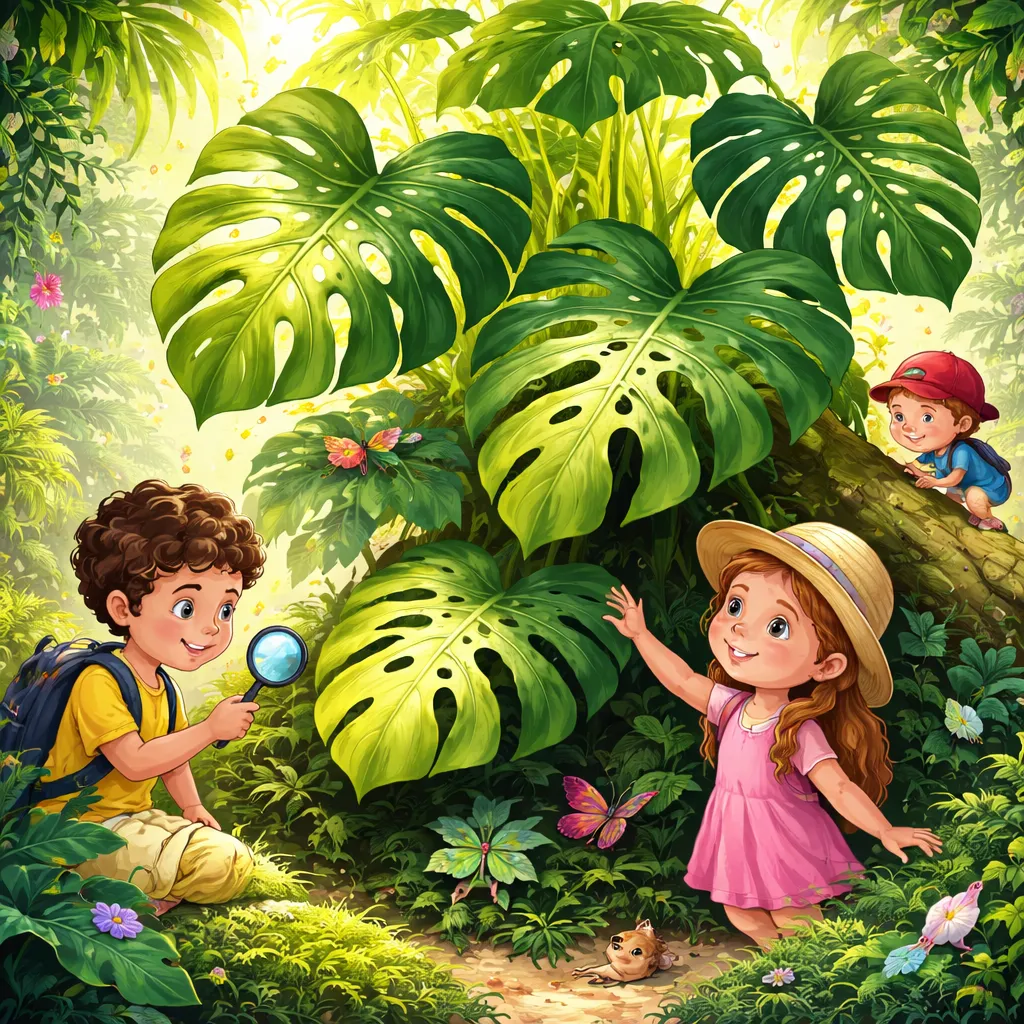
The monstera plant is a spectacular tropical vine with huge, glossy leaves that develop natural holes and splits. It grows as a climbing plant with thick stems. The leaves are the main attraction. When the plant is young, the leaves are small and heart-shaped with no holes. As it grows, the leaves get larger. Holes appear. Then the edges split. The leaves look like they have been cut with scissors. This is why monstera is called “Swiss cheese plant.” The holes help the plant survive in the wild. They let wind pass through without tearing the leaves. The leaves can grow over two feet wide. The plant can climb up to ten feet tall indoors. For children, monstera is like a puzzle plant. The leaves have holes and splits. They can put their fingers through the holes. Parents can grow monstera in pots. Children love the giant leaves and the Swiss cheese holes. This plant teaches children about adaptation, tropical beauty, and the wonder of plant design.
English Learning About This Plant
The English name “monstera” comes from the Latin word “monstrum,” meaning monster. The plant is huge. The pronunciation is “mon-ster-a.” The International Phonetic Alphabet (IPA) is /mɒnˈstɛrə/. The word has three syllables. Children can say it: mon-ster-a. When we learn about monstera plant, we learn words for its parts. The leaf is the large, glossy, hole-filled part. The fenestration is the natural hole or split in the leaf. The aerial root is the long, brown root that grows from the stem and climbs. The stem is the thick, green part that holds the leaves. The node is the bump on the stem where new leaves and roots grow. These words help children describe this tropical giant.
There is a famous saying about monstera. It is one of the most popular houseplants. Another saying goes, “Monstera leaves are nature’s puzzle pieces.” Parents can share these words with their child. They become gentle lessons about adaptation and the beauty of design. Monstera is native to the tropical forests of Central and South America.
Plant Facts and Scientific Knowledge
The monstera plant belongs to the species Monstera deliciosa. It is a member of the arum family, Araceae. It is native to the tropical forests of Mexico and Central America. It grows as a climbing vine on trees. In the wild, it can reach 60 feet tall. Its leaves can grow three feet wide.
Monstera leaves develop holes and splits as they mature. This is called fenestration. The holes let wind and rain pass through. This prevents the large leaves from tearing. The splits also let light reach lower leaves. Young leaves have no holes. They appear as the plant matures.
Monstera produces aerial roots. These long, brown roots grow from the stem. They attach to trees and surfaces. They also take in moisture from the air. The plant needs a support to climb.
Monstera produces fruit in the wild. The fruit takes a year to ripen. It tastes like a mix of banana and pineapple. The name “deliciosa” means delicious. The fruit is edible only when fully ripe.
Monstera has symbolic meaning. It represents growth, adaptation, and tropical beauty. The unique leaves represent individuality and the beauty of imperfection.
How to Grow and Care for This Plant
Growing a monstera plant is rewarding for families. Choose a spot with bright, indirect light. Monstera needs bright light to develop holes. It does not like direct sun. It needs well-drained soil. Use potting soil with perlite for drainage.
Plant monstera in a pot with drainage holes. Place the plant in the pot. Add a moss pole or stake for support. The aerial roots will attach. Children can help by placing the pole and adding soil.
Water monstera when the top inch of soil feels dry. It likes consistent moisture but does not like soggy soil. Water thoroughly, then let the soil dry slightly. In winter, water less. The plant will tell you when it needs water. The leaves will droop.
Monstera needs fertilizer. Feed once a month in spring and summer with balanced fertilizer. Wipe the leaves with a damp cloth to keep them glossy. Children can help with this.
Monstera grows quickly. Prune to control size. The cuttings can be rooted in water. They will grow into new plants. Children can do this themselves.
Benefits of Growing This Plant
Growing a monstera plant brings many gifts to a family. First, the leaves are spectacular. Children love the holes and splits. They can put their fingers through the holes. Second, monstera grows quickly. Children can see changes every week.
Monstera cleans the air. It removes toxins. Children learn that plants help us breathe better.
The plant teaches about adaptation. The holes let wind pass through. Children learn that plants have clever designs.
Monstera is easy to propagate. Children can make new plants from cuttings. They can share them with friends.
What Can We Learn From This Plant
A monstera plant teaches children about adaptation. The leaves develop holes to survive wind and rain. Children learn that they can adapt too. They can change to meet challenges.
Monstera also teaches about growth. The plant starts with small, solid leaves. It grows into a giant with holes. Children learn that growth brings change. They can grow into something new.
Another lesson is about uniqueness. The leaves have holes and splits. They are not perfect. Children learn that imperfection is beautiful. They can be unique.
Monstera also teaches about support. The plant needs a pole to climb. Children learn that they can ask for support. They can lean on others.
Fun Learning Activities
There are many simple activities to help children learn about monstera plant. One activity is a leaf study. Look at a monstera leaf. Count the holes. Trace the splits. See how the holes are arranged. This builds observation.
Another activity is a propagation activity. Cut a monstera stem with a node and a leaf. Place it in a glass of water. Watch the roots grow. Then plant it in soil. This teaches about plant reproduction.
A nature journal works well for monstera. Draw the large, glossy leaf with holes and splits. Draw the aerial roots. Draw the stem. Label the parts: leaf, fenestration, aerial root, stem. Write the date when you started your cutting.
For art, try painting monstera. Use dark green and light green paint. Paint the large, hole-filled leaves. Add the splits. Paint the aerial roots. This creates a tropical jungle picture.
Vocabulary games are fun too. Write the words monstera, leaf, fenestration, aerial root, hole, and climb on cards. Say each word. Ask your child to point to the part on the plant. Practice saying monstera together. Clap the syllables: mon-ster-a.
Finally, try an adaptation activity. Talk about why monstera leaves have holes. Ask your child to design a leaf for a windy place. Draw it. This connects the plant to science and creativity.
Through these activities, children build a deep connection with a tropical giant that grows holes to survive. They learn new words, propagate cuttings, and discover the joy of adaptation. The monstera plant becomes a symbol of growth and uniqueness. Each time they see the Swiss cheese leaves, children remember that they can adapt. They remember that imperfection is beautiful. This tropical plant opens a world of jungle wonder, propagation magic, and the lasting lesson that the plants with the most holes often have the most to teach us about survival.