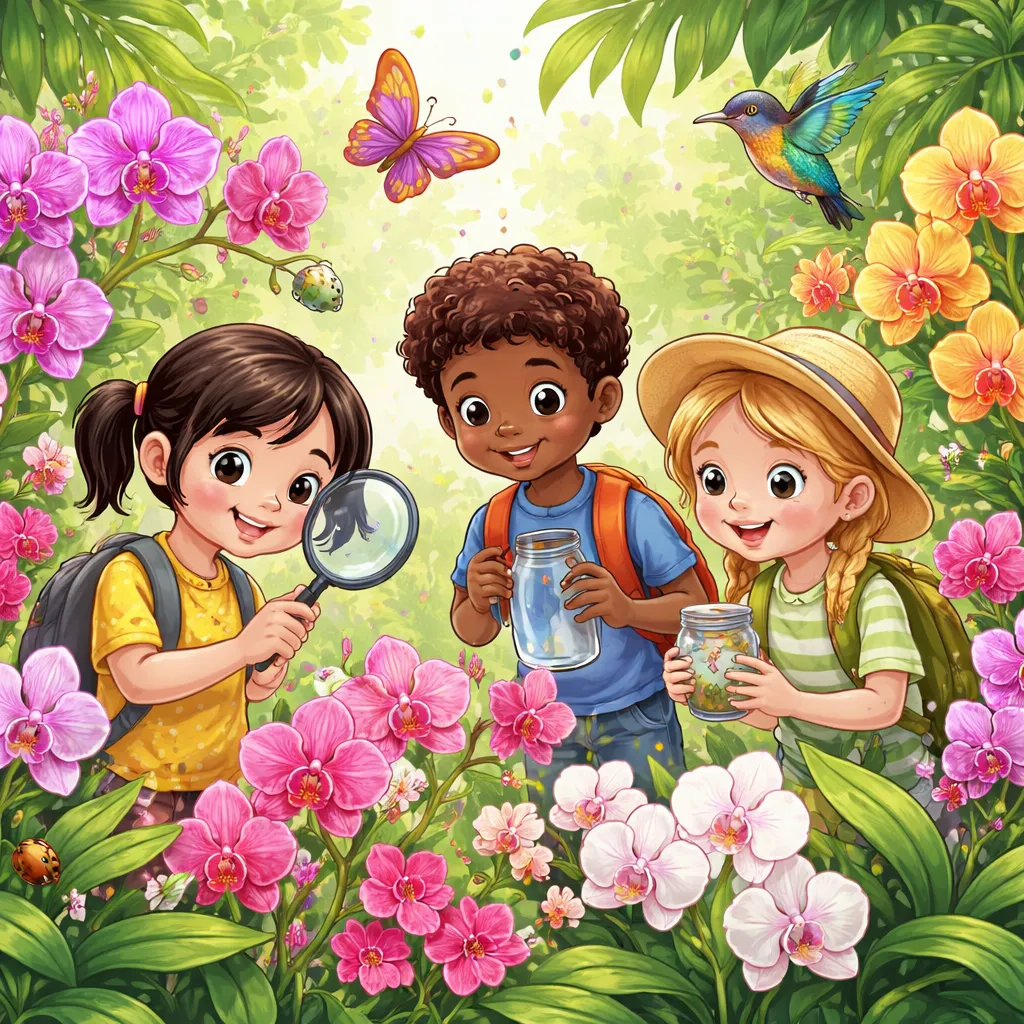

What Is This Plant?
The orchid plant is one of the most diverse and beautiful flowers in the world. It grows in many shapes, sizes, and colors. Some orchids are tiny. Others grow large flowers that look like butterflies or dancing ladies. The flowers have a special structure. Three petals surround a central part called the lip. The lip often looks different from the other petals. It can be frilly, spotted, or shaped like a pouch. Orchid leaves are usually thick and fleshy. They grow in pairs along a central stem. Some orchids grow in soil. Others grow attached to trees or rocks. They do not take food from the tree. They simply use it for support. For children, orchids feel like a discovery. Each flower looks like a little work of art. Parents can show their child an orchid at a garden center or in a pot at home. This plant sparks curiosity about the many ways nature creates beauty.
English Learning About This Plant
The English name “orchid” comes from a Greek word. It means testicle. Early scientists named it for the shape of the root bulbs. The pronunciation is “or-kid.” The International Phonetic Alphabet (IPA) is /ˈɔːrkɪd/. The word has two syllables. Children can say it clearly: or-kid. When we learn about orchid plant, we discover new words for its parts. The root is the part that takes in water and air. Many orchid roots are thick and white. They can grow outside the pot. The stem is the part that holds the leaves and flowers. The leaf is the fleshy green part that stores water. The flower is the colorful part with the special lip. The lip is the unique petal that gives each orchid its character. These words help children describe this unusual plant.
There is a famous saying about orchids. It goes, “Orchids teach us that beauty takes time and patience.” This means orchids do not bloom quickly. They need care and waiting. But when they bloom, they are extraordinary. Another lovely idea comes from the writer Susan Orlean. She called orchids “the divas of the plant world.” This means they are special and a little demanding. But they reward us with incredible beauty. Parents can share these ideas with children. They become gentle lessons about patience and effort.
Plant Facts and Scientific Knowledge
The orchid plant belongs to the family Orchidaceae. This is one of the largest plant families on Earth. There are over 25,000 species. Scientists discover new orchids every year. Orchids grow on every continent except Antarctica. They live in rainforests, mountains, and even deserts.
Orchid flowers have a special design. The lip serves as a landing platform for pollinators. Bees, butterflies, and even birds visit orchids. Some orchids mimic insects to attract them. One orchid looks exactly like a female bee. Male bees try to mate with it and carry pollen away.
Orchids have different growing habits. Epiphytic orchids grow on trees. They get moisture from the air. Terrestrial orchids grow in soil. Lithophytic orchids grow on rocks. Most orchids do not need much soil. Their roots need air circulation.
Orchids come in nearly every color. Some are pure white. Others are deep purple, bright pink, or sunny yellow. Some have spots, stripes, or patterns. Orchid flowers can last for weeks or even months. This makes them very special.
Orchids have strong symbolism. They represent beauty, strength, and refinement. In some cultures, orchids symbolize love and fertility. In others, they represent rare and precious things. Giving an orchid shows deep appreciation.
How to Grow and Care for This Plant
Growing an orchid plant is a wonderful learning experience. Start with a common type called Phalaenopsis or moth orchid. It is easy for beginners. Buy a small orchid from a garden store. It usually comes in a clear pot with special bark.
Place the orchid in bright, indirect light. A windowsill with a sheer curtain works well. Do not put it in direct sun. The leaves can burn. Children can help find the perfect spot. They can check the light throughout the day.
Watering orchids is different from other plants. Water once a week. Let water run through the pot. Do not let the plant sit in water. Orchid roots need air. If the roots look silvery, it is time to water. If they look green, wait. Children can learn to check the roots. This builds observation skills.
Orchids like humidity. You can mist the leaves lightly. Or place a small tray of water near the plant. Do not get water in the center of the plant. This can cause rot.
Fertilize orchids lightly. Use a special orchid fertilizer. Feed every other week in spring and summer. In fall and winter, feed once a month. Children can help mix the fertilizer and water the plant.
After the flowers fall, cut the flower spike. Some orchids will bloom again from the same spike. Others need a rest. Be patient. Orchids teach us that good things take time.
Benefits of Growing This Plant
Growing an orchid plant brings many quiet rewards. First, it adds elegance to a home. The long-lasting flowers brighten any room. Second, orchids teach responsibility. Children learn to water, check light, and observe changes. This builds gentle habits of care.
Orchids also create conversation. Visitors notice them. Children can explain how they care for the plant. This builds confidence and communication skills. It gives children a chance to share what they know.
Growing orchids connects children to global nature. They learn that orchids grow in rainforests far away. They learn about different habitats and climates. This opens a window to the wider world.
Orchids also offer a sense of achievement. When an orchid blooms, it feels like a celebration. Children see that their consistent care made something beautiful happen. This builds self-esteem and persistence.
What Can We Learn From This Plant
An orchid plant teaches children about diversity. Orchids come in thousands of shapes and colors. Some grow in trees. Some grow in soil. Children learn that there is no one right way to be. Everyone has their own unique way of growing.
Orchids also teach about adaptation. Orchids have special roots that take water from the air. They have lips that guide pollinators. They have learned to thrive in many places. Children learn that they too can adapt. They can find ways to grow even in different situations.
Another lesson is about patience. Orchids do not bloom on a schedule. They take their time. Sometimes they rest for months. Then suddenly, a flower spike appears. Children learn that waiting is part of growth. The best things come when we are patient.
Orchids also teach gentle care. They do not need heavy watering or strong sun. They need steady, gentle attention. Children learn that care does not have to be loud. Small, consistent actions make a big difference.
Fun Learning Activities
There are many simple activities to help children learn about orchid plant. One activity is root observation. Orchids have thick white roots that grow outside the pot. Let your child look at the roots. Ask them to describe what they see. Are they smooth or bumpy? What color are they? This builds observation and language skills.
Another activity is a light hunt. Walk around your home with your child. Find spots with bright, indirect light. Hold your hand near the window. If the shadow is soft, the light is good for orchids. This teaches children about light conditions.
A nature journal works well for orchids. Draw the orchid plant. Label the parts: root, stem, leaf, flower, lip. Write the date you water it. Note when new leaves appear. When a flower spike grows, celebrate with a special drawing.
For art, try creating imaginary orchids. Look at pictures of different orchids. Notice the shapes and colors. Give your child paper and crayons. Ask them to invent their own orchid. What colors would it have? What shape would the lip be? This encourages creativity and close looking.
Vocabulary games are fun too. Write the words orchid, root, leaf, stem, flower, and lip on cards. Say each word. Ask your child to point to the part on the plant. Practice saying the words together. Clap the syllables for or-chid.
Finally, try a patience journal. Orchids take time to bloom. Start a small calendar. Each week, draw the orchid. Write one sentence about how it looks. When the flower finally opens, look back at all the weeks of waiting. This teaches children that growth happens slowly and beautifully.
Through these activities, children build a deep appreciation for nature’s diversity. They learn new words, observe carefully, and develop patience. The orchid plant becomes a symbol of unique beauty. Each time they see an orchid, they remember that growing takes time. They remember that care, attention, and patience lead to something extraordinary. This elegant flower opens a world of wonder and gentle learning.