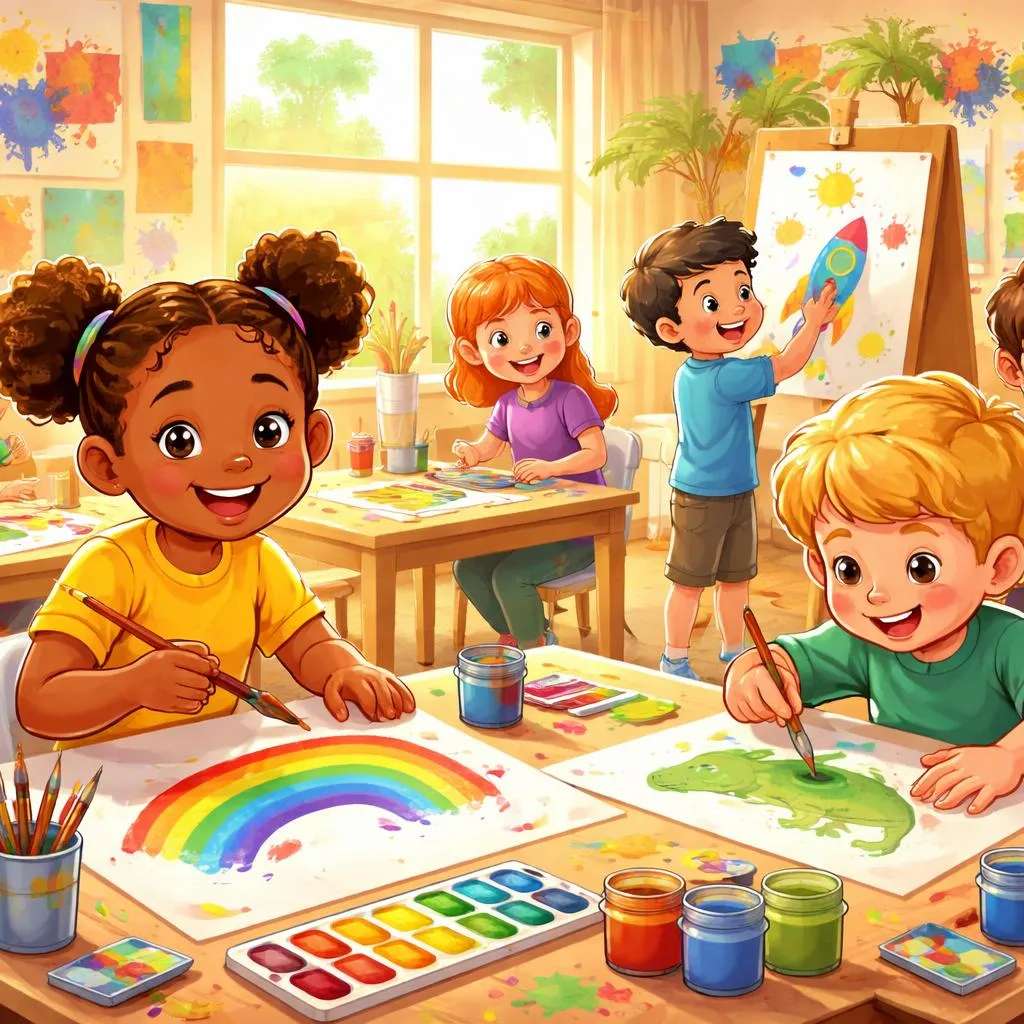

The art table is often the busiest place in any early childhood classroom. Children gather around with smocks and brushes. They dip into bright colors. They make marks on paper. When kids paint, they are doing much more than creating pictures. They are building important skills. They develop fine motor control. They learn about colors and mixing. They express feelings and ideas. They practice language as they describe their work. Painting engages the whole child. Let us explore how to use painting as a powerful learning tool in the young learners' classroom.
What Is Painting for Young Children?
Painting is a visual art activity where children apply paint to a surface. The surface is usually paper. The paint can be applied with brushes, fingers, sponges, or other tools. For young children, the process matters more than the product.
Types of painting for young children:
Easel painting - standing at an easel with brushes
Finger painting - using hands directly in paint
Watercolor painting - using water-based paints
Tempera painting - using thick, bright paints
Sponge painting - using sponges as tools
Stamping - using objects to make prints
Collaborative painting - working on a large paper together
Each type offers different experiences. Finger painting feels wonderful on hands. Easel painting builds arm strength. Sponge painting creates interesting textures.
Painting helps children in many ways. They learn to grip brushes. They learn to control marks. They learn to mix colors. They learn to plan and create. They learn to express themselves. All of this happens through joyful play.
Materials Needed When Kids Paint
Having the right materials makes painting successful. Here are the basic supplies for classroom painting.
Paint:
Tempera paint is best for young children. It is washable and comes in bright colors. It is thick and covers well. It cleans up easily with soap and water.
Brushes:
Provide different sizes of brushes. Thick brushes are easier for small hands to hold. Thin brushes allow for more detail. Keep brushes in good condition by washing them after each use.
Paper:
Heavy paper works best. Construction paper, butcher paper, or special painting paper. Newspaper can cover tables. Different sizes offer different experiences.
Smocks:
Protect children's clothing. Old shirts, aprons, or plastic smocks work well. Children can help put them on. This builds independence.
Containers:
Small cups or muffin tins hold paint. Each color needs its own container. Water cups for rinsing brushes between colors.
Drying space:
Wet paintings need a place to dry. A drying rack is ideal. A clothesline with clothespins works too. Flat tables can also work if space allows.
Cleaning supplies:
Paper towels, sponges, and a sink nearby. Teach children to help with cleanup. This builds responsibility.
Organize materials so children can reach them. Independence in choosing colors and tools builds confidence.
Setting Up the Painting Environment
The painting area should invite creativity. Here are tips for setting up a successful painting space.
Location:
Place the painting area near a sink if possible. Floor should be easy to clean. Tile or linoleum works well. Carpet is difficult to clean.
Easels:
Double-sided easels allow two children to paint at once. Adjust height so children can reach comfortably. Place paper at eye level.
Tables:
Low tables work well for group painting. Cover with newspaper or plastic. Children can stand or sit as they work.
Accessibility:
Place materials where children can reach them. Paint in small containers. Brushes in cups. Paper within easy reach. This builds independence.
Display:
Create a space to display finished paintings. A clothesline with clothespins works well. A bulletin board at children's eye level. Children love seeing their work displayed.
Cleanup station:
Set up a cleanup area nearby. Paper towels, a sink, and a place for wet paintings. Teach children the cleanup routine.
A well-organized painting area invites children to create. They know where materials are. They know how to clean up. They feel capable and independent.
Learning Activities with Paint
Painting activities can teach many concepts. Here are ideas for using paint in learning.
Color mixing:
Provide primary colors only. Red, yellow, and blue. Children discover they can make orange, green, and purple. This teaches color theory through discovery.
Texture painting:
Add sand, salt, or sawdust to paint. Children feel the texture as they paint. This adds a sensory element to the activity.
Seasonal painting:
Paint scenes from different seasons. Spring flowers, summer sun, autumn leaves, winter snow. This connects to science and calendar learning.
Story painting:
Read a story and then paint a scene from it. Children represent what they heard. This builds comprehension and imagination.
Music painting:
Play different types of music while children paint. Classical, jazz, nature sounds. Discuss how the music affects their painting. This connects to emotional expression.
Nature painting:
Take painting outdoors. Paint what you see. Trees, sky, flowers, clouds. This connects art to nature observation.
Collaborative mural:
Tape a large piece of paper to a wall or table. Several children paint together. They learn to share space and work as a team.
Painting emotions:
Talk about feelings. Paint a happy picture. Paint a sad picture. Paint an excited picture. This builds emotional vocabulary.
Vocabulary Development Through Painting
Painting naturally builds language skills. Here are words children learn when they paint.
Color words:
Red, blue, yellow, green, orange, purple, pink, brown, black, white. Children learn to name colors as they use them.
Action words:
Paint, dip, brush, mix, swirl, dot, stroke, cover, spread, rinse, wipe, dry. Children hear and use these verbs.
Texture words:
Smooth, rough, thick, thin, watery, goopy, sticky, bumpy. Children describe how the paint feels.
Tool words:
Brush, sponge, roller, smock, easel, paper, cup, tray. Children learn names of painting tools.
Process words:
First, next, then, finally. Children learn to describe the painting sequence.
Feeling words:
Happy, proud, frustrated, excited, calm. Children express feelings about their art.
Comparison words:
Lighter, darker, brighter, softer. Children compare colors and effects.
Teachers can model these words during painting. "You are using a thick brush." "The blue is darker than the green." "Tell me about your painting." This builds vocabulary naturally.
Printable Materials for Painting Activities
Printable resources support painting learning. Here are materials to prepare for painting activities.
Color mixing charts: Create simple charts showing primary colors and what they make. Red + yellow = orange. Blue + yellow = green. Red + blue = purple.
Color word cards: Make flashcards with color words. Include the color on the card. Children match the word to paint colors.
Painting prompt cards: Create cards with simple ideas. "Paint a sunny day." "Paint your family." "Paint a happy animal." Children choose a card for inspiration.
Step cards: Create cards showing painting steps. Put on smock. Get paper. Choose colors. Paint. Clean up. Children follow the sequence.
Emotion painting cards: Create cards with faces showing emotions. Happy, sad, excited, calm. Children paint how that emotion looks.
Season cards: Create cards with symbols for each season. A flower for spring. A sun for summer. A leaf for autumn. A snowflake for winter. Children paint scenes.
Laminate the cards for durability. Keep them near the painting area for reference.
Educational Games with Paint
Games make painting even more engaging. Here are games using paint.
Color Mixing Mystery: Give children cups of primary colors. Ask them to make a new color. "Can you make green?" They experiment and discover. Celebrate when they succeed.
Painting Scavenger Hunt: Give children a list of things to paint. A circle, a square, a line, a dot. They paint each item. This builds shape recognition.
Emotion Painting Charades: One child paints an emotion without saying what it is. Others guess the feeling. This builds emotional understanding.
Musical Painting: Play music while children paint. When the music stops, they move to a new painting spot and continue a friend's work. This builds cooperation.
Texture Match: Create texture boards with different materials. Sandpaper, fabric, bubble wrap. Children try to paint textures that match.
Paint by Number: Create simple outlines with numbers. Children follow the numbers to complete a picture. This builds number recognition.
Group Story Painting: Start a painting. Add one element. Pass it to the next child who adds something. Continue until everyone has contributed. Create a story about the finished painting.
Connecting Painting to Other Learning Areas
Painting connects naturally to many curriculum areas. Here are ways to extend learning.
Literacy connections:
Write stories about paintings. Label parts of paintings. Read books about artists. Create alphabet paintings. Each letter becomes a work of art.
Math connections:
Count brush strokes. Sort by color. Make patterns with painted dots. Measure paper sizes. Explore shapes in paintings.
Science connections:
Mix colors and observe changes. Paint what you see in nature. Explore how different papers absorb paint. Learn about primary and secondary colors.
Social studies connections:
Paint community helpers. Create maps with paint. Explore art from different cultures. Paint celebrations and traditions.
Physical development:
Build fine motor skills through brush control. Develop hand strength through squeezing bottles. Coordinate eye and hand movements.
Social emotional learning:
Express feelings through color. Share materials with others. Feel pride in creations. Learn to accept that art looks different for everyone.
Managing the Painting Experience
Successful painting requires good management. Here are tips for a smooth painting time.
Set clear expectations:
Explain the rules before painting begins. Paint stays on paper. Brushes stay in own colors. Clean up when finished. Children feel secure knowing boundaries.
Teach the routine:
Show children how to put on smocks. Demonstrate how to get paint. Practice cleaning up. Routines make painting time flow smoothly.
Supervise actively:
Stay near the painting area. Offer help when needed. Comment on what children are doing. "You are making long strokes." This shows interest and builds language.
Accept all efforts:
Every painting is valuable. Avoid judging or comparing. Celebrate each child's unique expression. This builds confidence and creativity.
Prepare for mess:
Mess is part of painting. Cover surfaces. Have cleaning supplies ready. Teach children that messes can be cleaned. This reduces stress.
Involve children in cleanup:
Children can help wash brushes. They can wipe tables. They can put paintings to dry. Cleanup is part of the learning process.
Responding to Children's Paintings
How adults respond to paintings matters greatly. Here are ways to respond supportively.
Notice the process:
Comment on what you see them doing. "You are mixing blue and yellow." "You are making tiny dots." This shows you value their effort.
Ask open questions:
"Tell me about your painting." "How did you make that color?" "What were you thinking about?" This invites conversation.
Avoid praise that judges:
Instead of "That's beautiful," try "You worked hard on that." Instead of "Good job," try "You used so many colors." This focuses on effort, not product.
Display paintings:
Hang paintings where children can see them. This shows that their work matters. They feel proud and valued.
Document the process:
Take photos of children painting. Display these next to finished paintings. Show the process along with the product.
Connect to experiences:
"I remember we saw ducks at the pond. Is that a duck?" This connects art to real life.
When kids paint, they are learning about themselves and their world. They are building skills that will serve them for life. They are expressing ideas they cannot yet put into words. They are creating beauty from simple materials. The painting area is not just for art. It is for math, science, language, and emotional growth. It is where children discover that they can create something new. And that discovery is powerful.