
What Is This Plant?
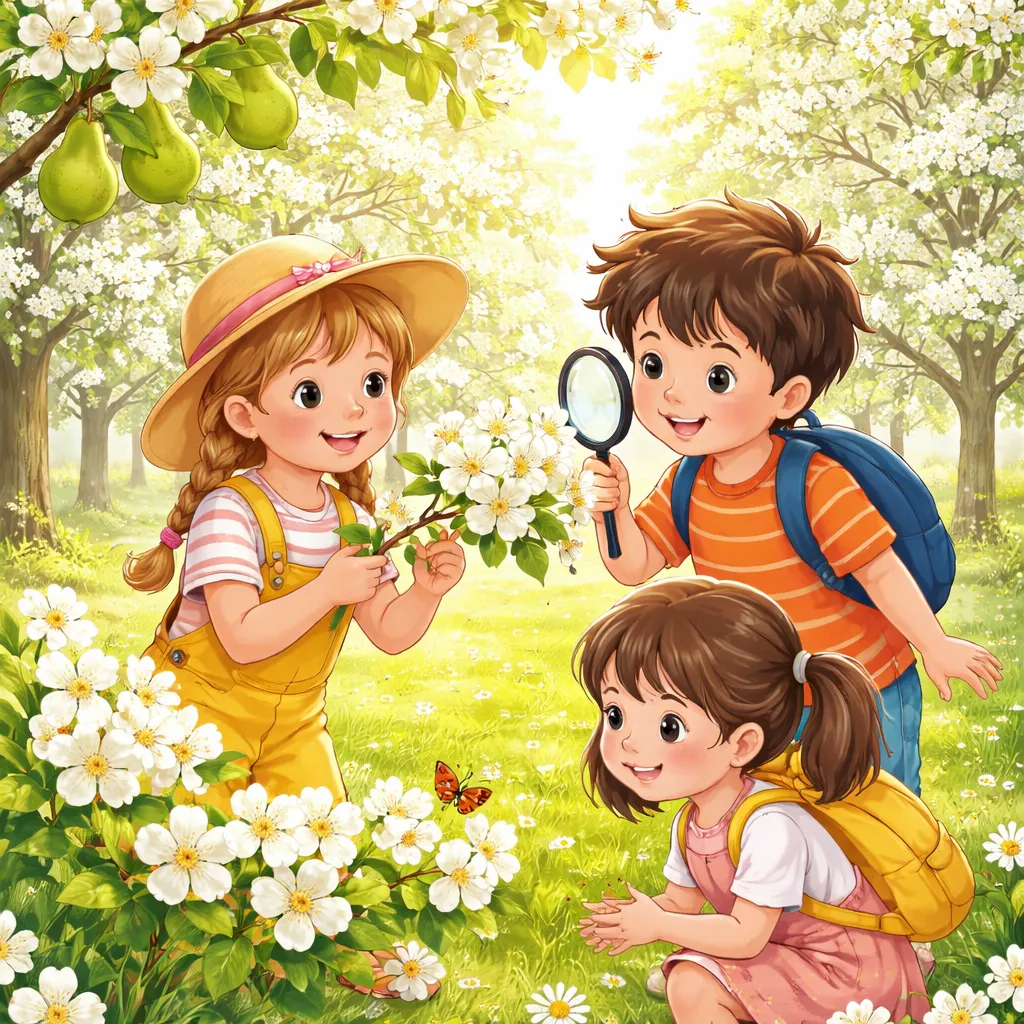
The pear blossom plant is a flowering tree that covers itself in pure white blossoms each spring. It grows as a medium to large tree with a tall, upright shape. Before the leaves appear, the entire tree becomes a cloud of white flowers. The blossoms grow in clusters. Each flower has five white petals. Sometimes the petals have a hint of pale pink. The flowers have a light, sweet scent that fills the air. After the blossoms fade, glossy green leaves appear. They are oval-shaped with tiny teeth along the edges. Later in summer and fall, the tree produces pears. The fruits are sweet and juicy. For children, a pear tree in full bloom looks like a white cloud resting on the ground. Parents can take children to see pear blossoms in orchards or gardens. Walking among the white flowers feels like stepping into a peaceful world.
English Learning About This Plant
The English name “pear blossom” combines two words. Pear comes from the fruit the tree produces. Blossom means a flower, especially on a fruit tree. The pronunciation is “pair blos-om.” The International Phonetic Alphabet (IPA) is /per ˈblɒsəm/. The words have two syllables together. Children can say it: pear blos-om. When we learn about pear blossom plant, we learn words for its parts. The trunk is the main woody stem of the tree. The branch is the part that holds the flowers and leaves. The bark is the rough outer covering. The flower is the white blossom with five petals. The cluster is a group of flowers growing together. These words help children describe this elegant spring tree.
There is a beautiful poem about pear blossoms. The poet Du Fu wrote about pear blossoms in spring rain. He described how the white flowers look like snow on the branches. Another saying goes, “Pear blossoms bring the promise of sweet fruit.” This means the beautiful flowers lead to delicious pears. Parents can share these words with their child. They become gentle lessons about hope and the rewards of patience. Pear blossoms also appear in many paintings and songs as symbols of pure beauty.
Plant Facts and Scientific Knowledge
The pear blossom plant belongs to the genus Pyrus. There are many species of pear trees. The common pear is Pyrus communis. Pears are native to Europe and Asia. They have been cultivated for thousands of years. The ancient Greeks and Romans grew pears.
Pear blossoms have five petals. The flowers are usually white, sometimes with a pale pink blush. They grow in clusters called corymbs. Each cluster can have five to ten flowers. The flowers bloom in mid to late spring, after the leaves of some other fruit trees have already appeared.
Pear trees have a distinctive shape. They grow tall and upright. Some pear trees can live for over 100 years. The bark is gray-brown and becomes rough with age. The leaves are dark green and glossy. They turn yellow, orange, or red in autumn.
Pears are unique fruits. They are sweet and juicy. Unlike many fruits, pears ripen best off the tree. They are picked when mature but still hard. Then they ripen at room temperature.
Pear blossoms have symbolic meaning. In many cultures, white flowers represent purity and innocence. Pear blossoms symbolize lasting friendship and good health. In Chinese culture, the pear tree represents longevity because pear trees live a long time. However, the word for “pear” sounds like the word for “separate” in Chinese. So pear blossoms also carry a gentle reminder to cherish time together.
How to Grow and Care for This Plant
Growing a pear blossom plant is a long-term family project. Choose a sunny spot. Pear trees need at least six hours of direct sunlight each day. The soil should be well-drained. Pear trees do not like wet roots.
Plant a young pear tree in early spring. Dig a hole twice as wide as the root ball. Place the tree in the hole. The graft union, which looks like a bump near the base, should be above the soil. Fill with soil. Water well. Children can help by holding the tree straight while you fill the hole.
Water the young tree regularly. Deep watering once a week helps the roots grow strong. In dry weather, water more often. Mulch around the base keeps the soil moist and prevents weeds.
Prune pear trees in late winter while the tree is still dormant. Remove dead, diseased, or crossing branches. Pear trees grow with a central leader. This is a main trunk that goes straight up. Children can help by collecting the pruned branches.
Fertilize pear trees in early spring. Use a balanced fertilizer. Do not overfertilize. Too much nitrogen creates leaves but fewer flowers and fruits. Protect the tree from pests. Pear trees can attract certain insects. Regular observation helps catch problems early.
Benefits of Growing This Plant
Growing a pear blossom plant brings many gifts to a family. First, it creates a spectacular spring display. The pure white flowers cover the tree like snow. Second, pear blossoms attract bees and other pollinators. Children can watch the bees moving from flower to flower. This teaches about pollination and the connection between plants and insects.
The tree also provides food. In late summer and fall, the pears ripen. Children can help harvest them. Pears can be eaten fresh, baked in pies, or made into preserves. This connects gardening to cooking and family meals.
The tree offers beauty in every season. In spring, the white blossoms bloom. In summer, the leaves are glossy green. In autumn, the leaves turn golden. In winter, the bare branches have a graceful shape. Families can watch the tree change throughout the year.
Pear blossoms also connect families to history. Pear trees have been grown for thousands of years. Parents can share stories about ancient orchards and how people have enjoyed pears for generations.
What Can We Learn From This Plant
A pear blossom plant teaches children about purity. The white flowers are clean and bright. They stand out against the sky. Children learn that simple beauty is powerful. They do not need bright colors to be noticed.
Pear blossoms also teach about patience. The tree takes years to grow and produce fruit. Children learn that they cannot rush growth. They must care for something over a long time.
Another lesson is about transformation. The white flowers become green leaves. The green leaves become golden in autumn. The golden leaves fall. Then the white flowers return in spring. Children learn that change is part of life. Each season brings something new.
Pear blossoms also teach about giving. The tree gives flowers, shade, and fruit. It gives beauty to everyone who sees it. Children learn that they too can give. They can share their gifts with others.
Fun Learning Activities
There are many simple activities to help children learn about pear blossom plant. One activity is a blossom cluster count. When the tree blooms, go outside together. Find a cluster of flowers. Count how many flowers are in the cluster. Count the petals on one flower. This builds observation and counting skills.
Another activity is a bark rubbing. Place a piece of paper against the trunk. Rub a crayon gently over the paper. The bark pattern appears. Compare the pattern with other trees. This builds observation and art skills.
A nature journal works well for pear blossoms. Draw the tree in spring with its white flowers. Draw the leaves in summer. Draw the fruit. Draw the autumn colors. Label the parts: trunk, branch, flower, leaf. Write the date when the first flower opens.
For art, try painting pear blossoms. Use white and pale pink paint. Paint the branches first. Then use a small brush to add the five-petaled flowers. Add clusters of flowers along the branches. This creates a peaceful spring picture.
Vocabulary games are fun too. Write the words pear blossom, trunk, branch, flower, cluster, and fruit on cards. Say each word. Ask your child to point to the part on the tree. Practice saying pear blossom together. Clap the syllables: pear blos-som.
Finally, try a taste test. When pears ripen, taste one together. Describe the flavor. Is it sweet? Is it juicy? Compare it to an apple. This builds descriptive language and sensory awareness.
Through these activities, children build a deep connection with a tree that brings pure white beauty and sweet rewards. They learn new words, observe nature, and discover the patience of growing fruit. The pear blossom plant becomes a symbol of purity and transformation. Each time they see pear blossoms, they remember that simple beauty is powerful. They remember that change brings new gifts. This elegant tree opens a world of seasonal wonder, cultural history, and the quiet joy of watching white blossoms turn into golden fruit.