
What Is This Plant?
The poppy plant is a delicate flowering plant with paper-thin petals in brilliant colors. It grows as a slender plant with hairy stems. The leaves are feathery and gray-green. They are deeply divided and look like lace. The flower buds nod downward. When the flower opens, the bud lifts and the petals unfold. The petals are thin and crinkly. They look like silk paper. The most famous poppies are bright red with a dark center. But poppies also come in pink, orange, yellow, purple, and white. Each flower lasts only a few days. After the petals fall, a seed pod forms. The pod has a flat top with small holes. When the wind blows, tiny seeds scatter like pepper. For children, poppies are like tissue paper flowers. The petals are so thin you can see light through them. Parents can plant poppy seeds in spring or fall. Children watch the fuzzy buds open into bright, delicate flowers.
English Learning About This Plant
The English name “poppy” comes from the Latin word “papaver.” The pronunciation is “pop-ee.” The International Phonetic Alphabet (IPA) is /ˈpɑːpi/. The word has two syllables. Children can say it: pop-ee. When we learn about poppy plant, we learn words for its parts. The leaf is the feathery, gray-green, lacy part. The stem is the slender, hairy part that holds the flower. The bud is the nodding, fuzzy part before it opens. The flower is the delicate, crinkly, papery blossom. The seed pod is the round, flat-topped part that holds the seeds. These words help children describe this delicate flower.
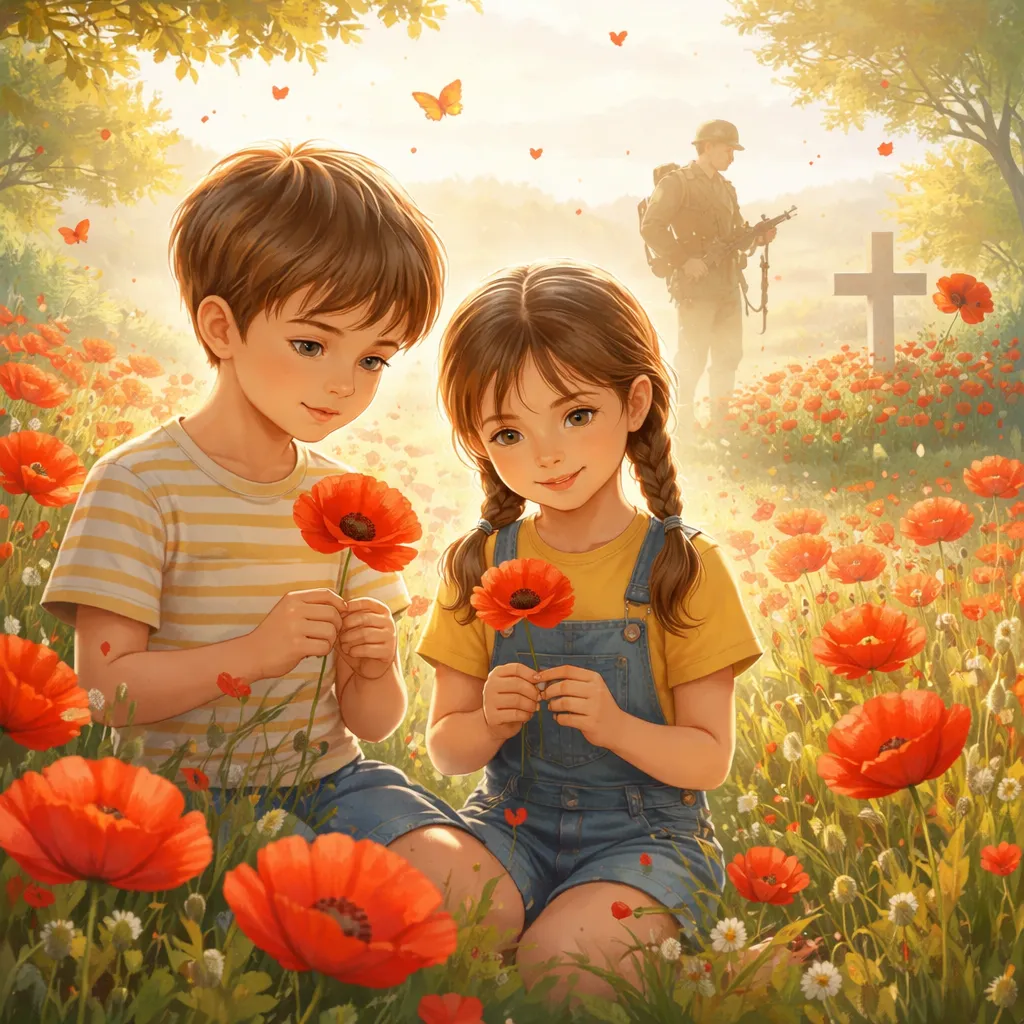
There is a famous poem about poppies. In World War I, a Canadian soldier wrote “In Flanders Fields.” It begins, “In Flanders fields the poppies blow between the crosses, row on row.” Poppies grew on the battlefields. Another saying goes, “Poppies are the flowers of remembrance.” Parents can share these words with their child. They become gentle lessons about bravery and remembering those who served. The red poppy is a symbol of remembrance in many countries.
Plant Facts and Scientific Knowledge
The poppy plant belongs to the genus Papaver. There are about 100 species. Poppies are native to Europe, Asia, and North America. They are members of the poppy family, Papaveraceae. The common red poppy is Papaver rhoeas. It is also called the corn poppy or Flanders poppy.
Poppy flowers have four to six petals. The petals are thin and crinkly. They are bright red in the common field poppy. Other species have pink, orange, yellow, purple, and white flowers. The center of the flower is dark with many stamens. The flowers bloom in spring and early summer.
Poppy leaves are feathery and deeply divided. They are gray-green. The stems are hairy. The plant grows about one to three feet tall.
After flowering, the seed pod forms. It is called a capsule. It has a flat top with small holes. When the wind blows, the stem shakes. The seeds scatter through the holes like a salt shaker. This is called “wind dispersal.”
Poppies have deep symbolic meaning. Red poppies represent remembrance for soldiers who died in war. This tradition began after World War I. Poppies also represent sleep, peace, and consolation. In Greek mythology, poppies were associated with Demeter, the goddess of agriculture.
How to Grow and Care for This Plant
Growing a poppy plant is easy for families. Plant seeds in spring or fall. Poppies do not like to be moved. Plant seeds directly in the ground. Choose a sunny spot. Poppies need full sun. They need well-drained soil. They do not like wet feet.
Scatter the seeds on the soil surface. Do not cover them. Poppy seeds need light to germinate. Press them gently into the soil. Water gently. Children can help by scattering the tiny seeds. The seeds are very small. Mix them with sand to see them better.
Water poppies regularly until they sprout. Once established, they are drought-tolerant. Do not overwater. Poppies do not need fertilizer. They grow well in poor soil.
Poppies do not like to be transplanted. Plant them where you want them to grow. They self-seed easily. You will often get new plants the next year. Let some seed pods dry on the plant. They will scatter seeds for next year.
Benefits of Growing This Plant
Growing a poppy plant brings many gifts to a family. First, the flowers are delicate and beautiful. The thin petals glow in the sun. Second, poppies are easy to grow from seed. Children can scatter the tiny seeds and watch them grow.
Poppies attract pollinators. Bees visit the flowers. Children can watch them collect pollen from the dark center.
The seed pods are fascinating. Children can watch the seeds scatter. They can collect dry pods and shake them. This teaches about seed dispersal.
Poppies also teach about remembrance. Parents can share the history of the red poppy. Children learn that flowers can carry meaning.
What Can We Learn From This Plant
A poppy plant teaches children about bravery. The red poppy reminds us of soldiers who were brave. Children learn that bravery is honored. They can be brave in their own lives.
Poppies also teach about delicacy. The petals are thin and easily torn. Children learn that delicate things are beautiful. They learn to be gentle.
Another lesson is about scattering. The seeds scatter in the wind. They find new places to grow. Children learn that they can scatter kindness. They can spread good things where they go.
Poppies also teach about remembrance. The flower reminds us to remember people and events. Children learn that remembering is important.
Fun Learning Activities
There are many simple activities to help children learn about poppy plant. One activity is a seed scattering activity. In fall, scatter poppy seeds in the garden. Mark the spot. In spring, watch for the feathery leaves. This builds anticipation and understanding of self-seeding.
Another activity is a seed pod study. When the seed pods dry, collect one. Shake it over paper. Hear the seeds rattle. Look at the tiny seeds. This builds observation and understanding of seed dispersal.
A nature journal works well for poppies. Draw the feathery, gray-green leaves. Draw the nodding bud. Draw the open flower with crinkly petals. Draw the seed pod. Label the parts: leaf, stem, bud, flower, seed pod. Write the date when the first flower opened.
For art, try painting poppies. Use bright red paint. Paint the crinkly petals. Add the dark center. Paint the feathery leaves. This creates a beautiful remembrance picture.
Vocabulary games are fun too. Write the words poppy, leaf, stem, bud, flower, and seed pod on cards. Say each word. Ask your child to point to the part on the plant. Practice saying poppy together. Clap the syllables: pop-ee.
Finally, try a remembrance activity. Talk about why people wear red poppies. Make a red poppy pin from paper. Wear it together. This connects the plant to history and remembrance.
Through these activities, children build a deep connection with a delicate flower that carries a powerful message. They learn new words, scatter seeds, and discover the meaning of remembrance. The poppy plant becomes a symbol of bravery and memory. Each spring when the red poppies bloom, children remember that delicate things can be strong. They remember that flowers can carry the memory of brave people. This beautiful flower opens a world of garden wonder, historical understanding, and the lasting lesson that even the most delicate petal can hold a powerful story.