
What Is This Plant?
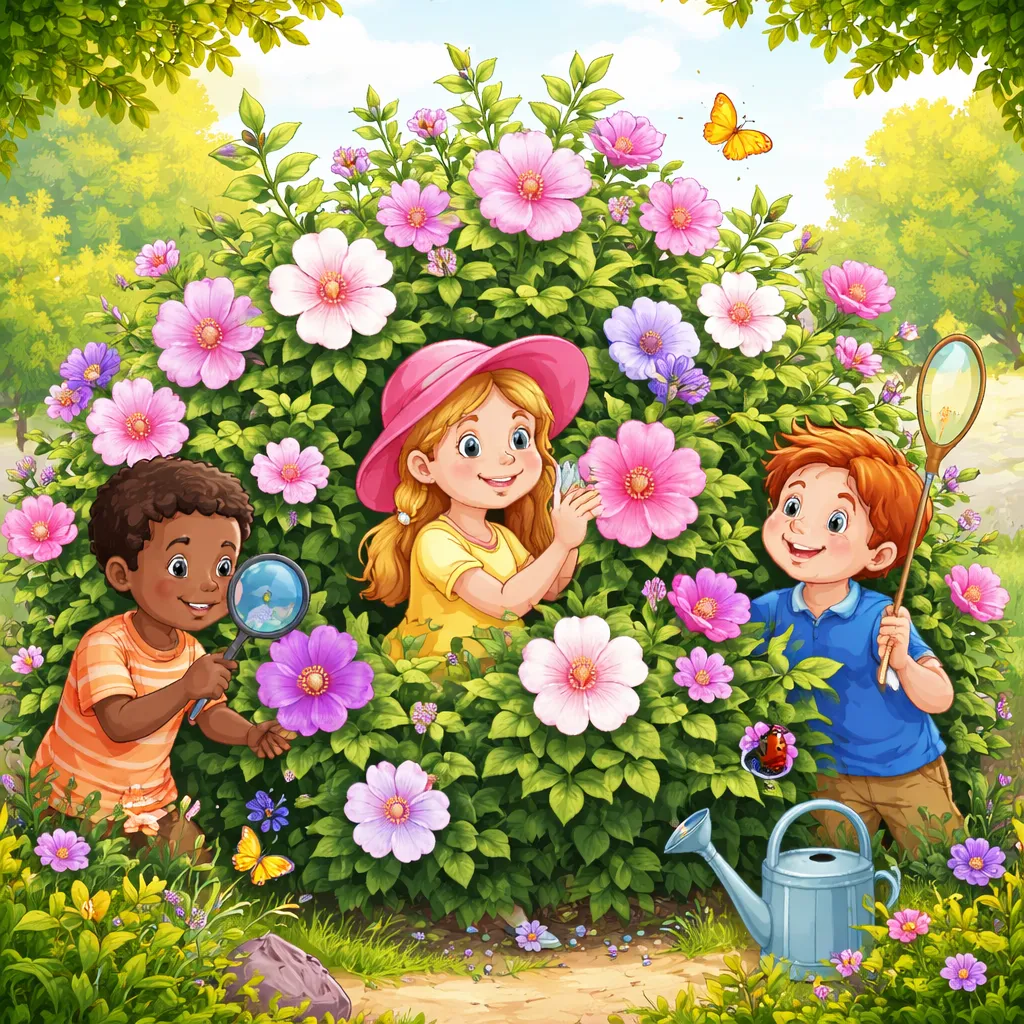
The Rose of Sharon plant is a flowering shrub that blooms in late summer when many other flowers have faded. It grows as an upright shrub with many branches. It can reach eight to twelve feet tall. The leaves are dark green and shaped like diamonds. They have three lobes. The flowers are large and showy. Each flower has five petals that spread wide. From the center, a tube of stamens sticks out. The flowers come in many colors. You can find white, pink, purple, blue, and red. Some have double flowers with many petals. The flowers bloom from mid-summer until fall. Each flower lasts only one day. But the plant produces many flowers over a long season. For children, Rose of Sharon is like a gift that keeps giving. When other flowers are tired, this shrub keeps blooming. Parents can plant Rose of Sharon in the garden. Children watch the buds form. When the first flower opens, they know more will follow.
English Learning About This Plant
The English name “Rose of Sharon” comes from a biblical reference. Sharon was a fertile plain in ancient Israel. The name suggests beauty and abundance. The pronunciation is “rose of shar-on.” The International Phonetic Alphabet (IPA) is /roʊz əv ˈʃærən/. Children can say it: rose of shar-on. When we learn about Rose of Sharon plant, we learn words for its parts. The leaf is the dark green, three-lobed part. The stem is the woody part that holds the leaves and flowers. The flower is the large, showy blossom. The petal is the soft, colorful part. The stamen is the tube in the center that holds pollen. These words help children describe this late-summer shrub.
There is a saying about Rose of Sharon. It comes from the Bible. In the Song of Solomon, it says, “I am the rose of Sharon, a lily of the valleys.” This speaks of beauty and belovedness. Another saying goes, “The Rose of Sharon blooms when the garden needs color most.” Parents can share these words with their child. They become gentle lessons about being a gift to others, especially when they are needed.
Plant Facts and Scientific Knowledge
The Rose of Sharon plant belongs to the species Hibiscus syriacus. It is a member of the mallow family, Malvaceae. It is related to the tropical hibiscus. Rose of Sharon is native to China and India. It has been cultivated for centuries. It is the national flower of South Korea.
Rose of Sharon flowers have five petals. The petals are broad and overlap slightly. In the center, a long tube holds the stamens. The stamens are covered with yellow pollen. Some varieties have double flowers. Double flowers have many layers of petals. They look like small roses.
Rose of Sharon blooms in late summer. It is one of the last shrubs to flower. The flowers open in the morning and close by evening. Each flower lasts one day. But a mature shrub can produce hundreds of flowers over several weeks.
Rose of Sharon is a deciduous shrub. It loses its leaves in winter. It is very hardy. It can grow in many climates. It tolerates heat, drought, and poor soil. This makes it easy to grow.
Rose of Sharon has symbolic meaning. It represents beauty, love, and fertility. In Korea, it symbolizes immortality. The flower appears on the national emblem. In the language of flowers, Rose of Sharon means “delicate beauty.”
How to Grow and Care for This Plant
Growing a Rose of Sharon plant is easy for families. Plant it in spring or fall. Choose a sunny spot. Rose of Sharon needs at least six hours of sunlight each day. It can grow in partial shade but flowers less.
Dig a hole twice as wide as the root ball. Place the plant in the hole. Fill with soil. Water well. Children can help by holding the plant straight while you fill the hole.
Water regularly during the first year. Once established, Rose of Sharon is drought-tolerant. Water during long dry spells. Mulch around the base keeps the soil moist.
Prune Rose of Sharon in late winter or early spring. Cut back about one-third of the plant. Remove dead or crossing branches. Pruning encourages more flowers. Children can help by collecting the pruned branches.
Rose of Sharon needs little fertilizer. A light feeding in spring is enough. Too much fertilizer creates leaves but fewer flowers. The plant may self-seed. You can remove seedlings or let them grow.
Benefits of Growing This Plant
Growing a Rose of Sharon plant brings many gifts to a family. First, it blooms when other flowers are fading. It fills the late summer garden with color. Second, it is very easy to grow. It tolerates neglect. This builds confidence in young gardeners.
Rose of Sharon attracts pollinators. Bees and butterflies visit the flowers. Hummingbirds also love them. Children can watch the activity all summer.
The plant provides privacy. It grows tall and dense. It can be used as a hedge or screen. Children can have their own secret space behind the shrub.
Rose of Sharon also teaches about hardiness. The plant survives heat, drought, and poor soil. Children learn that some plants are strong and adaptable.
What Can We Learn From This Plant
A Rose of Sharon plant teaches children about being a gift. It blooms when color is needed most. Children learn that they can be a gift to others. They can show up when they are needed.
Rose of Sharon also teaches about hardiness. The plant grows in tough conditions. It keeps blooming. Children learn that they can be hardy too. They can thrive even when conditions are not perfect.
Another lesson is about lasting beauty. The shrub blooms for weeks. Each flower is short-lived, but the plant keeps giving. Children learn that they can give over time. A single kindness is good. Many kind acts over time are even better.
Rose of Sharon also teaches about adaptability. The plant can grow in many climates. Children learn that they can adapt. They can grow in different places and situations.
Fun Learning Activities
There are many simple activities to help children learn about Rose of Sharon plant. One activity is a bloom watch. In late summer, check the plant each day. Count how many flowers are open. Mark the date when the first flower opens. See how many weeks the plant blooms. This builds observation and patience.
Another activity is a flower study. Pick a Rose of Sharon flower that has faded. Look at the five petals. Look at the stamen tube in the center. Count the stamens. Use a magnifying glass to see the pollen. This builds close observation skills.
A nature journal works well for Rose of Sharon. Draw the three-lobed leaves. Draw the large flower with five petals. Draw the stamen tube in the center. Label the parts: leaf, stem, flower, petal, stamen. Write the date when the first flower opened.
For art, try painting Rose of Sharon. Use pink, purple, or white paint. Paint the five broad petals. Paint the stamen tube in the center. Add the three-lobed leaves. This creates a beautiful late-summer picture.
Vocabulary games are fun too. Write the words Rose of Sharon, leaf, stem, flower, petal, and stamen on cards. Say each word. Ask your child to point to the part on the plant. Practice saying Rose of Sharon together. Clap the syllables: rose of shar-on.
Finally, try a seed pod activity. After the flowers fade, seed pods form. They look like small pods. When they dry, they open. Inside are fuzzy seeds. Let your child open a dry pod. See the seeds. Save some to plant next year. This teaches about the plant life cycle.
Through these activities, children build a deep connection with a shrub that brings color when it is most needed. They learn new words, observe flowers, and discover the joy of being a gift. The Rose of Sharon plant becomes a symbol of hardiness and lasting beauty. Each time they see Rose of Sharon, they remember that they can bloom when others need them. They remember that they can be strong and adaptable. This beautiful shrub opens a world of late-summer color, patient observation, and the lasting joy of being a gift to the garden when color is needed most.