
What Is This Plant?
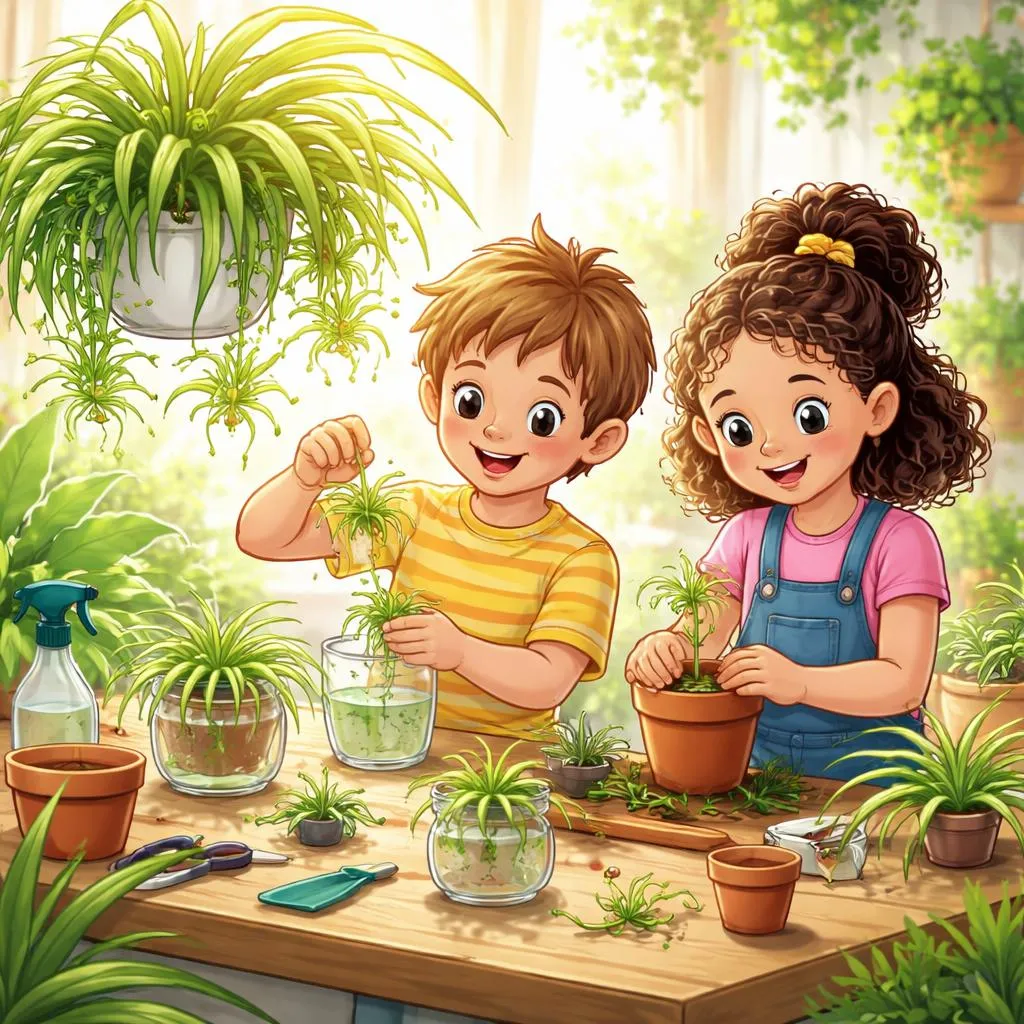
The spider plant is a popular houseplant with long, arching leaves that look like green ribbons. It grows as a clump of narrow leaves that cascade over the sides of the pot. The leaves are green with white or yellow stripes down the center. The plant is very easy to grow. It makes baby plants called spiderettes or pups. These babies grow on long stems that arch out from the mother plant. At the end of each stem, a tiny new plant forms. It looks like a little spider dangling on a thread. That is how the plant got its name. The spiderettes can be removed and planted to grow new plants. In summer, spider plants may produce small white flowers on the same stems. For children, spider plants are like magic. The mother plant makes babies that you can plant. Parents can grow spider plants in pots. Children love to watch the babies grow and plant them. This plant teaches children about propagation, sharing, and the joy of making new plants.
English Learning About This Plant
The English name “spider plant” comes from the spider-like baby plants that dangle on long stems. The pronunciation is “spy-der plant.” The International Phonetic Alphabet (IPA) is /ˈspaɪdər plænt/. Children can say it: spy-der plant. When we learn about spider plant plant, we learn words for its parts. The leaf is the long, arching, ribbon-like part. The spiderette is the baby plant that grows on a long stem. The stem is the long, thin part that holds the spiderette. The flower is the small, white blossom. The root is the thick, white part underground that stores water. These words help children describe this baby-making plant.
There is a famous saying about spider plants. They are one of the easiest plants to propagate. Another saying goes, “A spider plant gives the gift of new plants.” Parents can share these words with their child. They become gentle lessons about generosity and the joy of sharing. Spider plants are native to South Africa.
Plant Facts and Scientific Knowledge
The spider plant belongs to the species Chlorophytum comosum. It is a member of the asparagus family, Asparagaceae. It is native to South Africa. It grows in tropical and subtropical regions. It is one of the most popular houseplants in the world.
Spider plant leaves are long and narrow. They arch gracefully. The leaves can be solid green or variegated with white or yellow stripes. The plant grows in a clump. It can reach one to two feet tall and wide.
Spider plants produce long, thin stems called stolons. At the end of each stolon, a baby plant forms. These are called spiderettes or pups. The spiderettes have tiny roots. They can be cut off and planted. This makes spider plants very easy to propagate.
Spider plants produce small white flowers on the same stolons. The flowers are star-shaped. They bloom in summer. The flowers are not showy, but they are delicate and pretty.
Spider plants are known for cleaning the air. They remove toxins like formaldehyde and xylene. They are safe for pets and children.
Spider plants have symbolic meaning. They represent growth, family, and generosity. The mother plant makes many babies. They are plants of sharing and new beginnings.
How to Grow and Care for This Plant
Growing a spider plant is very easy for families. Choose a spot with bright, indirect light. Spider plants tolerate low light but grow best in bright light. They need well-drained soil. Use regular potting soil.
Plant spider plant in a pot with drainage holes. Place the plant in the pot. Fill with soil. Water well. Children can help by putting the plant in the pot and adding soil.
Water spider plants when the soil feels dry. They like consistent moisture but do not like soggy soil. Water thoroughly, then let the soil dry slightly. In winter, water less.
Spider plants need little fertilizer. Feed once a month in spring and summer with balanced fertilizer. Do not overfeed. Brown leaf tips can mean too much fertilizer or dry air.
The best part is the spiderettes. When the babies form, let them grow until they have roots. Then cut them off and plant them in small pots. Children can do this themselves. They can give the new plants as gifts.
Benefits of Growing This Plant
Growing a spider plant brings many gifts to a family. First, the plant makes babies. Children love to watch the spiderettes grow. They can plant them and share them. Second, spider plants clean the air. They remove toxins. Children learn that plants help us breathe better.
Spider plants are very easy to grow. They forgive mistakes. This builds confidence in young gardeners.
The plant teaches about propagation. Children learn that plants can make new plants without seeds. They learn about sharing and generosity.
Spider plants also teach about patience. The spiderettes take time to grow roots. Children learn to wait.
What Can We Learn From This Plant
A spider plant teaches children about generosity. The mother plant makes many babies. It gives them away. Children learn that they can be generous too. They can share what they have.
Spider plants also teach about growth. The spiderettes grow into new plants. Children learn that growth comes from care. They can help things grow.
Another lesson is about patience. The spiderettes take time to form roots. Children learn that good things take time. They can be patient.
Spider plants also teach about family. The mother plant cares for the babies. Children learn that families support each other.
Fun Learning Activities
There are many simple activities to help children learn about spider plant plant. One activity is a spiderette watch. Look at the spider plant. Find the long stems with baby plants. Count how many spiderettes are on the plant. This builds observation.
Another activity is a propagation activity. When the spiderettes have roots, cut them off. Plant them in small pots. Water lightly. Watch them grow into new plants. Give them as gifts. This teaches about sharing and plant reproduction.
A nature journal works well for spider plants. Draw the long, arching leaves with stripes. Draw the spiderette on its long stem. Draw the small white flowers. Label the parts: leaf, spiderette, stem, flower. Write the date when you planted your first spiderette.
For art, try painting spider plants. Use green and white paint. Paint the long, arching leaves. Paint the tiny spiderettes dangling on stems. This creates a picture of a plant that gives gifts.
Vocabulary games are fun too. Write the words spider plant, leaf, spiderette, stem, baby, and share on cards. Say each word. Ask your child to point to the part on the plant. Practice saying spider plant together. Clap the syllables: spy-der plant.
Finally, try a sharing activity. When you have new spider plants, give them to friends or family. Make a card to go with them. This connects the plant to generosity and kindness.
Through these activities, children build a deep connection with a plant that makes babies and gives them away. They learn new words, propagate spiderettes, and discover the joy of sharing. The spider plant becomes a symbol of generosity and family. Each time they see the dangling spiderettes, children remember that they can share. They remember that growth takes time. This generous plant opens a world of propagation wonder, air purification, and the lasting lesson that the best gift is the gift of new life.