
What Is This Plant?
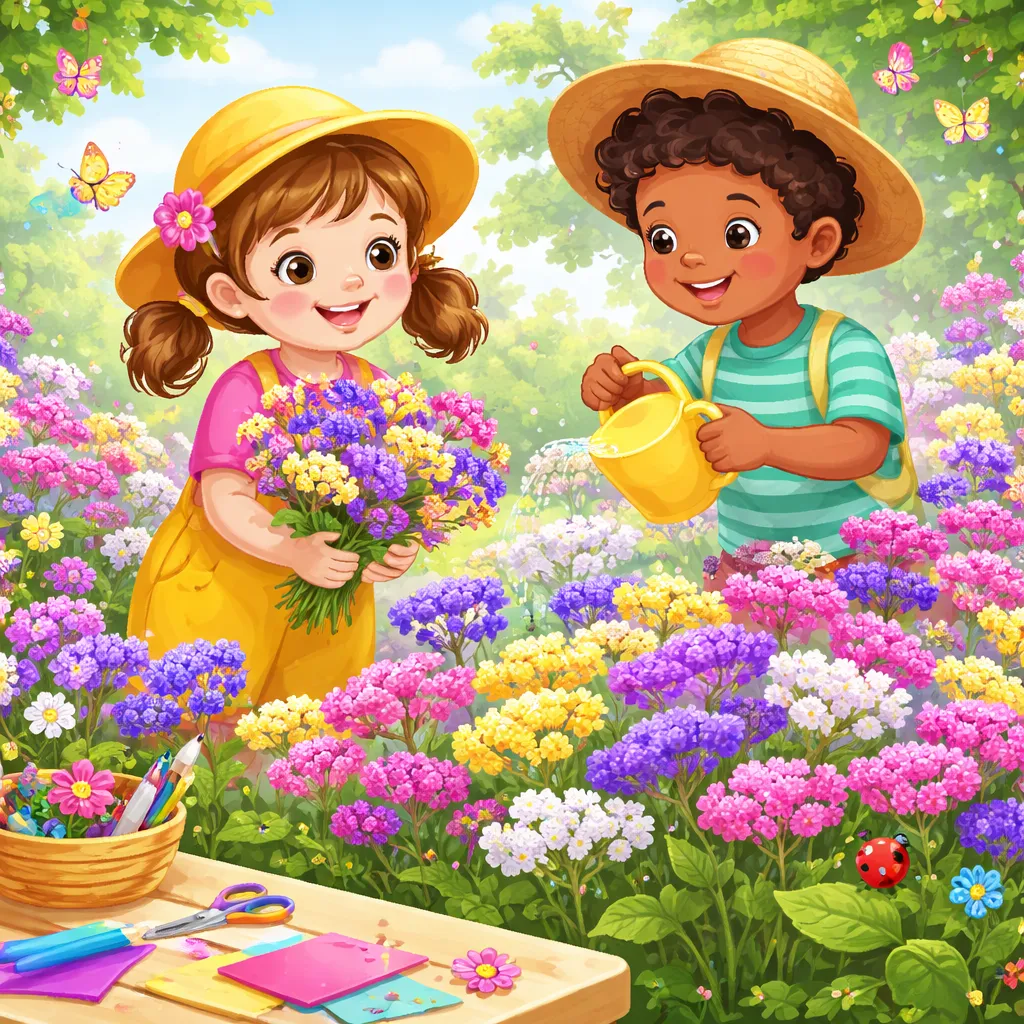
The statice plant is a colorful flowering plant with papery blooms that last a very long time. It grows as a bushy plant with branching stems. The leaves are oval and grow in a rosette at the base. They are green and sometimes wavy. The flowers are the treasure. They grow in clusters at the top of the stems. Each tiny flower has a papery texture. The flowers come in many colors. You can find purple, blue, pink, yellow, white, and lavender statice. The color comes from the papery calyx that surrounds the tiny flower. The real flower inside is small and white. The papery part stays colorful even after the flower dies. Statice blooms in summer. For children, statice is like a flower made of paper. The colors are bright and cheerful. The flowers last for weeks in a vase. They can be dried and kept for years. Parents can plant statice in the garden. Children can pick the flowers and watch them keep their color. This plant teaches children about lasting beauty.
English Learning About This Plant
The English name “statice” comes from the Latin word “statice.” It means stopping or standing. The flowers last a long time. The pronunciation is “stat-i-see.” The International Phonetic Alphabet (IPA) is /ˈstætɪsi/. The word has three syllables. Children can say it: stat-i-see. When we learn about statice plant, we learn words for its parts. The leaf is the oval, green part at the base. The stem is the branching, wiry part that holds the flowers. The flower cluster is the group of papery blooms at the top. The calyx is the papery, colorful part that stays after the flower dies. The seed is the tiny part inside. These words help children describe this long-lasting flower.
There is a saying about statice. It is also called “sea lavender” because it grows near the sea. Another saying goes, “Statice flowers never fade.” Parents can share these words with their child. They become gentle lessons about lasting beauty and memories that stay. Statice is often used in dried flower arrangements.
Plant Facts and Scientific Knowledge
The statice plant belongs to the genus Limonium. There are about 150 species. Statice is native to Europe, Asia, Africa, and Australia. It grows in coastal areas and salt marshes. It is a member of the leadwort family, Plumbaginaceae. The common garden statice is Limonium sinuatum.
Statice flowers have a unique structure. The papery part is the calyx. It surrounds the tiny white flower inside. The calyx stays colorful after the flower dies. This is why statice lasts so long. The colors can be purple, blue, pink, yellow, white, and lavender.
The leaves grow in a rosette at the base. They are oval and can be wavy or lobed. The stems are branching and wiry. The plant can be one to two feet tall. Some varieties are taller.
Statice blooms in summer. It is a favorite for cut flowers. It dries very well. Dried statice keeps its color for years. It is often used in dried arrangements and crafts.
Statice has symbolic meaning. It represents lasting beauty, remembrance, and success. Because the flowers last so long, they symbolize memories that stay. They are often used in dried bouquets to remember special occasions.
How to Grow and Care for This Plant
Growing a statice plant is easy for families. Plant seeds or small plants in spring. Choose a sunny spot. Statice needs full sun. It needs well-drained soil. It grows well in sandy or poor soil. It tolerates salt.
Plant seeds about one-quarter inch deep. Cover lightly with soil. Water gently. Children can help by scattering the seeds. The seeds are small. Mix them with sand to see them better.
Water statice regularly until established. Once established, it is drought-tolerant. Do not overwater. Statice does not like wet soil. It needs little fertilizer. Too much fertilizer makes it floppy.
Statice blooms in summer. Cut flowers for bouquets. The more you cut, the more it blooms. For dried flowers, cut when the flowers are fully open. Hang them upside down to dry. They will keep their color.
Benefits of Growing This Plant
Growing a statice plant brings many gifts to a family. First, the flowers are colorful and long-lasting. They look like little paper flowers. Second, statice is perfect for drying. Children can dry the flowers and keep them for years.
Statice attracts pollinators. Bees and butterflies visit the flowers. Children can watch them.
The plant is easy to grow. It tolerates poor soil and drought. This builds confidence in young gardeners.
Statice also teaches about lasting beauty. The flowers keep their color long after they are picked. Children learn that some things last.
What Can We Learn From This Plant
A statice plant teaches children about lasting beauty. The flowers keep their color even when dried. Children learn that beauty can last. Memories and love can last too.
Statice also teaches about adaptability. The plant grows in poor soil and salt marshes. Children learn that they can adapt to different conditions. They can grow anywhere.
Another lesson is about giving. The flowers last a long time. They can be given as gifts that last. Children learn that giving something that lasts is special.
Statice also teaches about patience. The flowers take time to dry. Children learn that good things take time.
Fun Learning Activities
There are many simple activities to help children learn about statice plant. One activity is a drying activity. Cut statice stems when the flowers are open. Tie them in small bundles. Hang them upside down. After two weeks, they are dry. Use them in a dried arrangement. This builds patience and craft skills.
Another activity is a color study. Look at different colors of statice. Purple, blue, pink, yellow, white. Count how many colors you have. This builds color recognition.
A nature journal works well for statice. Draw the oval leaves at the base. Draw the branching stems. Draw the clusters of papery flowers. Label the parts: leaf, stem, flower cluster, calyx. Write the date when the first flower opened.
For art, try painting statice. Use purple, blue, and pink paint. Paint the branching stems with clusters of papery flowers. Add the oval leaves. This creates a long-lasting picture.
Vocabulary games are fun too. Write the words statice, leaf, stem, flower cluster, calyx, and dry on cards. Say each word. Ask your child to point to the part on the plant. Practice saying statice together. Clap the syllables: stat-i-see.
Finally, try a memory activity. Dry statice flowers. Put them in a small vase. Keep them in a special place. Talk about memories you want to keep. This connects the plant to lasting memories.
Through these activities, children build a deep connection with a plant that keeps its beauty long after it is picked. They learn new words, dry flowers, and discover the joy of lasting memories. The statice plant becomes a symbol of enduring beauty and remembrance. Each time they see dried statice, children remember that some things last. They remember that they can give gifts that keep their beauty. This colorful flower opens a world of drying crafts, lasting color, and the lasting lesson that beauty can be preserved and memories can stay.