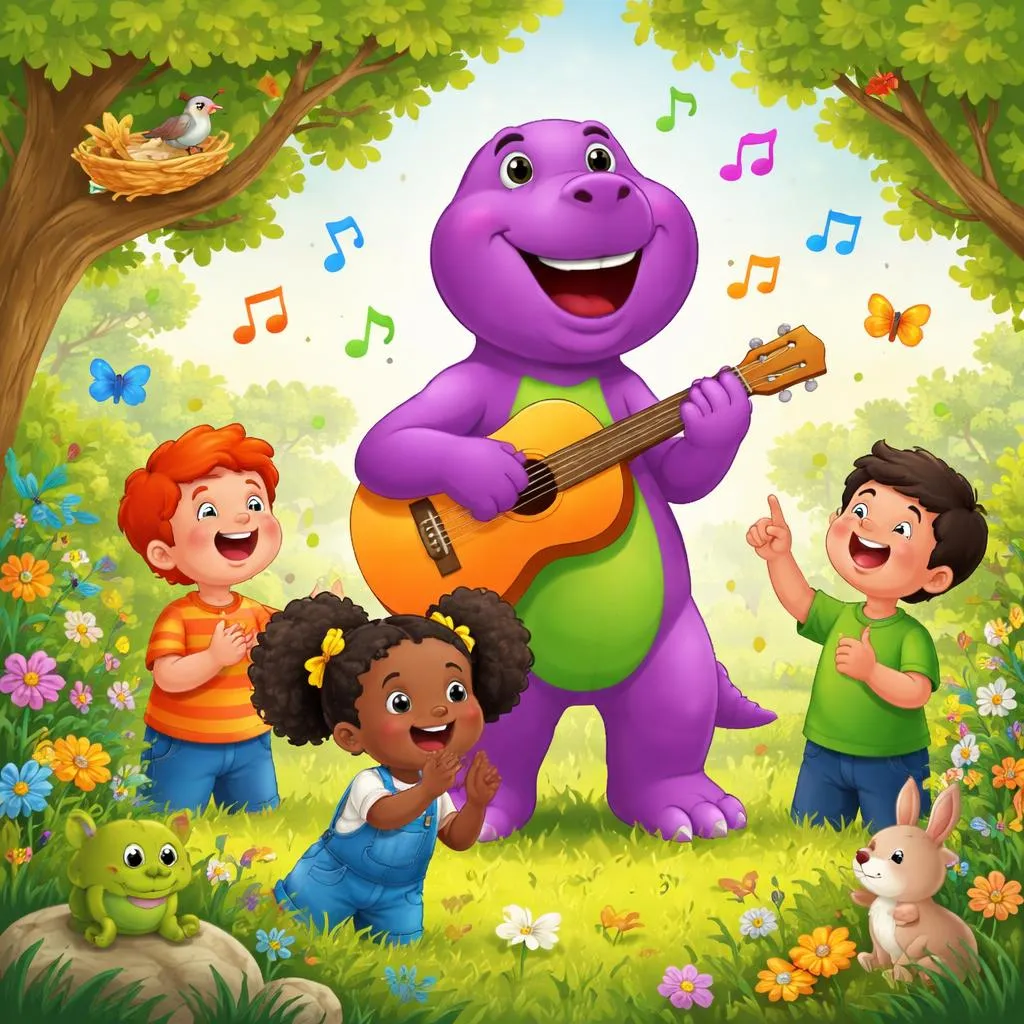

Some songs have a special quality. They capture children's attention and hold it. "The Green Grass Grows All Around" is one of these magical tunes. When Barney the dinosaur sings it, children everywhere join in. The song builds layer by layer. Each verse adds something new. This cumulative structure makes it perfect for language learning. Children remember the words because they repeat them many times. The song teaches nature vocabulary, sequencing, and memory skills all at once. By exploring the barney and the green grass grows all around song, teachers can create rich learning experiences. Let us discover how to use this cumulative folk song in the young learners' classroom.
What Is the Barney and the Green Grass Grows All Around Song? "The Green Grass Grows All Around" is a traditional folk song. It has been sung for many generations. The song is cumulative. Each verse adds a new element to the story. The verses build on each other. This structure helps children remember the words.
Barney the dinosaur made this song famous for a new generation. Barney is a purple dinosaur who loves to sing and learn. His version appears on the television show "Barney and Friends." Children love watching Barney sing with his young friends. The song becomes even more engaging with Barney's friendly presence.
The song tells a simple story about nature. There is a hole in the ground. A tree grows in the hole. A branch grows on the tree. A nest sits on the branch. An egg rests in the nest. A bird lives in the egg. The song describes each part. Then it repeats everything from the beginning.
The cumulative pattern builds memory skills. Children must remember each part to sing along. The repetition reinforces the vocabulary. By the end of the song, children have sung each word many times.
The Lyrics of the Barney Version Here is the version that Barney sings. This matches what children see on the show.
Oh, the green grass grows all around, all around, The green grass grows all around.
And in the grass there is a hole, the prettiest hole, And in the grass there is a hole, the prettiest hole.
Oh, the green grass grows all around, all around, The green grass grows all around.
And in that hole there is a tree, the prettiest tree, And in that hole there is a tree, the prettiest tree.
Oh, the green grass grows all around, all around, The green grass grows all around.
And on that tree there is a branch, the prettiest branch, And on that tree there is a branch, the prettiest branch.
Oh, the green grass grows all around, all around, The green grass grows all around.
And on that branch there is a nest, the prettiest nest, And on that branch there is a nest, the prettiest nest.
Oh, the green grass grows all around, all around, The green grass grows all around.
And in that nest there is an egg, the prettiest egg, And in that nest there is an egg, the prettiest egg.
Oh, the green grass grows all around, all around, The green grass grows all around.
And in that egg there is a bird, the prettiest bird, And in that egg there is a bird, the prettiest bird.
Oh, the green grass grows all around, all around, The green grass grows all around.
And on that bird there is a wing, the prettiest wing, And on that bird there is a wing, the prettiest wing.
Oh, the green grass grows all around, all around, The green grass grows all around.
And on that wing there is a feather, the prettiest feather, And on that wing there is a feather, the prettiest feather.
Oh, the green grass grows all around, all around, The green grass grows all around.
This version continues building. Some versions add more parts like a bug on the feather or a spot on the bug. The song can keep going as long as children want.
Vocabulary Learning from the Song The song introduces rich nature vocabulary. Children learn these words in a memorable cumulative context.
Grass: The green plant that covers the ground. Children see grass every day on playgrounds and lawns.
Hole: An opening in the ground. Animals live in holes. Children dig holes in sandboxes.
Tree: A tall plant with a trunk and branches. Trees provide shade and homes for animals.
Branch: Part of a tree that grows out from the trunk. Birds sit on branches.
Nest: A home that birds build. Nests hold eggs and baby birds.
Egg: A round object laid by birds. Baby birds hatch from eggs.
Bird: An animal with feathers, wings, and a beak. Birds fly and sing.
Wing: Part of a bird that helps it fly. Wings have feathers.
Feather: Soft covering on a bird's body. Feathers come in many colors.
Prettiest: A word meaning most beautiful. The song calls each part the prettiest. This builds comparative language.
All around: Everywhere. The grass grows in all directions.
Use these words in other contexts. Point to grass on the playground. Look for nests in trees outside. Show pictures of different bird feathers. The song provides a springboard for broader nature study.
Phonics Points in the Song The song offers excellent phonics practice. The rhyming and repetition highlight specific sounds.
The "ound" sound: Around and ground share this sound. This word family includes found, hound, and sound. Children can generate more words with this pattern.
The "ole" sound: Hole and whole share this sound. This word family includes mole, pole, and role.
The "ee" sound: Tree and see share the long "e" sound. This appears in many English words. Different spellings include tree, see, me, and be.
The "air" sound: Branch does not rhyme perfectly. But it introduces the "ch" sound at the end. This consonant digraph appears in many words.
The "est" sound: Prettiest, biggest, smallest. The -est ending makes comparisons. Children learn this pattern through the repeated word "prettiest."
The "ird" sound: Bird and heard share this sound. The "ir" pattern appears in girl, first, and shirt.
Clap the rhythm as you sing. "And in the grass there is a hole" has eight claps. This builds syllable awareness. Children learn to hear the separate beats in words.
Grammar Patterns in the Lyrics The song demonstrates several grammar patterns. Children absorb these through repetition.
Prepositional phrases: In the grass, on that tree, in that nest, on that bird. These phrases tell where things are located. Children learn common prepositions naturally.
There is / there are: "There is a hole" introduces new information. This structure appears in every verse. Children learn to use it for describing existence.
The + noun: The grass, the hole, the tree. Using "the" for specific things. The song uses "the" because each item is specific in the story.
Adjectives before nouns: Green grass, pretty hole. The adjective comes before the noun. This is the standard English pattern. Children internalize this word order.
Repetition for emphasis: "All around, all around" repeats for rhythm. This shows how English uses repetition for effect.
Comparatives: "The prettiest" uses the superlative form. Children learn that -est means the most.
Present tense verbs: Grows, is, sits. The song uses present tense throughout. This describes things that are true generally.
The song provides rich language input. Children do not need to analyze the grammar. They absorb it through joyful repetition.
Learning Activities with the Song Songs become powerful teaching tools when we add activities. Here are ideas for using this song in the classroom.
Build the Story Props: Create simple props for each part. A green blanket for grass. A box for the hole. A paper tree. A branch from outside. A nest from twigs. A plastic egg. A stuffed bird. A feather. As the song adds each part, place the prop in the correct spot. Children see the story build visually.
Draw Along: Give children paper and crayons. As the song adds each part, they add it to their drawing. Start with green grass all around. Add a hole. Add a tree. Add a branch. By the end, each child has a complete picture of the scene.
Act Out the Song: Children become the parts. One child is the grass, lying on the floor. Another is the hole, making a circle with arms. Another is the tree, standing tall. Another is the branch, extending arms. Continue through all parts. This kinesthetic approach engages the whole body.
Nature Walk: Go outside and look for real examples. Find grass, holes, trees, branches, nests, birds, and feathers. Talk about each one using words from the song. This connects the song to the real world.
Build a Nest: Gather twigs, grass, and leaves. Show children how birds build nests. Let them try to build their own small nests. Add a plastic egg. This connects to the song and teaches about nature.
Feather Exploration: If possible, bring in clean feathers. Children feel them. They notice how soft and light they are. They can paint with feathers. This sensory experience makes the word "feather" meaningful.
Cumulative Storytelling: Use the song's pattern to create new cumulative stories. Start with a house. In the house there is a room. In the room there is a table. On the table there is a book. Children create their own versions.
Printable Materials for Classroom Use Having printable resources makes lesson planning easier. Here are materials to prepare for this song.
Lyric Poster: Create a large poster with the full lyrics. Add simple illustrations for each part. Display it during singing time. Children can follow along as they sing.
Vocabulary Cards: Make flashcards for key words. Grass, hole, tree, branch, nest, egg, bird, wing, feather. Use pictures on one side and words on the other.
Sequencing Cards: Create picture cards showing each part. Grass, hole, tree, branch, nest, egg, bird, wing, feather. Children arrange them in the correct order. This builds comprehension of the cumulative structure.
Mini Books: Create simple foldable books with the song lyrics. Each page has one verse and a picture to color. Children take these home to share with families.
Coloring Pages: Design coloring pages showing the complete scene. Grass all around, a hole, a tree with a branch, a nest with an egg, a bird with wings and feathers. Children color while listening.
Build-Your-Own Scene: Create a page with all the parts as cutouts. Grass strip, hole circle, tree shape, branch, nest, egg, bird, wing, feather. Children cut and glue them in the correct order.
Word Search: Create a simple word search with words from the song. Children find and circle the words. This builds word recognition.
Educational Games for Deeper Learning Games make learning joyful. Here are games centered around the song.
What's Missing?: Place all the prop items in view. Children close their eyes. Remove one item. Children open their eyes and name what is missing. "The egg is missing!" This builds observation and vocabulary.
Cumulative Memory Game: Start with the first line. "The green grass grows all around." The next child adds the next part. Continue around the circle. Anyone who forgets a part is out. The last person standing wins. This builds memory and sequencing.
Nature I Spy: Play I Spy using words from the song. "I spy something green that grows on the ground." Children guess "grass!" "I spy something that birds build." Children guess "nest!"
Match the Part: Give children cards with the words. Hold up a prop. Children hold up the matching word card. This builds word recognition.
Build a Story Game: Use the song's pattern to create new stories. Choose a new setting. In the classroom there is a desk. On the desk there is a book. In the book there is a picture. Children create and tell their cumulative stories.
Barney Says: Play a variation of Simon Says using the song. "Barney says be a tree." Children stand tall like trees. "Barney says be a bird." Children flap their wings. This combines movement with song references.
Feather Drop Game: Drop a feather and watch it float. Children try to catch it before it lands. This connects to the feather in the song and builds motor skills.
Connecting to Science and Nature The song naturally leads to science learning about nature.
Bird Study: Learn about real birds. What do they eat? Where do they live? How do they build nests? Watch birds outside the classroom window. Keep a bird journal.
Tree Study: Learn about trees in your area. What kinds of trees grow nearby? What do their leaves look like? Do they have nests? Measure tree trunks. Draw tree branches.
Life Cycles: The egg in the nest leads to discussions about life cycles. How do birds grow? What comes out of an egg? Learn about other animals that lay eggs.
Habitat Study: The grass, hole, and tree create a habitat. What other animals might live there? Worms in the ground. Squirrels in the tree. Bugs on the branches. Build a diorama of the habitat.
Feather Science: Why do birds have feathers? How do feathers help birds fly? Why are some feathers different colors? Examine feathers with magnifying glasses.
Seasons and Growth: The grass grows all around. Talk about how plants grow. What do they need? Sun, water, soil. Watch grass grow in a cup in the classroom.
The barney and the green grass grows all around song connects children to nature through music. Each verse builds on the last, creating a complete picture of a small ecosystem. Children learn vocabulary, memory skills, and scientific concepts all while singing along with a friendly purple dinosaur. The song becomes a doorway to exploring the natural world. And that is a beautiful thing.