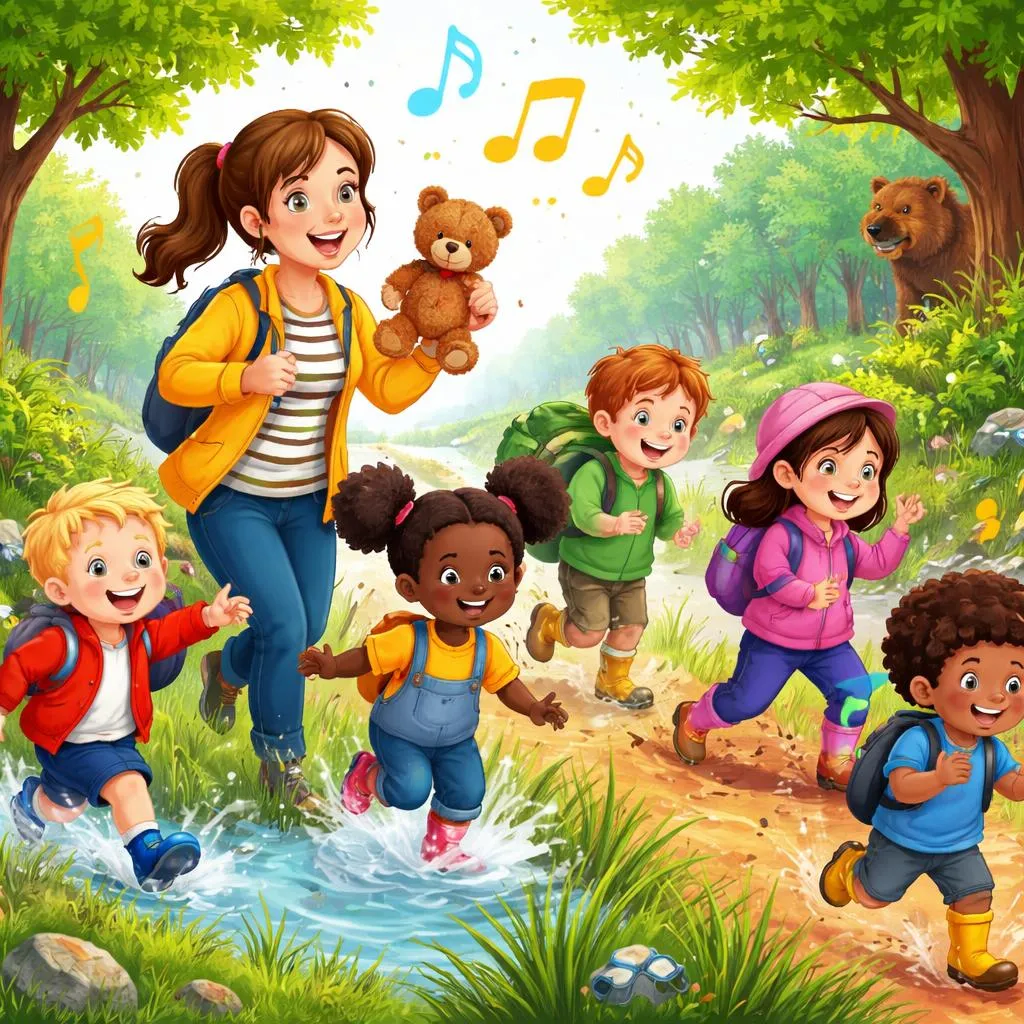

Some songs capture children's imaginations and never let go. "We're Going on a Bear Hunt" is one of these timeless treasures. It tells the story of a family going on an adventure. They face obstacles along the way. They finally find a bear and run back home. The bear hunt song lyrics are full of rhythm and repetition. Children love joining in with the sounds and actions. The song builds vocabulary, phonemic awareness, and memory skills. Let us discover how to use this classic song in the young learners' classroom.
What Is the Bear Hunt Song? "We're Going on a Bear Hunt" is based on the beloved children's book by Michael Rosen and Helen Oxenbury. The book was published in 1989 and has become a classic. The song version follows the same story with rhythmic, chant-like lyrics.
The story follows a family on an adventure to find a bear. They encounter different obstacles on their journey. They go through long grass, a deep river, thick mud, a dark forest, a snowstorm, and a narrow cave. Each obstacle has a sound and an action.
The family says "We can't go over it. We can't go under it. Oh no! We've got to go through it!" Finally, they find a bear in the cave. They get scared and run back through all the obstacles to their home. They hide under the covers and promise never to go on a bear hunt again.
The song is perfect for young children. The repetition makes it easy to remember. The sounds make it fun to say. The actions make it active. Children can join in from the very first time they hear it.
The Bear Hunt Song Lyrics Here are the lyrics to this beloved song. These bear hunt song lyrics have been shared with millions of children around the world.
We're going on a bear hunt. We're going to catch a big one. What a beautiful day! We're not scared.
Uh-uh! Grass! Long, wavy grass. We can't go over it. We can't go under it. Oh no! We've got to go through it! Swishy swashy! Swishy swashy! Swishy swashy!
We're going on a bear hunt. We're going to catch a big one. What a beautiful day! We're not scared.
Uh-uh! A river! A deep, cold river. We can't go over it. We can't go under it. Oh no! We've got to go through it! Splash splosh! Splash splosh! Splash splosh!
We're going on a bear hunt. We're going to catch a big one. What a beautiful day! We're not scared.
Uh-uh! Mud! Thick, oozy mud. We can't go over it. We can't go under it. Oh no! We've got to go through it! Squelch squerch! Squelch squerch! Squelch squerch!
We're going on a bear hunt. We're going to catch a big one. What a beautiful day! We're not scared.
Uh-uh! A forest! A big, dark forest. We can't go over it. We can't go under it. Oh no! We've got to go through it! Stumble trip! Stumble trip! Stumble trip!
We're going on a bear hunt. We're going to catch a big one. What a beautiful day! We're not scared.
Uh-uh! A snowstorm! A swirling, whirling snowstorm. We can't go over it. We can't go under it. Oh no! We've got to go through it! Hoooo woooo! Hoooo woooo! Hoooo woooo!
We're going on a bear hunt. We're going to catch a big one. What a beautiful day! We're not scared.
Uh-uh! A cave! A narrow, gloomy cave. We can't go over it. We can't go under it. Oh no! We've got to go through it! Tiptoe! Tiptoe! Tiptoe!
What's that? One shiny wet nose! Two big furry ears! Two big goggly eyes! IT'S A BEAR!
Quick! Back through the cave! Tiptoe! Tiptoe! Tiptoe! Back through the snowstorm! Hoooo woooo! Hoooo woooo! Back through the forest! Stumble trip! Stumble trip! Back through the mud! Squelch squerch! Squelch squerch! Back through the river! Splash splosh! Splash splosh! Back through the grass! Swishy swashy! Swishy swashy!
Get to our front door. Open the door. Up the stairs. Oh no! We forgot to shut the door. Back downstairs. Shut the door. Back upstairs. Into the bedroom. Jump into bed. Under the covers. We're never going on a bear hunt again!
This delightful song has a rhythm that children love. They join in with the repeated phrases and sound effects.
Vocabulary Learning from the Song The song introduces rich vocabulary about nature, obstacles, and actions. Children learn these words in a memorable musical context.
Nature words: Grass - the green plant covering the ground River - flowing water Mud - wet, soft earth Forest - a place with many trees Snowstorm - a storm with falling snow Cave - a hollow place in rocks Bear - a large, furry animal
Descriptive words: Long - not short Wavy - having curves Deep - going far down Cold - not warm Thick - not thin Oozy - soft and wet Dark - not light Swirling - moving in circles Whirling - spinning around Narrow - not wide Gloomy - dark and sad Shiny - reflecting light Furry - covered with fur Goggly - big and round
Action words: Go - to move Catch - to get hold of Scared - afraid Open - to move a door Close - to shut Jump - to leap Run - to move quickly Tiptoe - to walk quietly
Sound words: Swishy swashy - sound in grass Splash splosh - sound in water Squelch squerch - sound in mud Stumble trip - sound of tripping Hoooo woooo - sound of wind Tiptoe - quiet walking
Use these words in other contexts. Go outside and feel grass. Walk through puddles and make splash sounds. This connects vocabulary to real experiences.
Phonics Points in the Song The song offers excellent phonics practice. The sound words and repetition highlight specific sounds.
The "ish" sound: Swishy contains this sound. This word family includes fish, dish, and wish. Children hear the "sh" digraph.
The "ash" sound: Splash contains this sound. This word family includes crash, dash, and trash. The "sh" at the end is common.
The "ench" sound: Squelch contains this sound. This is less common but fun to say. Children feel the "ch" at the end.
The "ip" sound: Trip contains this sound. This word family includes dip, sip, and zip. The short "i" sound is common.
The "oo" sound: Hoooo has the long "oo" sound. This word family includes boo, moo, and zoo. Children practice this vowel sound.
Syllable counting: Clap the syllables in key words. Grass has one clap. Riv-er has two. For-est has two. Snow-storm has two. This builds phonemic awareness.
Initial sounds: Bear starts with B. Grass starts with G. River starts with R. Mud starts with M. Forest starts with F. Cave starts with C. Practice saying the first sound of each word.
Onomatopoeia: The song is full of sound words. Swishy swashy, splash splosh, squelch squerch. These words sound like what they describe. Children love saying them.
Grammar Patterns in the Song The song demonstrates several grammar patterns. Children absorb these through repetition.
Present continuous tense: "We're going on a bear hunt" uses present continuous. This shows action happening now. Children learn this common pattern.
Future intention: "We're going to catch a big one" shows future intention. The "going to" structure is very common.
Negative statements: "We're not scared" is a negative. Children learn to use "not" with the verb "to be."
Exclamations: "What a beautiful day!" shows excitement. Children learn that exclamation points show strong feeling.
Questions: "What's that?" asks about something unknown. This simple question is very useful.
Prepositional phrases: Over it, under it, through it. These prepositions show position and movement. Children learn these important words.
Repetition for emphasis: The repeated phrases help children remember. "We can't go over it. We can't go under it. Oh no! We've got to go through it!" This pattern appears for each obstacle.
Sequencing words: Back through, back through, back through shows the return journey. Children understand the sequence of events.
The song provides rich language input. Children do not need to analyze the grammar. They absorb it through joyful repetition.
Learning Activities with the Song Songs become powerful teaching tools when we add activities. Here are ideas for using the bear hunt song lyrics in the classroom.
Action Singing: Sing the song and do the actions. Swish arms for grass. Make swimming motions for river. Pretend to squelch through mud. Stumble through the forest. Shiver in the snowstorm. Tiptoe into the cave. Children love joining in.
Obstacle Course: Create an obstacle course representing the obstacles. Blue paper for river. Brown paper for mud. Green streamers for grass. Pillows for snowstorm. A tent or table for cave. Children go through each obstacle while chanting the words.
Sound Effects Orchestra: Assign different sound effects to groups. One group makes swishy swashy sounds. One makes splash splosh sounds. One makes squelch squerch sounds. Sing the song and each group makes their sound at the right time.
Bear Hunt Map: Draw a simple map showing the journey. Grass, river, mud, forest, snowstorm, cave. Children retell the story using the map. They point to each obstacle as they describe it.
Bear Craft: Make a bear from paper plates or brown paper. Add eyes, nose, and ears. Use the bears when retelling the story. Hide the bear in a "cave" and find it at the right moment.
Story Sequencing Cards: Create picture cards showing each obstacle. Children arrange them in the order of the song. They retell the story using the cards.
Sound Word Writing: Children draw a picture of one obstacle. They write the sound word under it. Swishy swashy, splash splosh, squelch squerch. This builds writing skills.
Printable Materials for Classroom Use Having printable resources makes lesson planning easier. Here are materials to prepare for this song.
Lyric Poster: Create a large poster with the full lyrics. Add simple illustrations of each obstacle. Display it during singing time. Children can follow along.
Obstacle Sequence Cards: Create cards showing each obstacle in order. Grass, river, mud, forest, snowstorm, cave. Children arrange them and retell the story.
Sound Word Cards: Create cards with each sound word. Swishy swashy, splash splosh, squelch squerch, stumble trip, hoooo woooo, tiptoe. Children match them to the obstacle.
Obstacle Picture Cards: Create large pictures of each obstacle. Use them during singing. Hold up the grass picture when singing that part.
Bear Puppet Template: Provide templates for making a bear puppet. Children color, cut out, and attach to a craft stick. Use it for the bear at the end.
Coloring Pages: Design coloring pages showing each obstacle. Children color while listening to the song. Add the sound words for tracing.
Mini Books: Create simple foldable books with the song lyrics. Children illustrate each page. They take these home to share with families.
Educational Games for Deeper Learning Games make learning with songs joyful. Here are games centered around the bear hunt song lyrics.
Bear Hunt Bingo: Create bingo cards with pictures of obstacles and sound words. Call out descriptions. "We went through long, wavy grass." Children cover the grass picture. First to cover a row wins.
Obstacle Memory Match: Create pairs of obstacle picture cards. Place them face down. Children take turns flipping two cards, trying to find matches. When they make a match, they name the obstacle and make the sound.
Sound Charades: Act out going through an obstacle without speaking. Make the movements for grass, river, mud, etc. Children guess which obstacle it is.
What's Next?: Sing the song but pause before each obstacle. Children predict what comes next. This builds comprehension and memory.
Bear Hunt Relay Race: Set up stations representing each obstacle. Children go through the course one by one. At each station, they say the sound word before moving on.
Obstacle Sorting: Create cards with different obstacles. Children sort them into categories. Water obstacles (river), ground obstacles (grass, mud), weather obstacles (snowstorm), place obstacles (forest, cave).
Bear Hunt Freeze Dance: Play the song while children act out going on a bear hunt. When the music stops, they freeze in position. Name the obstacle they were going through.
Connecting to Other Learning Areas The song connects naturally to many curriculum areas. Here are ways to extend learning.
Geography: Look at maps. Talk about different landscapes. Discuss how people travel through different terrains. Create simple maps of the journey.
Science: Learn about bears. Where do bears live? What do they eat? How do they survive winter? Discuss real bears versus story bears.
Music: Create soundscapes for each obstacle. Use instruments to make swishy, splashy, squelchy sounds. Compose music for the bear hunt.
Art: Create dioramas of each obstacle. Use different materials to represent grass, water, mud, snow. Display them in order.
Physical education: Create an obstacle course based on the song. Children crawl, jump, tiptoe, and run through it. This builds gross motor skills.
Social emotional learning: Discuss feelings. Were the children scared? Brave? Excited? How did they feel when they saw the bear? How did they feel safe at home?
The bear hunt song lyrics have delighted children for generations. The rhythmic text and engaging story create a rich learning experience. Children develop vocabulary, phonemic awareness, and comprehension skills. They learn about narrative structure and sequence. They explore sound words and descriptive language. Most importantly, they discover that learning through song is fun. And that discovery lasts a lifetime.