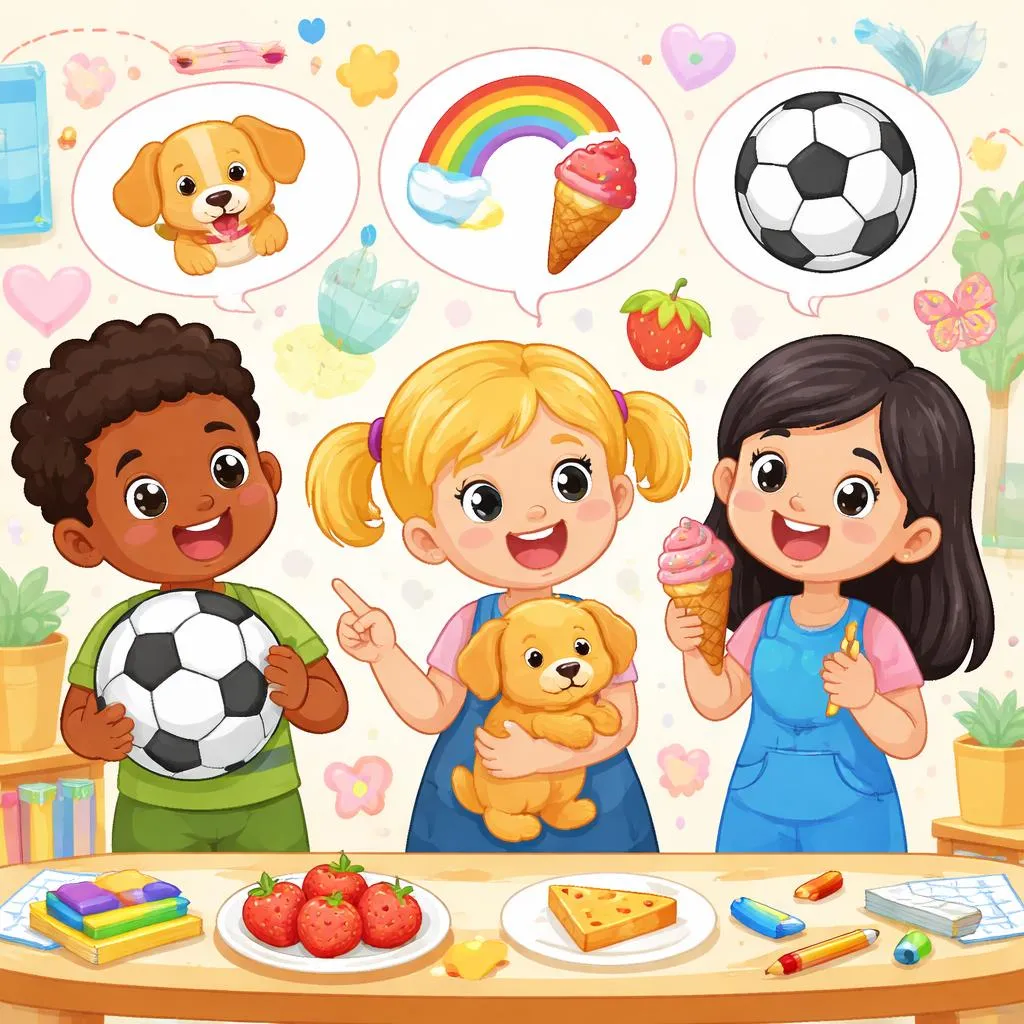

The words "I like" are among the first that children want to say. They express preferences. They share joys. They tell the world what brings happiness. Adding "a" to this phrase opens even more possibilities. "I like a" introduces singular nouns. It helps children talk about one thing they enjoy. This simple pattern appears countless times in daily conversation. Teaching this structure gives children the power to express themselves clearly. Let us explore how to guide young learners through this essential language pattern.
Meaning of I Like a
The phrase "I like a" expresses preference for one thing. The word "I" means the speaker. "Like" shows enjoyment or preference. "A" introduces one singular noun. Together, they create a complete thought about something the speaker enjoys.
Basic meaning: The speaker enjoys one specific thing from a category.
I like a cat. (I enjoy cats in general, one cat as an example)
I like a good book. (I enjoy reading good books)
With adjectives: Describing words can come between "a" and the noun.
I like a red apple.
I like a happy story.
I like a soft blanket.
With verbs: Sometimes "like" is followed by "to" plus a verb.
I like to run.
I like to draw.
I like to sing.
For young learners, start with simple nouns. I like a dog. I like a ball. I like a cookie. These are concrete and meaningful. Children can see and touch these things.
Conjugation of I Like a
The verb "like" changes form for different subjects. Children need to learn these patterns.
Present tense:
I like a
You like a
He likes a
She likes a
It likes a (rare, but possible for pets)
We like a
They like a
Negative present:
I do not like a
You do not like a
He does not like a
She does not like a
It does not like a
We do not like a
They do not like a
Contractions:
I don't like a
You don't like a
He doesn't like a
She doesn't like a
It doesn't like a
We don't like a
They don't like a
Past tense:
I liked a
You liked a
He liked a
She liked a
It liked a
We liked a
They liked a
Future tense:
I will like a
You will like a
He will like a
She will like a
It will like a
We will like a
They will like a
For beginners, focus on "I like a" and "I don't like a." These are the most useful. Add other subjects gradually as children gain confidence.
Present Tense with I Like a
The present tense with "I like a" describes things the speaker enjoys now. This is the most common use for young learners.
Positive statements:
I like a banana.
I like a blue crayon.
I like a happy song.
I like a sunny day.
I like a funny story.
I like a soft pillow.
I like a cold drink.
Negative statements:
I do not like a spicy food.
I do not like a scary movie.
I do not like a loud noise.
I do not like a broken toy.
I do not like a rainy day.
I do not like a mean person.
Questions:
Do you like a banana?
Do you like a blue crayon?
Do you like a happy song?
Short answers:
Yes, I do.
No, I do not.
Yes, I like bananas.
No, I do not like scary movies.
Practice these sentences during daily routines. During snack time, ask "Do you like an apple?" During art, ask "Do you like a red crayon?" This connects grammar to real experiences.
Past Tense with I Like a
The past tense "I liked a" describes things the speaker enjoyed before now.
Past positive statements:
I liked a story we read yesterday.
I liked a song from music class.
I liked a game we played last week.
I liked a movie I saw.
I liked a cookie at the party.
I liked a book from the library.
I liked a toy when I was little.
Past negative statements:
I did not like a loud noise at the parade.
I did not like a cold bath.
I did not like a scary dream.
I did not like a bumpy ride.
I did not like a bitter medicine.
Past questions:
Did you like a story?
Did you like a song?
Did you like a game?
Past short answers:
Yes, I did.
No, I did not.
Yes, I liked that book.
No, I did not like that food.
Use clear time markers with past tense. Yesterday, last week, when I was little. These words signal that the time is past.
Future Tense with I Like a
The future tense "I will like a" describes things the speaker might enjoy later.
Future positive statements:
I will like a present on my birthday.
I will like a trip to the beach.
I will like a new teacher next year.
I will like a movie we see tomorrow.
I will like a snack after school.
I will like a game we play later.
I will like a book we read soon.
Future negative statements:
I will not like a scary noise tonight.
I will not like a long car ride.
I will not like a bad dream.
I will not like a yucky vegetable.
I will not like a rainy picnic.
Future questions:
Will you like a party?
Will you like a new game?
Will you like a special treat?
Future short answers:
Yes, I will.
No, I will not.
Yes, I will like that.
No, I will not like that.
Future time markers include tomorrow, next week, later, on my birthday. These words help children understand when the action happens.
Questions with I Like a
Forming questions with "like" follows a pattern. Use "do" or "does" at the beginning.
Yes or no questions with like:
Do you like a dog?
Do you like a cat?
Do you like a red ball?
Does he like a train?
Does she like a doll?
Do they like a park?
Information questions:
What do you like?
What does he like?
What does she like?
What do they like?
Why do you like a rainy day?
Where do you like to play?
Questions about preferences:
Do you like a book or a movie?
Do you like a hot day or a cold day?
Do you like a sweet snack or a salty snack?
Answer practice:
Yes, I like dogs.
No, I do not like cats.
I like a red ball.
He likes trains.
She likes dolls.
They like the park.
Practice question patterns during sharing time. Ask children about their preferences. This builds conversation skills and grammar together.
Other Uses of I Like a
The pattern "I like a" has other uses beyond simple preferences. Children will encounter these as they progress.
I like a + person:
I like a friend who shares.
I like a teacher who helps.
I like a mom who reads stories.
I like a + place:
I like a park with swings.
I like a beach with soft sand.
I like a library with many books.
I like a + time:
I like a sunny morning.
I like a quiet afternoon.
I like a starry night.
I like a + activity (with to):
I like to draw a picture.
I like to sing a song.
I like to read a book.
I like a + food:
I like a pizza with cheese.
I like a sandwich with ham.
I like a cake with icing.
I like a + color:
I like a blue sky.
I like a green tree.
I like a yellow sun.
These variations show the flexibility of the pattern. Children learn to express preferences about many aspects of life.
Learning Tips for Teaching I Like a
Teaching "I like a" requires clear strategies. Here are tips for introducing this pattern effectively.
Start with real objects: Bring actual items to class. A ball, a book, a cookie. Hold each up and say "I like a ball." Children understand concrete examples best.
Use pictures: Show pictures of favorite things. Animals, foods, toys. Point and say "I like a dog." Children connect the words to the images.
Model the pattern: Say "I like a" sentences throughout the day. "I like a sunny day." "I like a quiet classroom." Children hear the pattern repeatedly.
Encourage sharing: During circle time, ask children to share something they like. "I like a..." They complete the sentence. This builds confidence and community.
Use songs: Sing songs about likes. "I Like to Eat Apples and Bananas" works well. Adapt lyrics to include "I like a" pattern.
Create a class book: Make a book called "What We Like." Each child contributes a page. "I like a dog." "I like a pizza." Read it together often.
Correct gently: When children make errors, model the correct form. If a child says "I like dog," respond "Yes, you like a dog." Gentle modeling works better than explicit correction.
Educational Games for Practice
Games make grammar practice joyful. Here are games for practicing "I like a."
I Like a Bingo: Create bingo cards with pictures of common items. Call out "I like a dog." Children cover the dog picture if they have it. First to cover a row wins.
Like or Don't Like Sorting: Give children picture cards. Create two baskets labeled "I like" and "I don't like." Children sort cards into the correct basket based on their preferences. They say "I like a cat" or "I don't like a spider" as they sort.
Preference Interview: Children interview each other with simple questions. "Do you like a pizza?" They record answers on a simple chart. This builds question practice and social skills.
I Like a Memory Game: Place pairs of picture cards face down. Children take turns flipping two cards. If they find a match, they say "I like a..." and name the item. This builds vocabulary and memory.
Spin and Say: Create a spinner with pictures of different items. Children spin and make a sentence. "I like a book." "I don't like a snake." This adds an element of chance.
Mystery Bag: Place an object in a bag. Children feel without looking. They guess what it is. "I like a ball?" They pull it out to check. This builds suspense and language.
Preference Graph: Create a simple graph on the board. Choose two items. "Do you like a cat or a dog?" Children place their names under their preference. Count and compare. This connects to math.
Common Challenges with I Like a
Young learners often struggle with certain aspects of "I like a." Knowing these challenges helps teachers provide support.
Forgetting a: Some children say "I like dog" without the article. Explain that English uses "a" for one thing. Practice with many examples. "I like a cat." "I like a book." "I like a car."
Using a with plurals: Children may say "I like a dogs." Explain that "a" means one. For more than one, we say "I like dogs" without "a." Contrast examples. "I like a dog" (one dog). "I like dogs" (dogs in general).
Confusing like and likes: Children may say "He like a dog." Remind them that he, she, and it use "likes." Practice with different subjects. "I like. You like. He likes."
Negative formation: Children may say "I no like a dog." Model the correct form. "I do not like a dog." Teach the contraction "don't" for natural speech.
Question formation: Children may say "You like a dog?" with rising intonation but no "do." Model "Do you like a dog?" Practice question forms separately.
Address these challenges with patience. Children learn through exposure and practice, not through error correction alone.
Connecting I Like a to Writing
Writing activities reinforce the "I like a" pattern. Here are writing ideas.
I Like a Book: Create a class book with one page per child. Each child writes "I like a..." and completes the sentence. They illustrate their page. Read it together often.
Preference Lists: Children make lists of things they like. "I like a cat." "I like a pizza." "I like a park." This builds writing fluency.
Thank You Notes: Write simple thank you notes. "Thank you for a book. I like a book." This connects to real communication.
I Like a Poems: Create simple poems using the pattern. "I like a sun. I like a fun run." This builds creativity and phonics.
Labeling Drawings: Children draw pictures of things they like. They label each item. "a dog" "a ball" "a tree." This connects writing to art.
Sentence Starters: Provide sentence starters for journals. "Today I like a..." Children complete the sentence. This builds daily writing habits.
The phrase "I like a" opens the door to self-expression. Children use it to share their world. They tell what brings them joy. They connect with others who share their interests. This simple pattern appears in every conversation about preferences. Teaching it well gives children confidence to speak about what matters to them. With songs, games, and daily practice, "I like a" becomes second nature. And that is the beginning of real communication.