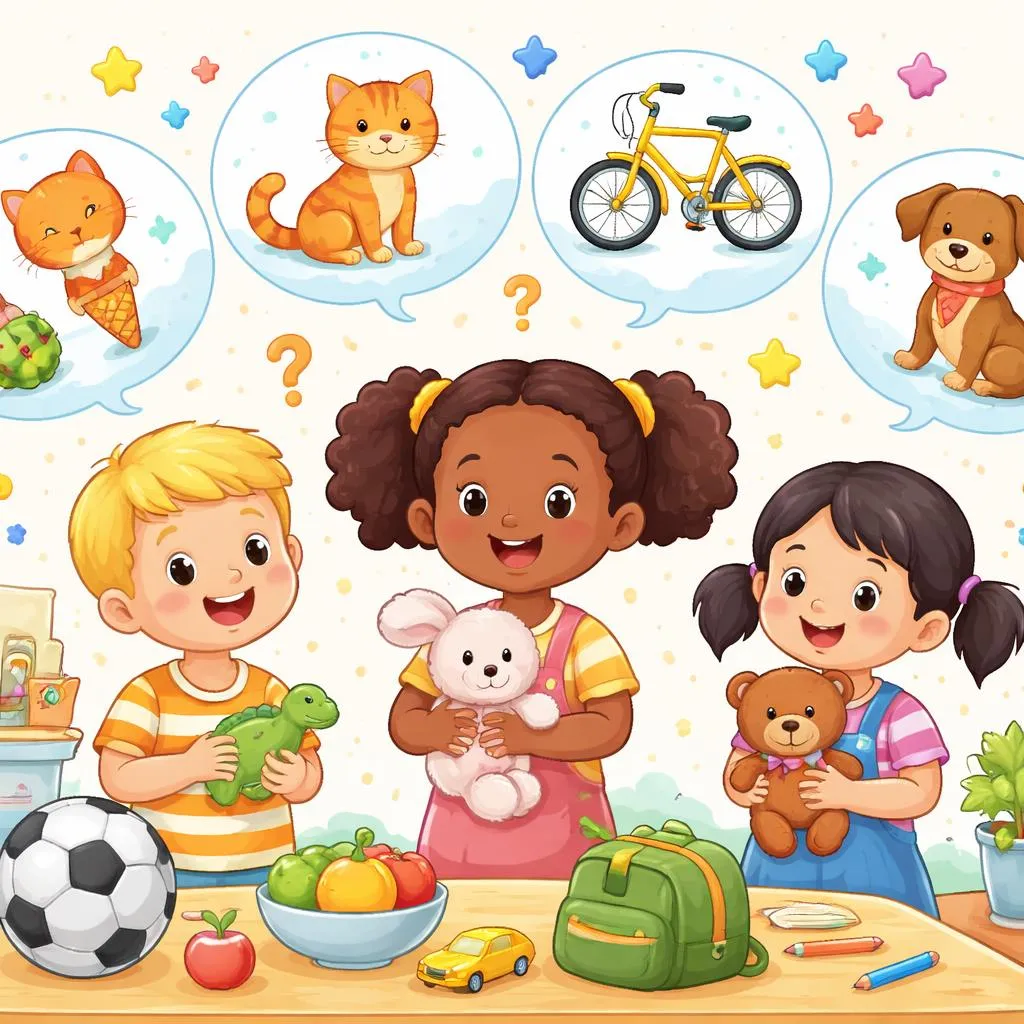

The verb "have" appears in almost every conversation. Children use it constantly. "I have a toy." "You have a book." "She has a pet." This small verb carries big meaning in present tense. It shows ownership. It describes relationships. It talks about experiences. Understanding how to use have in present tense helps children build complete sentences. It gives them words to talk about their world right now. Let us explore how to guide young learners through this essential grammar point with clear explanations and engaging activities.
Meaning of Have in Present Tense The verb "have" in present tense has several important meanings. Understanding these meanings helps children use it correctly.
Possession in the present: This shows what someone owns or holds right now. I have a red crayon. You have a new backpack. She has two sisters. He has a pet dog. We have a big classroom. They have many toys.
Relationships in the present: "Have" shows connections that exist now. I have a best friend. You have a kind teacher. She has a baby brother. He has cousins in Canada. We have wonderful families. They have good neighbors.
Characteristics in the present: "Have" describes features true now. She has blue eyes. He has curly hair. The elephant has big ears. It has a long tail. We have energy today. They have happy smiles.
Experiences in the present: "Have" combines with nouns for activities now. We have breakfast at eight. I have a headache today. They have fun at the park. She has a bath every night. He has music class now. You have time to play.
Illnesses and conditions in the present: I have a cold. She has a fever. He has a stomach ache. They have allergies.
For young learners, start with possession. This is the most concrete meaning. Children understand owning things. Add other meanings gradually.
Conjugation of Have in Present Tense The verb "have" is irregular in present tense. It changes form for different subjects. Children need to learn these patterns.
Positive present tense forms: I have You have We have They have He has She has It has
Negative present tense forms: I do not have (I don't have) You do not have (you don't have) We do not have (we don't have) They do not have (they don't have) He does not have (he doesn't have) She does not have (she doesn't have) It does not have (it doesn't have)
Contractions in positive: I've (I have) You've (you have) We've (we have) They've (they have) He's (he has) - careful not to confuse with "he is" She's (she has) - careful not to confuse with "she is" It's (it has) - careful not to confuse with "it is"
Contractions in negative: I don't have You don't have We don't have They don't have He doesn't have She doesn't have It doesn't have
The change from "have" to "has" for he, she, and it is very important. Children often forget this at first. Gentle correction and repetition help establish the correct pattern.
Present Tense Positive Statements with Have Positive statements with "have" in present tense describe what people possess, experience, or relate to now.
I have examples: I have a blue pencil case. I have two brothers. I have a cold today. I have breakfast at seven o'clock. I have a question for the teacher. I have fun at the playground. I have a new book from the library.
You have examples: You have a beautiful smile. You have a red backpack. You have a kind heart. You have time to finish your work. You have a great imagination. You have many friends in class. You have a loud voice when you sing.
We have examples: We have a wonderful classroom. We have a new pet in our class. We have music on Tuesdays. We have snack at ten o'clock. We have a field trip next week. We have the best teacher. We have fun learning together.
They have examples: They have new pencils. They have a big dog at home. They have gym class now. They have beautiful drawings. They have a party on Friday. They have grandparents visiting. They have many books in their backpacks.
He has examples: He has a blue shirt today. He has a pet turtle. He has a great sense of humor. He has music class now. He has a new bicycle. He has long eyelashes. He has a loud laugh.
She has examples: She has long brown hair. She has a baby sister. She has a beautiful singing voice. She has art class on Thursdays. She has many crayons. She has a kind heart. She has a sparkly backpack.
It has examples: It has four legs. It has a long tail. It has soft fur. It has big eyes. It has a broken handle. It has a red cover. It has wheels that spin.
Practice these sentences during daily routines. Point to objects and people. "She has a blue backpack." "He has a new pencil." This connects grammar to real life.
Present Tense Negative Statements with Have Negative statements with "have" use "do not have" or "does not have." The main verb returns to "have" in negatives.
I do not have examples: I do not have a pencil today. I do not have any brothers. I do not have a fever. I do not have time to play now. I do not have a pet at home. I do not have a blue crayon. I do not have my lunch today.
You do not have examples: You do not have to worry. You do not have a cold. You do not have a turn yet. You do not have enough money. You do not have the right color. You do not have to go outside. You do not have a sister.
We do not have examples: We do not have school on Sunday. We do not have any juice left. We do not have time for another game. We do not have a pet in our classroom. We do not have music today. We do not have enough chairs. We do not have homework tonight.
They do not have examples: They do not have their books. They do not have a car. They do not have any food. They do not have a place to sit. They do not have the answer. They do not have money for snacks. They do not have a phone.
He does not have examples: He does not have a pencil. He does not have a sister. He does not have his coat. He does not have time to play. He does not have a pet. He does not have a fever. He does not have a lunch box.
She does not have examples: She does not have a brother. She does not have her backpack. She does not have a cold. She does not have enough crayons. She does not have a turn yet. She does not have a watch. She does not have her shoes on.
It does not have examples: It does not have a handle. It does not have wheels. It does not have a battery. It does not have a cover. It does not have any spots. It does not have a tail. It does not have a sharp point.
Notice that after "does not," the verb goes back to "have," not "has." This is a common source of errors. Practice this pattern carefully.
Questions with Have in Present Tense Forming questions with "have" uses "do" or "does" at the beginning.
Yes or no questions with have: Do I have a turn? Do you have a pencil? Does he have a sister? Does she have a pet? Does it have a handle? Do we have time? Do they have money?
Information questions with have: What do I have in my hand? What do you have for lunch? Where does he have his books? Why does she have a bandage? How many pencils do we have? What color eyes does it have? When do they have music class?
Short answers: Yes, I do. No, I don't. Yes, he does. No, she doesn't. Yes, we do. No, they don't. Yes, it does. No, it doesn't.
Question practice examples: Do you have a pet? Yes, I have a dog. Does she have a brother? No, she has a sister. Do we have gym today? Yes, we have gym. Does it have stripes? No, it has spots. Do they have enough chairs? Yes, they do.
Practice question patterns during daily routines. Ask about possessions. "Do you have a red crayon?" Ask about family. "Does she have a baby brother?" This makes questions natural and meaningful.
Other Uses of Have in Present Tense Beyond possession, "have" appears in many common expressions in present tense.
Have to for obligation: I have to go to bed at eight. You have to wear a coat today. He has to finish his homework. She has to practice piano. We have to be quiet in the library. They have to wait their turn.
This expresses necessity in the present.
Have for meals: I have breakfast at home. You have lunch at school. She has dinner with her family. We have snack at ten o'clock. They have tea in the afternoon.
Have for experiences: I have fun at the park. You have a good time at the party. He has a dream about flying. She has a great idea. We have a wonderful day. They have an adventure.
Have for feelings and states: I have a headache. You have a fever. He has a cold. She has energy today. We have patience. They have hope.
Have got (alternative form): I have got a new book. She has got blue eyes. They have got a big house.
This form is more common in British English. Both forms are correct.
Have for age (in some expressions): The baby has six teeth. The tree has many years.
Not used for personal age. "I am five" not "I have five."
Learning Tips for Teaching Have in Present Tense Teaching "have" in present tense requires clear strategies. Here are tips for introducing it effectively.
Start with possession: This is the most concrete meaning. Children understand owning things. Use real objects in the classroom. "I have a book." "You have a crayon." Point to the objects as you speak.
Use a chart: Create a large classroom chart showing all present tense forms of "have." Color code the subjects. Green for I, you, we, they. Red for he, she, it. Children can refer to it when they forget.
Teach "has" separately: The third person singular causes the most errors. Spend extra time on he, she, it. Practice with many examples. Use pictures of people and animals.
Connect to daily routines: Talk about what children have in their lunchboxes. Discuss what the class has on the schedule. Ask about what pets have. Real topics make grammar meaningful.
Use songs and chants: Create simple chants for "have" and "has." "I have, you have, we have, they have. He has, she has, it has." Set it to a simple melody. Repetition helps it stick.
Contrast positive and negative: Show the difference between "I have" and "I don't have." Use the same objects. "I have a pencil. I don't have an eraser." This makes the pattern clear.
Correct gently: When children say "he have," simply repeat correctly. "Yes, he has a blue shirt." Gentle modeling works better than explicit correction.
Educational Games for Practice Games turn grammar practice into play. Here are games for practicing have in present tense.
What's in the Bag?: Place an object in a bag. Children ask questions to guess. "Does it have fur?" "Does it have wheels?" "Does it have a handle?" This practices questions with "have."
Have or Has Race: Hold up a subject card. "I" "You" "He" "She" "We" "They" "It." Children race to say the correct form. "Have!" or "Has!" First correct answer wins a point.
Memory Chain: Start a memory chain. "I have a cat." Next child says "She has a cat and I have a dog." Continue adding items. This practices possession and builds memory.
Picture Description: Show complex pictures with many details. Children describe what they see using "have." "The house has a red door." "The family has three children." "The dog has floppy ears." This builds observation and language together.
Have Bingo: Create bingo cards with pictures of items people might have. Call out "I have a dog." Children cover the dog if they have it on their card. This practices listening and vocabulary.
Find Someone Who: Give children a list of items. "Find someone who has a pet." "Find someone who has a brother." Children ask classmates "Do you have a pet?" and write names. This builds question practice.
Yes/No Question Circle: Sit in a circle. One child thinks of something they have. Others ask yes/no questions. "Do you have it in your backpack?" "Does it have fur?" The first to guess correctly wins.
Common Challenges with Have in Present Tense Young learners often struggle with certain aspects of "have" in present tense. Knowing these challenges helps teachers provide support.
Forgetting to change for he/she/it: Children may say "He have" instead of "he has." Explain that he, she, and it need "has." Practice with many examples.
Using have for age: In some languages, people say "I have five years." Explain that English uses "be" for age. "I am five years old."
Confusing have and has in questions: Children may say "Does he has a car?" Explain that after "does," the main verb goes back to base form. "Does he have a car?"
Using have got and have together: Children may learn "I have got" and then say "I have got a dog" correctly. Both forms are fine. Just be consistent.
Forgetting have in sentences: Some children say "I a dog" without the verb. Remind them that English needs a verb. "I have a dog."
Confusing have and there is/there are: "Have" shows possession. "There is" shows existence. "I have a book" vs. "There is a book on the table." Contrast these uses.
Using have for hunger/thirst: Some languages use "have" for these states. Explain that English uses "be." "I am hungry" not "I have hunger."
Address these challenges with patience. Children learn through exposure and practice, not through error correction alone.
The verb "have" in present tense accompanies children through their entire English learning journey. It helps them talk about their world right now. It connects them to others through questions and answers. It allows them to share experiences and express needs. Mastering the present tense forms gives children confidence and fluency. They can say what they own, what they need, and what they experience today. With songs, games, and daily practice, "have" and "has" become natural. Children use them without thinking. And that is real communication in the present moment.