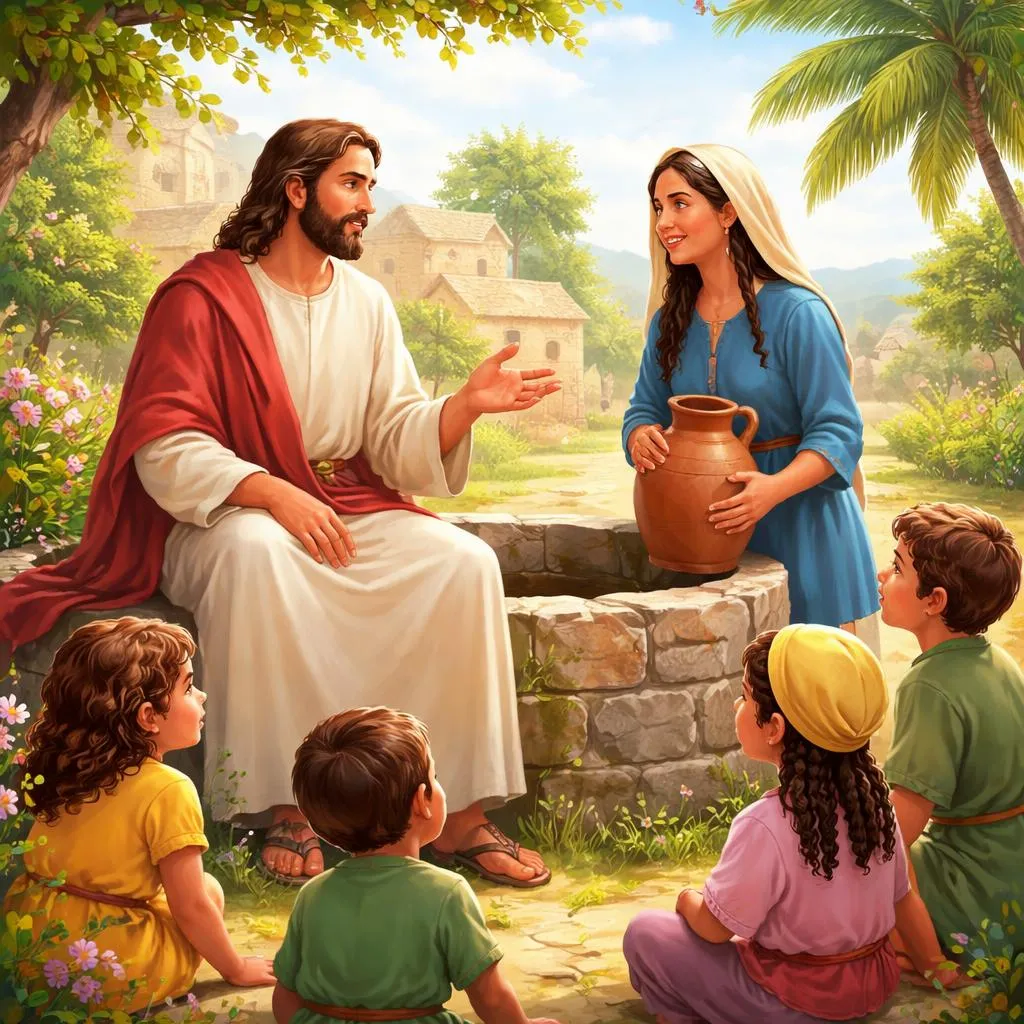

What Is the Woman at the Well Children's Story? Let us explore this meaningful Bible story together. The woman at the well children's story comes from the Gospel of John. It tells of Jesus meeting a Samaritan woman at a well. Jesus was traveling through Samaria on his way to Galilee. He stopped at Jacob's well, tired from the journey. His disciples had gone into town to buy food. A Samaritan woman came to draw water at the well. Jesus asked her, "Will you give me a drink?" This surprised the woman because Jews and Samaritans did not associate. Jesus told her about living water that would satisfy forever. Anyone who drinks this water will never thirst again. The woman was curious and wanted this water. Jesus knew all about her life and past. He told her things he could not have known naturally. The woman realized Jesus was a prophet, maybe the Messiah. She ran back to town and told everyone about Jesus. Many Samaritans believed because of her testimony. They asked Jesus to stay, and he stayed two days. Many more believed because of his words.
Meaning and Purpose of the Woman at the Well Story This story carries deep meaning about God's love for all people. Jesus crossed boundaries that divided people in his time. Jews and Samaritans normally avoided each other completely. Yet Jesus spoke to this woman kindly and respectfully. Men did not usually speak to women in public either. Jesus broke social rules to show God's love. The story also shows that Jesus knows each person completely. He knew the woman's life and still loved her. Nothing we do keeps God from loving us. The living water represents eternal life Jesus offers. Physical water satisfies for a little while. Jesus offers satisfaction that lasts forever. The woman became the first evangelist in her town. She told everyone about Jesus immediately.
Main Characters in the Woman at the Well Story We can identify several important figures in this narrative. Jesus is the central figure offering living water. He shows love and acceptance to someone unexpected. The Samaritan woman is the main character of the story. She came to draw water at the hottest part of day. She may have come alone because others avoided her. Jesus knew her life story completely. He knew she had been married five times. The man she lived with now was not her husband. This did not stop Jesus from loving and accepting her. The disciples returned from buying food. They were surprised Jesus was talking to a woman. They said nothing but wondered about it. The townspeople heard the woman's testimony. Many believed because of what she told them.
Vocabulary Learning from the Woman at the Well Story This story introduces important biblical vocabulary for children. Samaritan means a person from Samaria, disliked by Jews. Well means a hole dug to reach water underground. Living water means the eternal life Jesus offers. Thirst means the feeling of needing something to drink. Satisfy means to meet a need or desire completely. Prophet means a person who speaks for God. Messiah means the promised savior sent by God. Testimony means a statement telling what someone knows. Believe means to accept something as true. Eternal means lasting forever, without end. We can teach these words with picture cards showing examples. Use them in sentences about the story events.
Phonics Points in the Woman at the Well Story This story provides useful phonics practice with biblical language. Woman has the short U and short A and N sound. Well has the short E and LL. Water has the WA blend and short A and ER ending. Samaritan has the short A and short A and short I and short A. Thirst has the TH digraph and IR combination and ST blend. Satisfy has the short A and short I and long I. Prophet has the short O and short E and T sound. Messiah has the short E and long I and short A. Testimony has the short E and short I and short O and long E. Believe has the short E and long E and silent E. Place names offer valuable sound patterns. Samaria has the short A and long A and short A. Galilee has the short A and long I. Jacob has the long A and short O. We can focus on one sound pattern from each part. Find all words with that sound in the story. Write them on water or well shapes for practice.
Grammar Patterns in the Woman at the Well Narrative This story models useful grammar for young readers naturally. Past tense carries the main narrative throughout. "Jesus sat by the well while his disciples went to town." Present tense appears in Jesus' words about living water. "Everyone who drinks this water will never thirst again." Future tense shows what will happen because of belief. "Many Samaritans will believe because of the woman's testimony." Questions explore the woman's curiosity and surprise. "How do you know about my life?" "Are you greater than our father Jacob?" Commands appear in Jesus' invitation. "Go, call your husband." "Drink the water I give." Descriptive language paints the scene vividly. "The hot, dusty well sat beside the road through Samaria." Prepositional phrases describe locations. "At the well, in the town, through Samaria." We can point out these patterns during reading.
Daily Life Connections Through This Story This story connects to children's experiences in meaningful ways. Everyone knows what it feels like to be thirsty. Children understand needing a drink on a hot day. Jesus offers water that satisfies forever. This pictures something children can grasp. Feeling left out or different happens to children. The Samaritan woman was different from Jewish people. Jesus accepted her anyway. Children need to know God accepts them too. Telling others good news is something children do. The woman ran to tell everyone about Jesus. Children can share good news with friends. Jesus knowing everything about us might feel scary. But he knows and loves us anyway. We can point out these connections during reading. "Jesus loves you just like he loved that woman." "You can tell friends about Jesus too."
Learning Activities for This Story Many activities deepen understanding of this Bible story. Create a simple well craft from a paper cup. Draw a bucket on string going down inside. Act out the story with simple costumes and props. Use a water pitcher and well drawing. Draw a picture of Jesus and the woman at the well. Include the well, water, and village in background. Practice telling someone about Jesus like the woman did. Share something you've learned with a friend. Make a list of "living water" things that satisfy forever. God's love, Jesus, eternal life, and peace included. Learn a song about the woman at the well. Sing about Jesus offering living water.
Printable Materials for This Story Printable resources support deep engagement with this Bible story. Create sequencing cards showing major story events. Jesus at well, woman comes, Jesus asks water, conversation, woman tells town. Design character cards for each person in the story. Jesus, woman, disciples, townspeople included. Make vocabulary cards with story words and definitions. Well, living water, Samaritan, prophet, Messiah, testimony included. Create a coloring page showing Jesus and woman at well. Children color while hearing the story again. Design a "living water" drop template for writing blessings. Write things that satisfy forever inside the drop. Make a simple comprehension sheet with questions. "Who did Jesus meet at the well?" "What did Jesus offer her?" These printables structure learning activities effectively.
Educational Games About This Story Games make this Bible story playful and interactive. Play "Well Word Match" pairing vocabulary words with definitions. Match "living water" with "eternal life from Jesus." Create "Story Sequence Relay" arranging events in correct order. Teams race to put story cards in sequence. Play "Who Said It?" matching quotes with who spoke. "Give me a drink" matches Jesus. "Are you greater than our father Jacob?" matches woman. Design "Samaritan Bingo" with story elements on cards. Well, water, woman, Jesus, disciples, town, believe included. Play "Living Water Relay" passing water carefully without spilling. Discuss how Jesus' living water never runs out. Create "Tell the Good News" game where children share story parts. Each child adds something to retelling around circle. These games build story knowledge through active participation.
Teaching About God's Acceptance This story powerfully teaches that God accepts everyone. The Samaritan woman had many strikes against her. She was a woman in a man's world. She was a Samaritan, despised by Jews. She had a complicated personal history. Yet Jesus treated her with dignity and respect. He offered her the same living water as anyone. Children learn that nothing excludes them from God's love. Their background, family, or mistakes don't matter. Jesus accepts them just as they are. This builds security and self-worth. Children can rest in God's unconditional love.
The Woman Becomes a Missionary The woman's response to Jesus is remarkable. She left her water jar at the well. She ran back to town to tell everyone. She didn't worry about what people thought. She shared her testimony simply and effectively. "Come see a man who told me everything I ever did." Many believed because of her words. This woman became the first evangelist to the Samaritans. Children can learn from her example. They don't need special training to share Jesus. They can simply tell what Jesus has done. Their simple testimony can impact others. The woman at the well shows the way.
Living Water Today The living water Jesus offered is still available. Anyone who believes in Jesus receives eternal life. This living water satisfies the deepest thirst. People try many things to feel satisfied. Money, toys, and success don't satisfy forever. Only Jesus offers lasting satisfaction. Children can begin drinking this living water now. They can believe in Jesus and receive his life. They can experience his love and peace daily. The well never runs dry; there's always more. Jesus invites everyone to come and drink. The woman at the well accepted the invitation. Children can too.