
What Is This Plant?
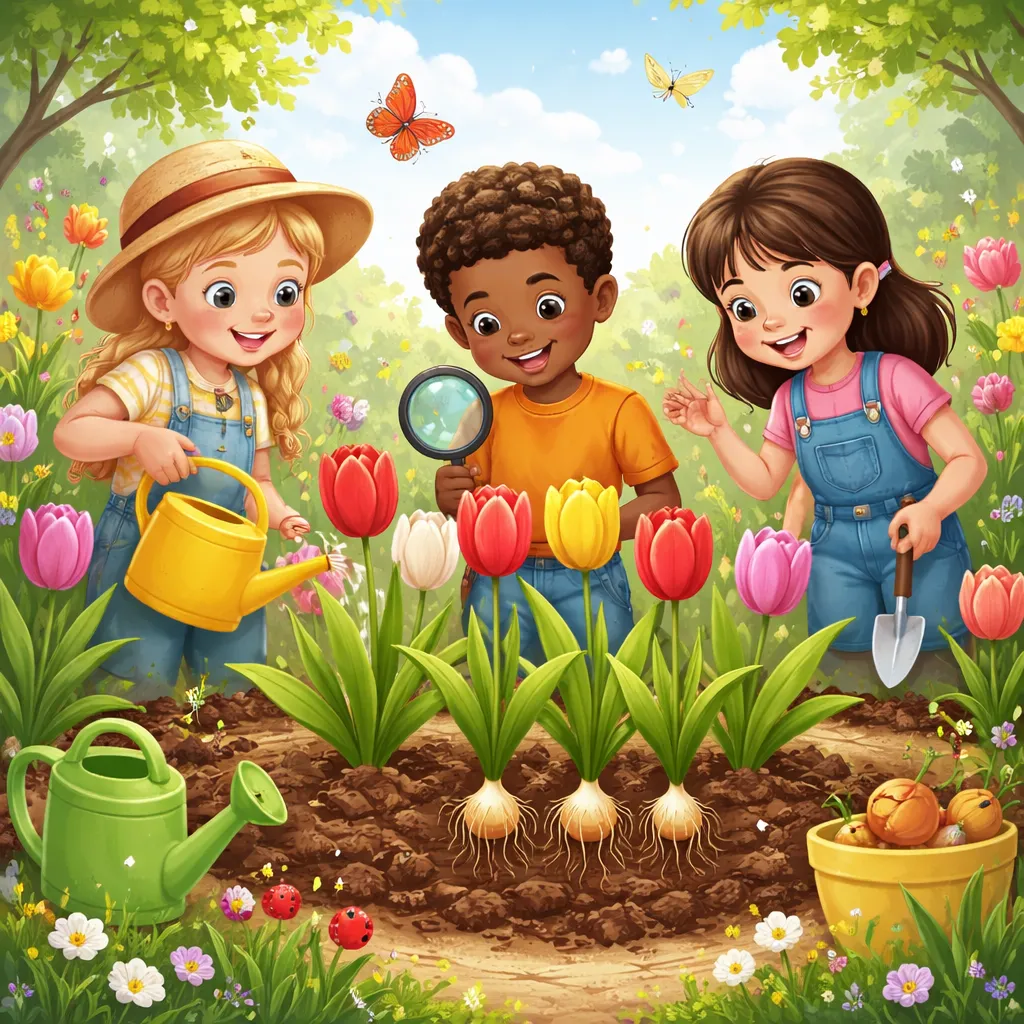
The tulip plant is a cheerful flower that appears in spring. It grows from a bulb, which is like a small underground storage unit. The plant sends up green leaves and a single flower stem. At the top, one cup-shaped flower opens to greet the sun. Tulips come in almost every color. You can find red, yellow, pink, purple, white, and even striped tulips. The leaves are wide and smooth. They are usually a bright, fresh green. When you see tulips blooming, you know warmer days are coming. For children, tulips are easy to recognize. Their simple shape and bright colors make them a favorite. Parents can take children to a garden or park in spring. Point out the rows of tulips standing tall. This is a gentle way to begin exploring nature together.
English Learning About This Plant
The English name “tulip” is short and fun to say. It sounds like “too-lip.” The International Phonetic Alphabet (IPA) is /ˈtuːlɪp/. The word has two syllables. Children can clap their hands once for each syllable. This helps them remember the word. When we learn about tulip plant, we discover new words for its parts. The bulb is the round part underground. It stores food for the plant. The stem is the straight part that holds up the flower. The leaf is the flat green part that catches sunlight. The flower is the colorful part that opens wide. These are simple words for young learners to practice.
There is a famous Dutch proverb about tulips. It says, “A tulip does not strive to impress the rose.” This means every flower has its own beauty. A tulip does not try to be a rose. It is happy being itself. This is a wonderful idea to share with children. It teaches them to appreciate their own unique qualities. Another lovely quote comes from the poet Emily Dickinson. She wrote about flowers waking in spring. Tulips appear in many poems as symbols of new beginnings. Parents can read a short tulip poem aloud. Then they can ask their child what colors they imagine. This makes language learning feel like a gentle conversation.
Plant Facts and Scientific Knowledge
The tulip plant belongs to the genus Tulipa. There are about 75 wild species. People have grown tulips for hundreds of years. Tulips originally came from Central Asia. They traveled to Europe through trade. In the 1600s, tulips became very famous in the Netherlands. People loved them so much that they called it “Tulip Mania.” Today, the Netherlands still grows many tulips for the world.
Tulips are perennial flowers. This means they can come back year after year. They grow best in places with cold winters and dry summers. The bulb needs a cold period to rest. Then it sends up leaves and flowers in spring. Most tulips bloom for one to two weeks. The flowers close at night and on cloudy days. They open wide when the sun shines.
Tulips come in many colors, but they do not have a true blue color. Breeders have created tulips with stripes and flame-like patterns. These are called “Rembrandt” tulips. They look like they were painted by an artist.
Tulips also have flower language. A red tulip means true love. A yellow tulip means cheerful thoughts. A purple tulip means royalty. A white tulip means forgiveness. People gave tulips to send kind messages. This is a lovely fact to tell children. It shows how flowers help us share feelings.
How to Grow and Care for This Plant
Growing a tulip plant is a wonderful project for families. You start in the fall. Buy tulip bulbs from a garden store. Choose a sunny spot. Tulips need sunlight to grow strong. The soil should be loose and drain well. Dig a hole about three times as deep as the bulb is tall. Place the bulb with the pointy side up. Cover it with soil. Water it a little.
Then comes the waiting. The bulb rests underground through winter. In spring, the first green leaves appear. Children love checking each day for changes. The stem grows taller. Then a bud forms. Finally, the flower opens. This process teaches patience in a natural way.
Watering is simple. Give water when the soil feels dry. Do not overwater. Tulips do not like soggy soil. After the flowers fade, leave the leaves alone. Let them turn yellow and wither. The leaves make food for the bulb for next year. You can remove them when they become dry.
Tulips also grow well in pots. Fill a pot with soil. Plant several bulbs close together. Water and place the pot outside. This is a good choice for balconies or small spaces. Children can decorate the pot with paint or stickers. This makes the plant feel like their own special project.
Benefits of Growing This Plant
Growing a tulip plant brings many gifts to a family. First, it fills the home or garden with color. After a long winter, tulips feel like a celebration. Their bright petals lift the mood. Second, caring for bulbs teaches responsibility. Children learn to plant, water, and wait. They see that small actions lead to beautiful results.
Tulips also invite curiosity. Children ask questions. Why does the bulb need cold? Why do flowers close at night? These questions open doors to science. Parents can explore answers together. This builds a love for learning.
Cutting tulips for a vase is another benefit. Children feel proud to bring their flowers inside. A small vase on the table reminds everyone of the care they gave. Tulips also attract attention from neighbors and visitors. They start conversations about gardening. This connects families to their community.
Finally, growing tulips creates family memories. The planting day in fall becomes a tradition. The first sight of green leaves in spring becomes a shared joy. These small moments stay with children for a long time.
What Can We Learn From This Plant
A tulip plant teaches children about patience. The bulb stays hidden for months. Nothing seems to happen. Then one day, green leaves appear. Children learn that growth takes time. Good things do not happen instantly. This lesson applies to learning a new skill or making a friend.
Tulips also teach about rest. The bulb needs a cold winter to rest. After resting, it has energy to bloom. Children learn that rest is important. Sleep and quiet time help us grow strong. This is a gentle way to talk about healthy habits.
Another lesson is about timing. Tulips do not rush. They wait for the right season. Children learn that everyone has their own timing. Some friends learn to read early. Some learn later. Both are okay. The tulip blooms when it is ready.
Tulips also show us that beauty comes in many forms. Some tulips are tall. Some are short. Some are solid colors. Some have stripes. Each one is beautiful. Children learn to appreciate differences. They learn that being yourself is enough.
Fun Learning Activities
There are many simple activities to help children learn about tulip plant. One fun idea is a bulb investigation. Give your child a dry tulip bulb. Let them hold it and feel it. Ask them to describe it. Is it smooth or bumpy? What shape is it? Then explain that this small bulb holds a whole flower inside. This creates wonder.
Another activity is a planting diary. Use a small notebook. Each week, draw the tulip plant. Write the date. Note how tall it has grown. When the first leaf appears, make a special mark. When the flower opens, celebrate. This diary becomes a treasured keepsake.
You can also create a color chart. Visit a garden with tulips or look at pictures. Ask your child to find red, yellow, pink, purple, and white tulips. Count how many of each color you see. This builds observation and counting skills.
A simple art project is making paper tulips. Use colored paper. Cut a cup shape for the flower. Cut a green stem and leaves. Glue them together. Display the paper tulips on a window. This connects creativity with learning.
For vocabulary practice, make word cards. Write bulb, stem, leaf, flower, and root. Say each word. Ask your child to point to the part on a real tulip or in a picture. Clap the syllables for each word. This makes language learning active.
Finally, try a storytelling activity. Ask your child to imagine what the tulip bulb thinks while waiting underground. What does it dream about? Write down their story. This builds imagination and language skills.
Through these activities, children build a connection with nature. They learn words, science, and patience. They also gain confidence. Growing a tulip plant becomes a journey they lead. Each spring, when the tulips return, they remember what they learned. The bright flowers become a symbol of their own growth and curiosity.