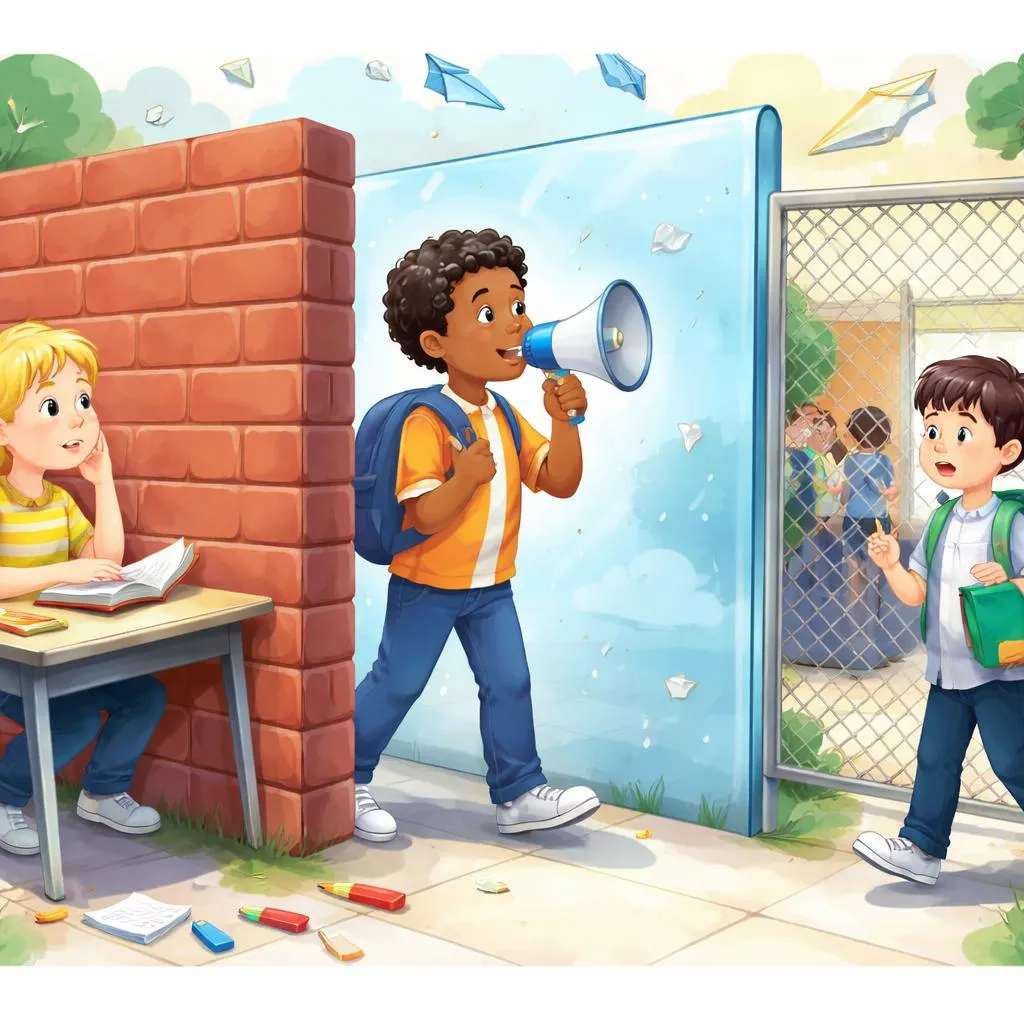

Children often learn building words early in English study. Words like “wall,” “door,” and “window” appear in homes, classrooms, and storybooks every day. As vocabulary becomes more advanced, learners also meet broader words like “barrier.”
The expressions “wall to” and “barrier to” may seem similar because both describe something that blocks movement or separates spaces. However, native speakers use these words differently depending on meaning, purpose, and situation.
One word usually describes a physical structure. The other often describes anything that prevents movement or progress. Understanding this difference helps children read more carefully and communicate more clearly.
Small vocabulary changes can create very different meanings.
What Do These Expressions Mean?
The phrase “wall to” comes from the word “wall.” A wall is a solid upright structure that divides or protects spaces.
For example:
“The children walked wall to wall.”
“Pictures covered the classroom wall.”
Walls usually appear in:
houses
schools
buildings
gardens
The phrase “barrier to” comes from the word “barrier.” A barrier is anything that blocks movement, action, or progress.
For example:
“Rain became a barrier to travel.”
“The fence acted as a barrier.”
A barrier may be:
physical
emotional
social
natural
A child-friendly explanation is simple:
“Wall” means a physical structure.
“Barrier” means something that blocks or stops.
The expressions seem similar because walls can act as barriers. Still, not every barrier is a wall.
What’s the Difference?
The biggest difference comes from flexibility of meaning.
“Wall” usually has a concrete physical meaning.
“Barrier” has a broader and more abstract meaning.
One word describes an actual structure people can touch. The other can describe physical or invisible obstacles.
Here is a simple comparison:
ExpressionMain MeaningFeelingCommon Usagewall tosolid physical structurespecific and visualhomes and buildingsbarrier toobstacle or blockagebroad and flexiblerules, problems, protection
Another important difference is emotional meaning.
“Wall” often describes something visible.
For example:
“The wall stood beside the garden.”
“Barrier” may describe ideas or difficulties.
For example:
“Fear became a barrier to speaking.”
This sentence does not describe a real object.
When Do We Use Each One?
Children hear “wall to” often in daily life.
At home:
“The clock hangs on the wall.”
“The ball bounced off the wall.”
At school:
“Student artwork covered the wall.”
“The classroom wall looked colorful.”
The word “wall” sounds concrete and familiar.
“Barrier to” appears more often in formal, educational, or emotional situations.
For example:
“Language became a barrier to communication.”
“The gate created a barrier.”
Teachers, news reports, and science lessons often use “barrier” because it can describe many types of obstacles.
Children should remember this idea:
“Wall” usually means a structure.
“Barrier” means anything that blocks.
Why Writers Use “Barrier” in Different Ways
Authors often choose “barrier” because it can describe both physical and invisible problems.
For example:
“Shyness became a barrier to friendship.”
Readers understand that shyness blocks communication.
No real wall exists in the sentence.
Writers use “wall” more literally most of the time.
For example:
“The stone wall surrounded the castle.”
Readers imagine a real structure immediately.
Children who notice literal and abstract meanings become stronger readers.
How Science and Geography Use “Barrier”
Science and geography often use the word “barrier.”
For example:
coral barrier
sound barrier
barrier island
The word describes something that separates or protects.
Medicine also uses “barrier.”
For example:
skin barrier
protective barrier
In these cases, the word focuses on protection and blocking.
The word “wall” also appears in science sometimes.
For example:
cell wall
cave wall
These examples still describe solid structures.
Example Sentences for Kids
Here are simple examples using “wall to.”
“The poster stayed on the wall.”
“The cat jumped over the wall.”
“We painted the bedroom wall blue.”
Now look at examples using “barrier to.”
“Snow became a barrier to travel.”
“The fence acted as a barrier.”
“Fear can become a barrier to learning.”
Children may notice that “wall” sounds physical and exact.
“Barrier” sounds broader and more flexible.
Common Mistakes to Avoid
One common mistake is thinking every barrier is a wall.
Incorrect:
“Homework is a wall to free time.”
Better:
“Homework is a barrier to free time.”
Homework is not a physical structure.
Another mistake is using “wall” for invisible problems.
Incorrect:
“Fear created a wall to speaking.”
Better:
“Fear created a barrier to speaking.”
Children should also avoid thinking “barrier” always means something negative.
Sometimes barriers protect people.
For example:
“The barrier kept cars away from the playground.”
The correct word depends on meaning and situation.
Easy Memory Tips
A simple trick can help children remember the difference.
Think about this:
“Wall” = something you can touch
“Barrier” = anything that blocks
Another fun memory idea:
Every wall can act like a barrier.
But some barriers are invisible.
Children can also remember:
rooms have walls
problems create barriers
Simple mental pictures help vocabulary stay organized.
Why Abstract Vocabulary Matters
As children grow, English becomes more abstract.
Young learners first understand concrete words like:
wall
table
chair
Later, they learn abstract words like:
barrier
challenge
opportunity
Understanding abstract vocabulary improves reading comprehension and communication.
Children become better at understanding books, lessons, and conversations.
This skill also helps with writing and critical thinking.
Quick Practice Time
Choose the Correct Word
The basketball hit the _____.
A. wall
B. strawberry
Correct answer: A
Heavy rain became a _____ to travel.
A. barrier
B. pillow
Correct answer: A
Fill in the Blank
The castle had a tall stone _____.
Answer: wall
Fear can become a _____ to learning.
Answer: barrier
How Children Can Practice These Words Naturally
Children can practice these words through reading, conversation, and observation.
Daily life helps learners understand “wall.”
Books and school discussions help learners understand “barrier.”
Children can also practice by describing real and invisible obstacles.
For example:
“The wall separated the garden.”
“Noise became a barrier to studying.”
Real examples help vocabulary become meaningful and memorable.
Children do not need to memorize every rule immediately. Instead, they should focus on context and repeated exposure.
Step by step, the differences become natural and clear.
Wrap-up
“Wall” usually describes a solid physical structure, while “barrier” describes anything that blocks movement, action, communication, or progress.