
What Is This Plant?
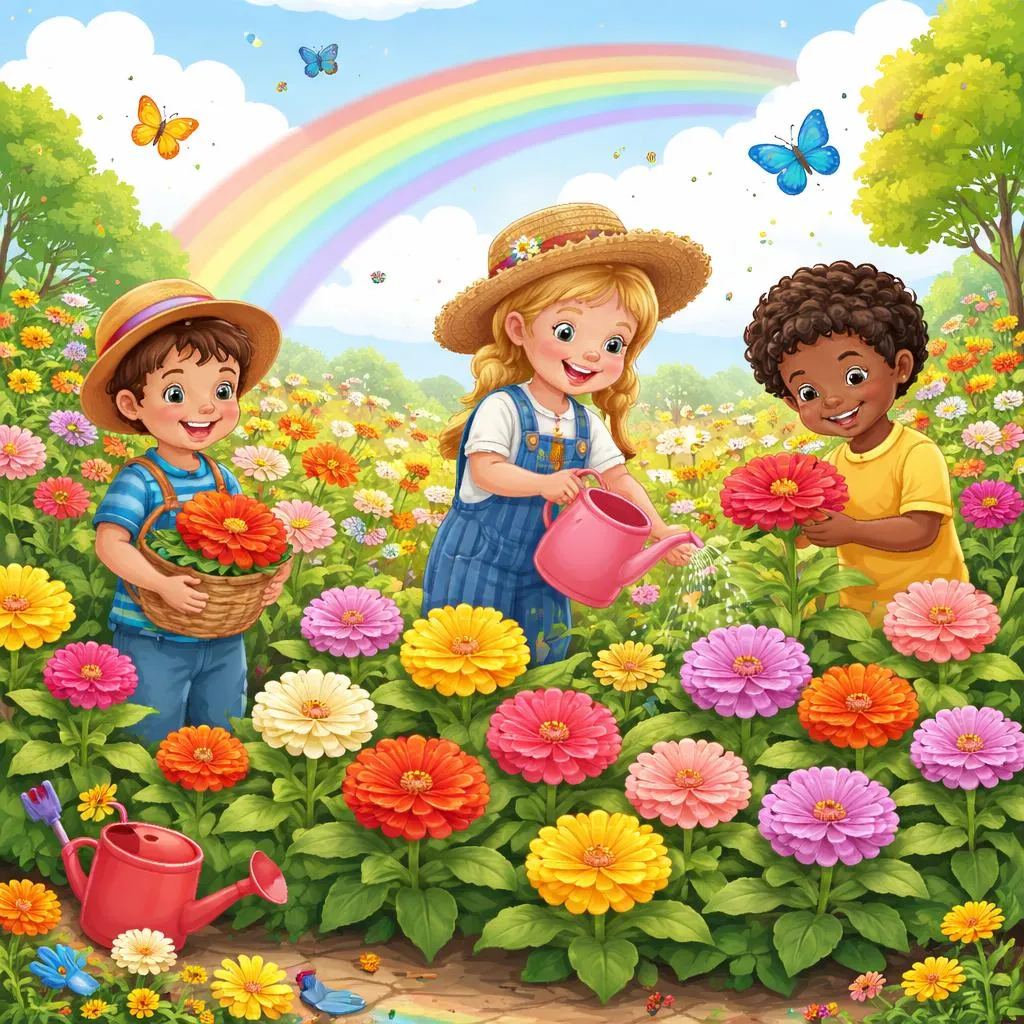
The zinnia plant is a cheerful flower that comes in almost every color of the rainbow. It grows on sturdy stems that stand upright. The leaves are oval-shaped and slightly rough. They grow in pairs along the stem. The flowers are round and full. Some are single with one layer of petals. Others are double with many layers. The flowers can be as small as a coin or as large as a child’s hand. They come in red, pink, orange, yellow, purple, white, and green. Some have stripes. Some have petals that are tipped with a different color. Zinnias bloom from summer until frost. They do not stop. For children, zinnias are like a box of crayons. The colors are bright and joyful. Parents can plant zinnia seeds with children. The seeds are easy to handle. Children watch the plants grow tall and bloom in a rainbow of colors.
English Learning About This Plant
The English name “zinnia” honors the German botanist Johann Gottfried Zinn. He studied these flowers. The pronunciation is “zin-ee-a.” The International Phonetic Alphabet (IPA) is /ˈzɪniə/. The word has three syllables. Children can say it: zin-ee-a. When we learn about zinnia plant, we learn words for its parts. The stem is the sturdy, upright part. The leaf is the oval, rough part. The flower is the round, colorful blossom. The petal is the soft, colorful part. The seed is the small, arrow-shaped part that grows after the flower fades. These words help children describe this colorful plant.
There is a saying about zinnias. It goes, “Zinnias are the happiest flowers in the garden.” Another saying says, “Plant zinnias and the butterflies will come.” Parents can share these words with their child. They become gentle lessons about joy and welcoming others. Zinnias are also known for their long bloom time. They keep giving all summer.
Plant Facts and Scientific Knowledge
The zinnia plant belongs to the genus Zinnia. There are about 20 species. Zinnias are native to North and South America, especially Mexico. They are members of the daisy family, Asteraceae. Zinnias were brought to Europe in the 1700s. Breeders have created many varieties.
There are three main types of zinnias. Zinnia elegans has large, double flowers. It is the most common. Zinnia angustifolia has smaller flowers and narrow leaves. It is more heat-tolerant. Zinnia haageana has small, single flowers in bright colors.
Zinnia flowers come in many shapes. Single zinnias have one row of petals. Double zinnias have many rows. Cactus-flowered zinnias have petals that curl like cactus spines. Button zinnias have small, round flowers.
Zinnias are annuals. They grow, bloom, and die in one season. They love heat. They bloom best in hot weather. They are easy to grow from seed. They germinate quickly.
Zinnias have symbolic meaning. They represent endurance, friendship, and daily remembrance. They are flowers of lasting affection. In the language of flowers, zinnias mean “I remember you.” This makes them perfect for giving to friends and family.
How to Grow and Care for This Plant
Growing a zinnia plant is perfect for children. Zinnias are very easy to grow from seed. Plant the seeds in spring after the last frost. Choose a sunny spot. Zinnias need at least six hours of sunlight each day. They love heat.
Make a small hole in the soil. Place a seed in the hole. Cover with a little soil. Space seeds about six to twelve inches apart. Water gently. Children can help by placing the seeds. The seeds are arrow-shaped and easy to handle.
Water zinnias regularly. They like consistent moisture. Water at the base. Avoid wetting the leaves. Wet leaves can lead to disease. Zinnias are drought-tolerant once established.
Zinnias do not need much fertilizer. Too much fertilizer creates leaves but fewer flowers. They grow well in average soil. Remove dead flowers. This is called deadheading. It makes the plant produce more flowers. Children can pinch off the faded flowers easily.
Zinnias bloom all summer. In fall, they will die after frost. But you can save the seeds. Let some flowers dry on the plant. Pull out the arrow-shaped seeds. Save them for next year.
Benefits of Growing This Plant
Growing a zinnia plant brings many gifts to a family. First, the colors are amazing. Zinnias come in every color except blue. They create a rainbow in the garden. Second, zinnias attract butterflies. Monarchs, swallowtails, and many other butterflies visit the flowers. Children can watch them all summer.
Zinnias are excellent cut flowers. They last a long time in a vase. Children can pick bouquets to give to family and friends. This builds generosity and pride.
The plant teaches about the life cycle. Children plant seeds. They watch the plants grow. They see flowers bloom. They collect seeds for next year. This shows the full cycle of growth.
Zinnias also teach about diversity. The flowers come in so many shapes and colors. Each one is different. Children learn that differences make the garden beautiful.
What Can We Learn From This Plant
A zinnia plant teaches children about color. The flowers come in so many colors. Children learn that the world is full of color. They can add color to the world through their actions and kindness.
Zinnias also teach about endurance. They bloom all summer. They keep going even in heat. Children learn that they can endure. They can keep going even when things are hard.
Another lesson is about giving. Zinnias give color, seeds, and nectar. They give joy to people and food to butterflies. Children learn that giving is part of life. They can give to others in many ways.
Zinnias also teach about growth. From a tiny seed comes a tall plant with many flowers. Children learn that small beginnings can lead to big results. They can start small and grow.
Fun Learning Activities
There are many simple activities to help children learn about zinnia plant. One activity is a color rainbow. Plant different colors of zinnias together. Let your child arrange them in rainbow order. Red, orange, yellow, pink, purple. This builds color recognition and design skills.
Another activity is butterfly watching. Place a chair near the zinnias. Sit quietly. Watch for butterflies. Count how many different butterflies visit. Draw them in a journal. This builds patience and observation skills.
A nature journal works well for zinnias. Draw the different flower shapes. Draw the oval leaves. Label the parts: stem, leaf, flower, petal. Write the date when the first flower opened. Count how many colors you have.
For art, try painting zinnias. Use bright colors like red, pink, orange, and yellow. Paint the round flowers with many petals. Add the oval leaves. Paint the stems. This creates a colorful summer picture.
Vocabulary games are fun too. Write the words zinnia, stem, leaf, flower, petal, and seed on cards. Say each word. Ask your child to point to the part on the plant. Practice saying zinnia together. Clap the syllables: zin-ee-a.
Finally, try a seed saving activity. Let some zinnia flowers dry on the plant. Show your child how to pull out the arrow-shaped seeds. Put them in an envelope. Label it with the color. Save them for next year. This teaches about life cycles and planning ahead.
Through these activities, children build a deep connection with a plant that brings a rainbow of color to the garden. They learn new words, watch butterflies, and discover the joy of giving. The zinnia plant becomes a symbol of endurance and diversity. Each time they see zinnias, they remember that colors make the world beautiful. They remember that they can endure and keep blooming. This cheerful flower opens a world of summer color, butterfly magic, and the lasting joy of growing a rainbow from tiny seeds.