
Who Is This Celebrity?
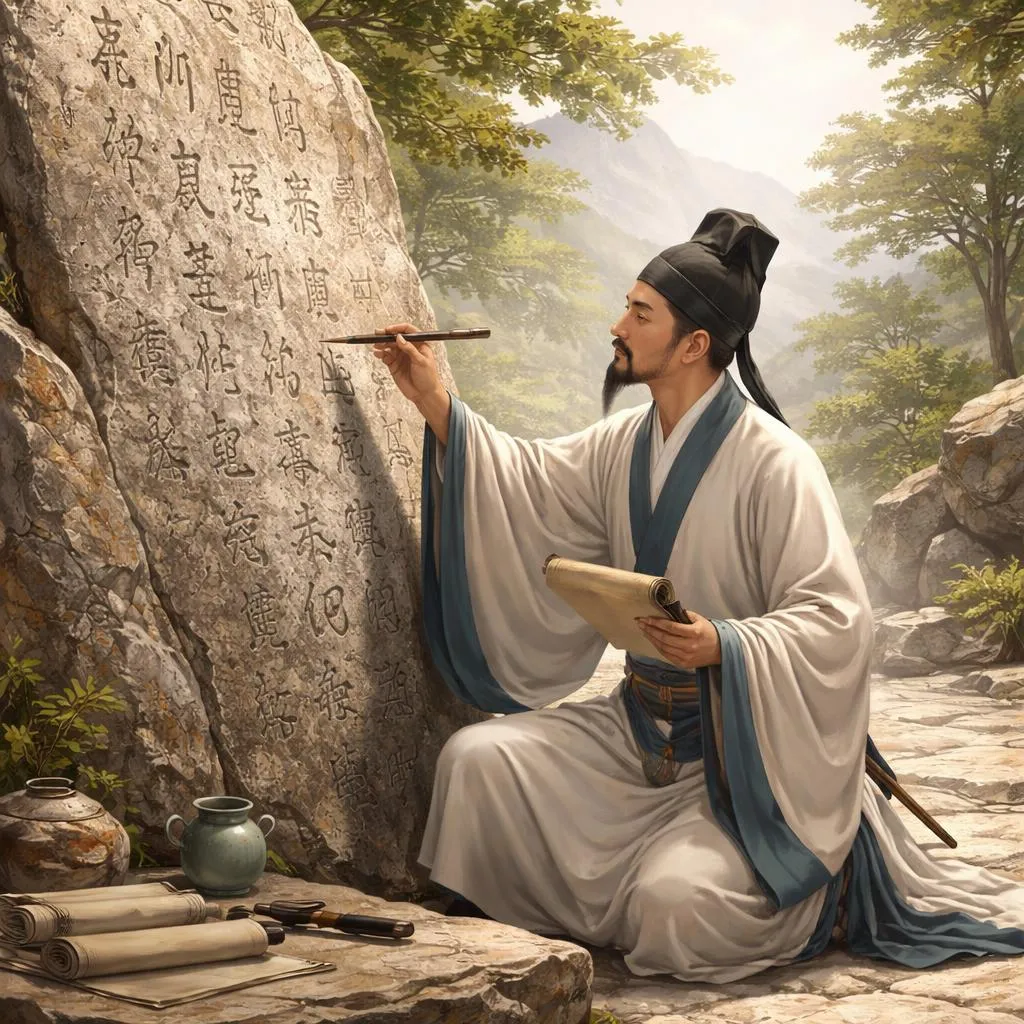
Ouyang Xun was one of the greatest calligraphers of the Tang Dynasty. He lived about 1,400 years ago. People call his writing the "Ouyang Style." His characters are known for their precise, square, and powerful structure. He served the emperor as a scholar and official. He studied ancient stone inscriptions until he understood every stroke. His calligraphy became the model for standard printed Chinese characters. His story shows that perfection comes from studying the masters.
Early Life and Childhood
Ouyang Xun was born in 557 CE in Linxiang, Hunan Province, China. His family were scholars who served several dynasties. Young Ouyang grew up during a time of war and chaos. Dynasties fell and rose around him. He found stability in books and calligraphy. He loved practicing brush strokes from the age of five. He also enjoyed studying history and classical texts. His father taught him that good calligraphy required patience. Ouyang would spend hours on a single character. He would not stop until it looked exactly right. His family thought he was too obsessed. He did not care.
Education and Learning Journey
Ouyang Xun studied with the best scholars of his time. He learned the Confucian classics, history, and poetry. He passed the imperial exams and became a government official. But his true passion was calligraphy. He studied the works of Wang Xizhi, the great master. He copied Wang's characters thousands of times. He was not satisfied. He felt Wang's style was too elegant for his taste. He wanted something more precise and powerful. He began studying ancient stone inscriptions. These inscriptions were carved by unknown calligraphers centuries before. Ouyang spent days copying them. He slept beside the stones. He traced the characters with his finger until the stones wore smooth.
How Did They Become Successful?
Ouyang Xun became successful by perfecting structure over elegance. Other calligraphers focused on beauty and flow. Ouyang focused on balance and precision. Each of his characters stands like a well-built house. The strokes are straight, the corners are sharp, and the spaces are even. He could write the same character a hundred times. Each one looked identical. This consistency amazed people. The emperor heard about Ouyang's skill and summoned him to the capital. Ouyang became a court scholar and calligrapher. He wrote important inscriptions for the emperor. His reputation spread across China and even to neighboring countries. Envoys from Korea and Japan came to buy his work.
Big Ideas and Achievements
Ouyang Xun's biggest achievement was creating the "Ouyang Style" of calligraphy. His characters became the model for standard printed Chinese characters. When China developed printing, printers used Ouyang's style as the standard. Today, the Chinese characters you see in books and on screens trace back to Ouyang Xun. His most famous work is "The Inscription on the Jiucheng Palace." This piece has over 1,100 characters carved in stone. Every stroke is perfect. Calligraphy students still copy this piece today. It has been copied for over 1,300 years. Ouyang also wrote a book on calligraphy structure. He explained how to balance strokes and space characters. This book is still studied.
Challenges and Difficult Times
Ouyang Xun faced the challenge of living through dynastic changes. He was born during the Liang Dynasty. He served the Chen Dynasty, then the Sui Dynasty, then the Tang Dynasty. Each change brought danger. Officials who served the old dynasty were often killed. Ouyang survived by focusing on his scholarship. He never joined political factions. He also faced the challenge of being born ugly. Historical records say Ouyang was very unattractive. People mocked his appearance. But when they saw his calligraphy, they forgot his face. His art became his beauty. He also faced the challenge of poverty in his early years. He could not afford fine brushes or paper. He practiced on old cloth and used cheap ink.
Fun Facts About the Celebrity
Ouyang Xun loved eating pears. He believed they cleared his mind. He also enjoyed drinking rice wine, but only a small cup each evening. He never wore silk robes, even after becoming famous. He preferred rough hemp cloth. He kept a small collection of ancient ink stones. He would only use stones that felt perfectly smooth. He also loved playing a stringed instrument called the qin. He played it before writing to relax his hands. He kept a pet cat that would sit on his desk. The cat never disturbed his work. He also loved walking in the mountains. He believed mountain air improved his calligraphy.
Why Is This Celebrity Important Today?
Ouyang Xun's calligraphy style is still the standard for printed Chinese characters. Every time you read a Chinese book, you see Ouyang's influence. His "Inscription on the Jiucheng Palace" is a national treasure. It is kept in a museum and rarely displayed. Calligraphy students spend years copying his characters. His emphasis on structure influenced not just calligraphy but also architecture and design. Chinese people see his influence everywhere, from building designs to product packaging. His life story is taught in schools as an example of dedication. He represents the value of precision and patience. His name is synonymous with perfect structure.
What Can Kids Learn from This Story?
You can learn that studying the masters is essential. Ouyang copied ancient inscriptions until he understood them. You can also learn that structure matters more than flashy style. His characters are not fancy. They are perfectly balanced. You can learn to ignore insults about your appearance. People mocked his face but admired his art. You can learn to stay out of political drama. He served four dynasties and survived. You can also learn that consistency is a superpower. His characters look identical every time.
Quick Quiz or Practice Time
Let's see what you remember about Ouyang Xun.
Question 1: What is the name of Ouyang Xun's most famous calligraphy piece?
Answer: The Inscription on the Jiucheng Palace.
Question 2: What style of calligraphy did Ouyang Xun create?
Answer: The Ouyang Style.
Question 3: What fruit did Ouyang Xun love eating because it cleared his mind?
Answer: Pears.
Question 4: What instrument did Ouyang Xun play before writing?
Answer: The qin.
Question 5: How many dynasties did Ouyang Xun serve during his lifetime?
Answer: Four dynasties (Liang, Chen, Sui, and Tang).
Activity: Practice writing the same character or letter 20 times in a row. Try to make each one look identical. Pay attention to the spacing and balance. This is what Ouyang Xun did for hours every day. You are practicing the discipline of a master calligrapher. Draw a picture of Ouyang Xun copying ancient stone inscriptions.
Ouyang Xun lived through chaos. Dynasties fell like leaves in autumn. Emperors rose and were murdered. Friends became enemies overnight. Anyone could be killed for serving the wrong master. Ouyang survived by doing one thing well. He wrote characters. He did not fight in wars. He did not join conspiracies. He did not flatter the powerful. He simply held a brush and painted stroke after stroke. He painted them so perfectly that people forgot his ugly face. He painted them so precisely that printers copied his style 1,000 years later. He painted them so consistently that his characters became the standard for an entire civilization. His story teaches us that you do not need to be a warrior to be strong. You do not need to be beautiful to be admired. You do not need to be famous to be influential. You just need to master one thing. Do it so well that no one can ignore it. Do it so perfectly that people copy you for centuries. Ouyang Xun did that with a brush. You can do it with your own tools. A pen. A computer. A garden. A classroom. Whatever you choose, do it with precision. Do it with patience. Do it with consistency. That is the way of Ouyang Xun. That is your way too. Now go practice. The perfect stroke is waiting.