
What Is This Animal?
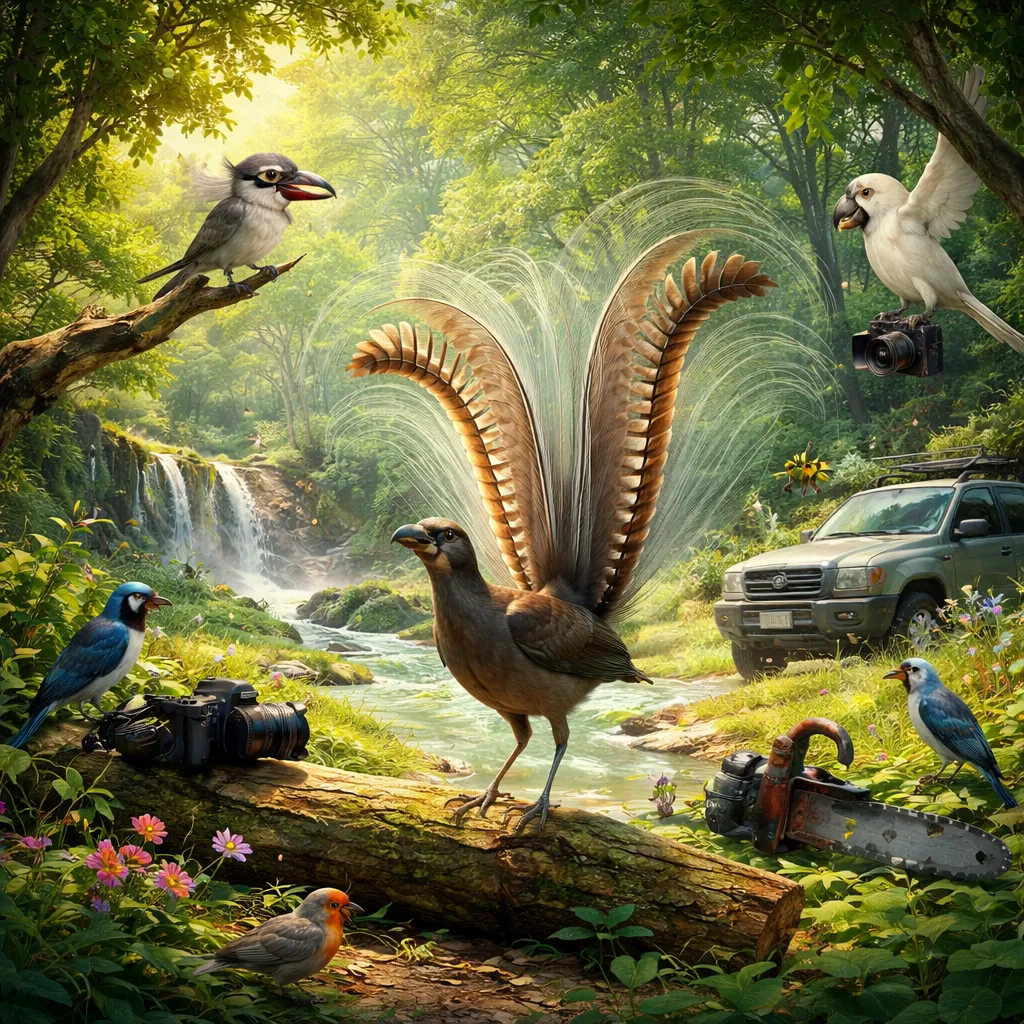
A lyrebird is a ground-dwelling bird with a spectacular tail shaped like a lyre. Its tail has sixteen feathers. The outer feathers curve like a musical instrument. When displayed, the tail forms a beautiful arch. Lyrebirds are famous for their incredible ability to mimic sounds.
Lyrebirds live in the forests of southeastern Australia. They are large birds. They have strong legs for scratching through leaves. They spend most of their time on the forest floor. They are shy and secretive. They are heard more often than seen.
These birds are among the best mimics in the world. They can copy almost any sound. They imitate other birds, animals, and even human-made noises. They can copy chainsaws, car alarms, and camera shutters. Their songs are a mix of their own calls and sounds they have heard.
For children, lyrebirds are astonishing. Their tails and mimicry make them unforgettable. Learning about lyrebirds teaches children about Australian wildlife, animal communication, and the wonder of nature’s most talented impersonators.
English Learning About This Animal
Let us learn the English word lyrebird. We say it like this: /ˈlaɪərbɜːrd/. The word has two parts. Lyre sounds like “lyre” (like a musical instrument). Bird sounds like “bird.” Put them together: lyrebird. Say it three times. Lyrebird. Lyrebird. Lyrebird.
Now let us learn words about a lyrebird’s body. The tail has sixteen feathers shaped like a lyre. The legs are strong for scratching. The feet have sharp claws. The feathers are brown on the body. The chicks are baby lyrebirds.
There is a famous saying about lyrebirds. Naturalists say, “The lyrebird sings the song of the forest, every voice within it.” This describes their mimicry. Another saying is, “To hear a lyrebird is to hear the whole forest in one bird.” This celebrates their skill.
These English words help children understand lyrebird anatomy. When they say tail, they learn about the lyre shape. When they say chicks, they know the babies. Parents can practice these words while looking at pictures. Point to the parts. Say the words together.
Animal Facts and Science Knowledge
Lyrebirds belong to the family Menuridae. There are two species. The superb lyrebird is the most famous. It lives in southeastern Australia. Albert’s lyrebird lives in a small area of Queensland. Lyrebirds are ancient birds. They are one of the oldest songbird groups.
Lyrebirds live in wet forests and woodlands. They need dense undergrowth. They scratch through leaf litter for food. They have large territories. They are solitary except during breeding season. They are shy. They hide when people approach.
Lyrebirds are omnivores. They eat insects, worms, spiders, and seeds. They scratch the forest floor with their strong feet. They find food in the leaf litter. They also eat small frogs and lizards.
Lyrebirds have special abilities. They are the world’s best mimics. They can copy over twenty different bird species. They can copy sounds like camera shutters, chainsaws, and car alarms. They learn sounds from their environment. Males sing to attract females. Their displays include both mimicry and tail feathers.
Male lyrebirds have spectacular courtship displays. They clear a small area of forest floor. They spread their tail feathers. The tail forms a silver arch over their head. They sing and dance. They mimic sounds they have learned. Females choose the best performer.
How to Interact With This Animal Safely
Lyrebirds are wild birds. They are not pets. The best way to interact is to listen. Visit forests in southeastern Australia. Go early in the morning. Sit quietly. Listen for their incredible songs. You may hear them imitating other birds.
Teach children to be quiet in the forest. Lyrebirds are shy. Noise will scare them away. Sitting still and listening is the best way to hear them. Use binoculars to watch from a distance.
Never try to catch or touch a lyrebird. They are protected in Australia. Disturbing them can harm their breeding. If you see a lyrebird, watch quietly. Do not approach. Let it go about its day.
Lyrebirds need healthy forests. Their habitat is threatened by fire and development. Supporting forest conservation helps them. Learning about them helps us understand why forests matter.
In zoos, lyrebirds are sometimes kept. They need large enclosures. They are still shy. Visiting a wildlife sanctuary is a great way to see them safely.
What Can We Learn From This Animal
Lyrebirds teach us about listening. They learn sounds from their world. Children learn that listening is important. Hearing sounds, learning from others, and paying attention help us grow.
Lyrebirds teach us about copying. They mimic what they hear. Children learn that copying can help us learn. Watching others, practicing what we see, and learning from examples are good ways to learn.
Lyrebirds teach us about being unique. They have the most amazing tails. Children learn that being unique is wonderful. Everyone has something special. Lyrebirds have their tails. We all have our own gifts.
Lyrebirds teach us about the forest. They show us that forests are full of sounds. Children learn that the forest is alive with voices. Each bird, each animal, each insect adds to the song.
Fun Learning Activities
Let us make learning about lyrebird fun. One activity is the lyrebird mimic game. Ask your child to listen to sounds around them. Copy those sounds. Copy bird calls, animal sounds, or household noises. Practice making the sounds. Say “lyrebird listens” and “lyrebird mimics.”
Another activity is drawing a lyrebird. Look at pictures of lyrebirds. Notice the spectacular tail shaped like a lyre. Draw a male lyrebird displaying his tail. Add the forest floor. Label the parts. Say the words aloud.
Create a story about a lyrebird’s song. Ask your child what sounds the lyrebird learns. Does it copy a kookaburra? Does it copy a chainsaw? Does it copy a camera? Write a few sentences together. Let your child draw pictures. Read the story aloud.
Make a lyrebird craft. Use brown paper for the body. Add a long, beautiful tail with paper feathers. Shape the tail like a lyre. Add strong legs and feet. Move the craft lyrebird. Practice saying “lyrebird sings” and “lyrebird displays.”
Learn about Australian animals. Talk about other animals that live with lyrebirds. Compare lyrebirds to other songbirds. Use words like “mimic,” “display,” and “endemic.”
Learn about animal communication. Talk about why lyrebirds mimic sounds. Compare to other mimics like parrots or mockingbirds. Use words like “vocalization,” “learning,” and “courtship.”
These simple activities bring learning to life. Children build English vocabulary while playing. They learn science through understanding animal communication. They develop appreciation through learning about Australia’s unique wildlife. Learning about lyrebird becomes a journey into ancient forests. Each moment spent together strengthens language, curiosity, and a growing appreciation for the master mimics that teach us that listening, learning, and sharing our unique gifts make the world a richer, more beautiful place.