
Who Is This Celebrity?
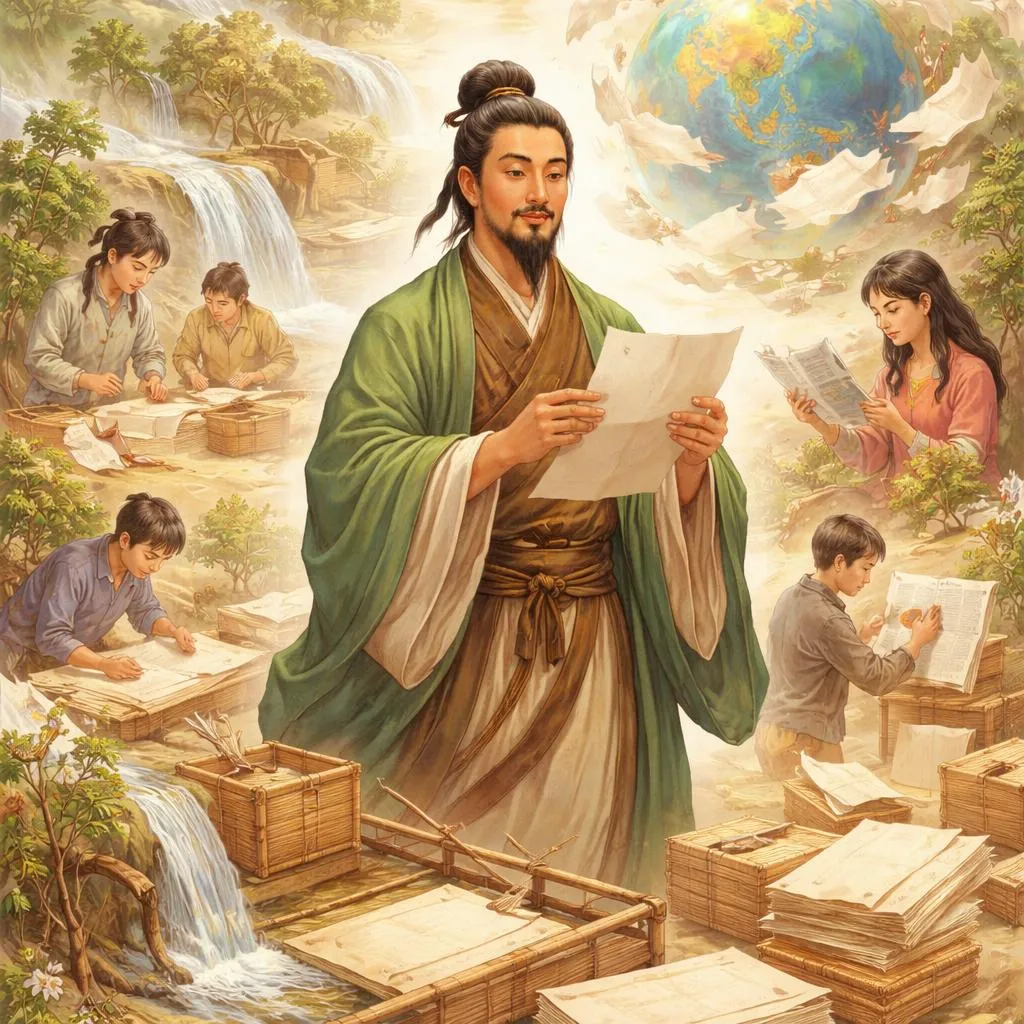
Cai Lun invented paper as we know it today. He lived about 1,900 years ago during the Han Dynasty in China. Before him, people wrote on heavy bamboo or expensive silk. His paper was cheap, light, and easy to make. The emperor loved his invention and made it official. Paper spread from China to the entire world. Without Cai Lun, books would cost a fortune. You might not have a single book in your home. His story shows that simple ideas can change everything.
Early Life and Childhood
Cai Lun was born around 50 CE in Guiyang County, Hunan Province, China. His family was poor but respected. They worked as farmers and craftsmen. Young Cai loved watching his father make tools from bamboo and wood. He also enjoyed playing with bark and plant fibers. He noticed how different materials felt and bent. He dreamed of creating something useful for everyone. He was a quiet and thoughtful child. He did not play rough games with other boys. He preferred observing and thinking. When he was still young, his family sent him to work in the imperial palace.
Education and Learning Journey
Cai Lun entered the imperial palace as a young servant. He worked as a eunuch, a common position for palace staff. He received training in reading, writing, and court manners. He learned how to manage supplies and supervise workers. He also studied the classics of Confucius and other philosophers. His intelligence caught the attention of the emperor. Cai Lun received promotions to higher positions. He became a personal attendant to the emperor. He also served as a messenger and advisor. His job required him to handle many documents. He saw how expensive and heavy writing materials were. He began thinking about a better solution.
How Did They Become Successful?
Cai Lun became successful through careful experimentation. The emperor promoted him to run a workshop that made weapons and tools. Cai Lun used this position to experiment with materials. He tried making paper from many different fibers. He used tree bark, hemp scraps, old rags, and fishing nets. He soaked these materials in water. He pounded them into a pulp. He spread the pulp on a flat screen. He let the water drain and the fibers dry. The result was a thin, flat sheet. It was strong enough to write on. It was cheap enough for everyone. In 105 CE, he presented his paper to the emperor. The emperor was delighted.
Big Ideas and Achievements
Cai Lun's biggest achievement was creating a practical papermaking process. Before him, people had tried making paper from single materials. The results were poor. Cai Lun combined multiple materials for strength. He also standardized the steps so anyone could follow them. His method used water, pounding, pressing, and drying. These steps became the basis of papermaking for centuries. The Chinese government adopted paper for all official documents. Paper gradually replaced bamboo strips and silk. Books became much cheaper to produce. Learning spread to more people. Paper technology spread to Korea and Japan. It reached the Arab world in the 700s. Europe learned papermaking in the 1200s. The entire world now uses his basic method.
Challenges and Difficult Times
Cai Lun lived a dangerous life inside the palace. He rose to great power and made many enemies. He supported one empress against another. When the empress he supported fell from power, his enemies attacked him. They accused him of crimes. Rather than face torture and execution, Cai Lun chose to end his own life. He dressed in fine clothes, drank poison, and died in 121 CE. His invention survived him. The paper he created kept spreading across the world. His name was sometimes forgotten. Later historians restored his reputation. They recognized that his invention changed human civilization. Despite his tragic death, his legacy lived on.
Fun Facts About the Celebrity
Cai Lun loved drinking tea made from mulberry leaves. He believed it helped his thinking. He also enjoyed practicing calligraphy on his own paper. He tested different paper recipes by writing poems. He never wore silk clothes, even though he could afford them. He preferred simple hemp robes. He kept a small garden where he grew mulberry trees. He used the bark for paper experiments. He also kept a pond with fish. He watched them swim while thinking about new ideas. He never married or had children. His paper was his child. He also loved playing a board game called Go. He played against scholars who visited the palace.
Why Is This Celebrity Important Today?
Cai Lun's papermaking method is still used today. Modern machines have replaced his hands. But the basic steps remain the same. We still mix fibers with water. We still press and dry the mixture. Every piece of paper you touch comes from his invention. Notebooks, textbooks, newspapers, cardboard boxes, and toilet paper all trace back to Cai Lun. His invention made education possible for ordinary people. Before paper, only the rich could afford books. After paper, schools could buy textbooks. Libraries could hold thousands of books. Knowledge spread faster than ever before. Cai Lun ranks among the most important inventors in history. Some historians rank paper as the most important invention of all time.
What Can Kids Learn from This Story?
You can learn that simple materials can create great things. Cai Lun used tree bark and old rags. You can also learn to experiment. He tried many combinations before finding the right one. You can learn that inventions spread like ripples in water. His paper went from China to the whole world. You can learn that your work might outlive you. He died in disgrace. His invention made him famous forever. You can also learn that you do not need to be a scientist to invent something. He was a palace servant who observed and experimented.
Quick Quiz or Practice Time
Let's see what you remember about Cai Lun.
Question 1: What year did Cai Lun present his paper to the emperor?
Answer: 105 CE.
Question 2: What four materials did Cai Lun use to make his paper?
Answer: Tree bark, hemp scraps, old rags, and fishing nets.
Question 3: What did Cai Lun drink that he believed helped his thinking?
Answer: Tea made from mulberry leaves.
Question 4: What happened to Cai Lun in 121 CE?
Answer: He drank poison and died to avoid torture.
Question 5: What game did Cai Lun love playing with visiting scholars?
Answer: Go.
Activity: Make your own paper at home. Take an old newspaper or paper towel. Tear it into tiny pieces. Soak the pieces in water for an hour. Blend them into a pulp. Spread the pulp on a flat screen. Press out the water. Let it dry for a day. You just became a papermaker like Cai Lun. Draw a picture of your handmade paper.
Cai Lun lived 1,900 years ago. He worked in a palace full of danger and intrigue. He rose to power and then fell. He died by his own hand. His enemies thought they had erased him. But they could not erase his invention. Paper traveled from China to Korea. From Korea to Japan. From Japan to the Arab world. From the Arab world to Europe. From Europe to the Americas. Now every country on Earth uses paper. Every schoolchild learns to write on it. Every book is printed on it. Every package is wrapped in it. Cai Lun changed the world without fighting a battle. Without writing a law. Without conquering a single city. He just mixed bark, rags, and water. Then he let them dry. That is the power of a simple idea. That is the power of noticing a problem and solving it. You have that same power. Look around your home. What problem do you see? What material could you combine? What simple invention could make life better? Cai Lun did it with bark and rags. You can do it with whatever you have. Now go create something. The world is waiting.