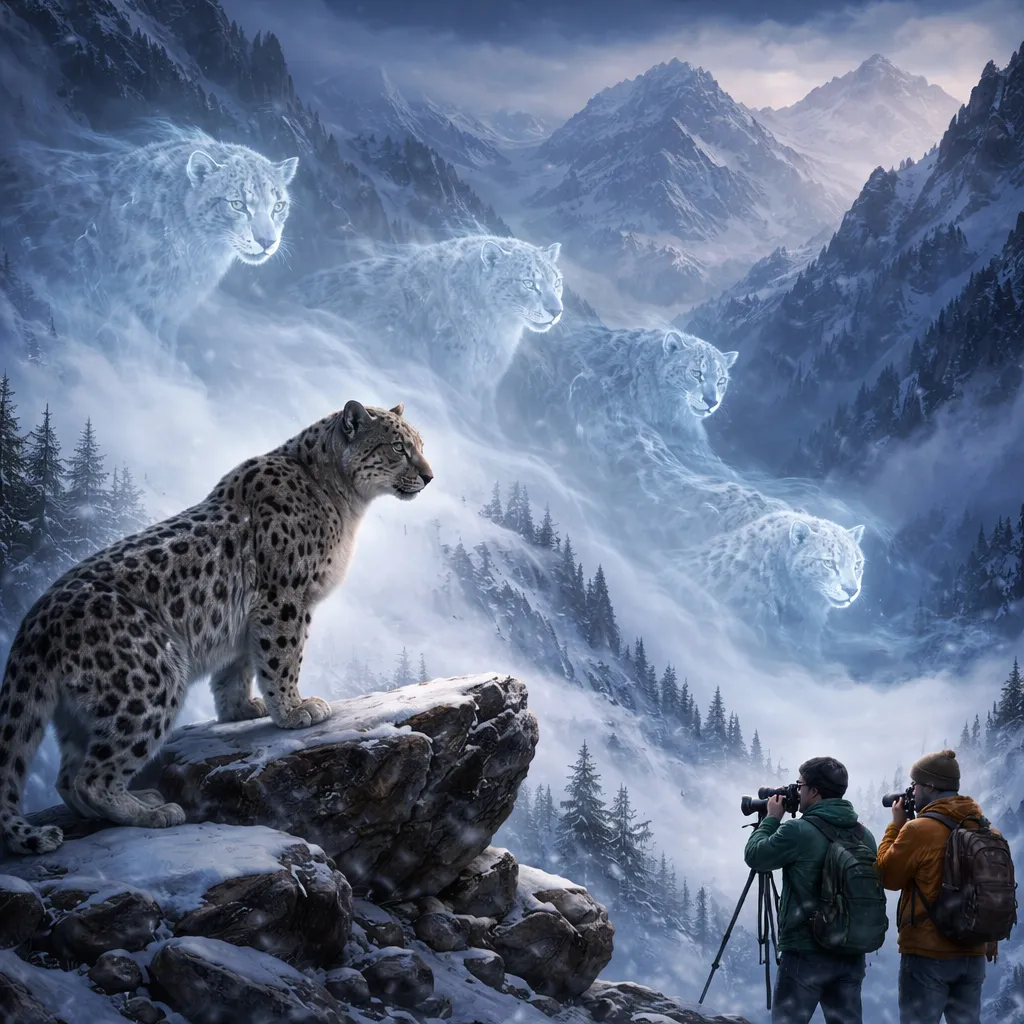

What Is This Animal?
A snow leopard is a large cat with thick, smoky-gray fur. Its fur has dark spots called rosettes. These spots help it blend into rocky mountains. Its tail is long and thick. It wraps its tail around itself for warmth. Snow leopards are sometimes called “ghosts of the mountains” because they are so hard to see.
Snow leopards live in the high mountains of Central Asia. They are found in twelve countries, including India, China, Nepal, and Mongolia. They live at elevations between 10,000 and 15,000 feet. These mountains are cold, rocky, and steep.
These cats are solitary. They live alone except when raising cubs. They are most active at dawn and dusk. They are excellent climbers. They leap across rocky cliffs with ease. Their long tail helps them balance.
For children, snow leopards are mysterious and beautiful. Their thick fur and long tails look like something from a storybook. Learning about snow leopards teaches children about rare animals, mountain habitats, and the importance of protecting endangered species.
English Learning About This Animal
Let us learn the English words snow leopard. We say it like this: /snoʊ ˈlɛpərd/. Snow sounds like “sno.” Leopard sounds like “lep-erd.” Put them together: snow leopard. Say it three times. Snow leopard. Snow leopard. Snow leopard.
Now let us learn words about a snow leopard’s body. The fur is thick and gray with rosette spots. The tail is long and furry. It helps with balance and warmth. The paws are large and furry. They act like snowshoes. The eyes are pale green or gray. The cubs are baby snow leopards.
There is a beautiful saying from the Himalayas. People say, “The snow leopard walks the high ridges where no human dares.” This speaks to its secretive nature. Another saying is, “To see a snow leopard is to be blessed.” This reflects how rare and special sightings are.
These English words help children understand snow leopard anatomy. When they say rosettes, they learn about the spot patterns. When they say paws, they understand how they walk on snow. Parents can practice these words while looking at pictures. Point to the parts. Say the words together.
Animal Facts and Science Knowledge
Snow leopards belong to the cat family Felidae. They are closely related to tigers. Their scientific name means “clouded leopard.” They are not true leopards. They are a separate species. Snow leopards cannot roar. They make sounds like chuffing, hissing, and moaning.
Snow leopards live in high mountain ranges. They live in the Himalayas, Tibetan Plateau, and Altai Mountains. Their habitat is rocky, steep, and cold. They prefer areas with cliffs and ridges. These provide cover for hunting.
Snow leopards eat wild sheep, goats, and smaller animals. They hunt blue sheep, ibex, marmots, and birds. They stalk their prey. They leap from great distances to catch it. They can kill animals three times their size.
Snow leopards have special abilities. They can leap up to fifty feet. Their long tail helps them balance on narrow ledges. Their large paws distribute weight on snow. Their thick fur keeps them warm in subzero temperatures. Their camouflage makes them nearly invisible in rocky terrain.
Snow leopards are endangered. There are fewer than 7,000 left in the wild. Threats include poaching, habitat loss, and conflict with herders. Conservation groups work to protect them. They set up protected areas and help communities protect livestock.
How to Interact With This Animal Safely
Snow leopards are wild and endangered. They are not pets. The best way to interact is to support conservation. Teach children about protecting snow leopards. Learn about organizations that help them. Donate or share what you learn.
If you ever travel to snow leopard habitat, follow guides. Stay on trails. Do not approach wildlife. Snow leopards avoid people. They are very shy. Seeing one is extremely rare. Respect their space.
In zoos, snow leopards are in protected habitats. Follow all rules. Stay behind barriers. Do not tap on glass. Watch them rest, climb, and play. Learn from zoo educators. Zoos help protect snow leopards through breeding programs.
Teach children never to try to touch or feed wild animals. Wild animals need to stay wild. Feeding them changes their behavior. It can make them sick. It can also put people at risk.
Snow leopards need our help. Their numbers are small. Learning about them is the first step. Sharing what we learn helps others care too. Protecting their habitat protects them.
What Can We Learn From This Animal
Snow leopards teach us about solitude. They live alone. They are comfortable in quiet places. Children learn that being alone can be peaceful. Reading, thinking, and resting are good for us.
Snow leopards teach us about camouflage. Their spots help them disappear into rocks. Children learn that sometimes blending in is helpful. Other times, standing out is good. Knowing when to be seen and when to be quiet is a skill.
Snow leopards teach us about adaptation. They live in the highest mountains. Their bodies are perfect for snow and cliffs. Children learn that adapting to our environment helps us thrive. Learning new skills, wearing warm clothes, and preparing for challenges all help.
Snow leopards teach us about conservation. They are rare and need protection. Children learn that some animals need our help. Protecting nature, learning about endangered species, and sharing knowledge all make a difference.
Fun Learning Activities
Let us make learning about snow leopard fun. One activity is the snow leopard leap game. Ask your child to crouch low. Leap forward like a snow leopard. Use a long tail made of ribbon or scarf for balance. Say “snow leopard leaps” and “snow leopard balances.”
Another activity is drawing a snow leopard. Look at pictures of snow leopards. Notice the thick fur, long tail, and rosette spots. Draw a snow leopard on a rocky cliff. Add the spots. Label the parts. Say the words aloud.
Create a story about a snow leopard mother. Ask your child what the mother does. Does she hunt for her cubs? Does she teach them to climb? Do they hide in the rocks? Write a few sentences together. Let your child draw pictures. Read the story aloud.
Make a snow leopard craft. Use gray paper or felt for the body. Add a long tail with a stripe. Add spots with black marker. Add ears and whiskers. Move the craft leopard. Practice saying “snow leopard climbs” and “snow leopard hides.”
Learn about mountain habitats. Talk about how snow leopards survive in high mountains. Compare them to other mountain animals like ibex and marmots. Use words like “adaptation,” “camouflage,” and “endangered.”
Learn about conservation. Find a snow leopard conservation group online. Read about what they do. Make a poster about snow leopards to share with family. Use words like “protect,” “habitat,” and “wildlife.”
These simple activities bring learning to life. Children build English vocabulary while playing. They learn science through understanding adaptation. They develop conservation awareness through learning about endangered animals. Learning about snow leopard becomes a journey to the roof of the world. Each moment spent together strengthens language, curiosity, and a growing appreciation for the ghost cats that walk the high ridges, teaching us that some treasures are hidden, some strengths are quiet, and protecting what is rare is one of our most important tasks.