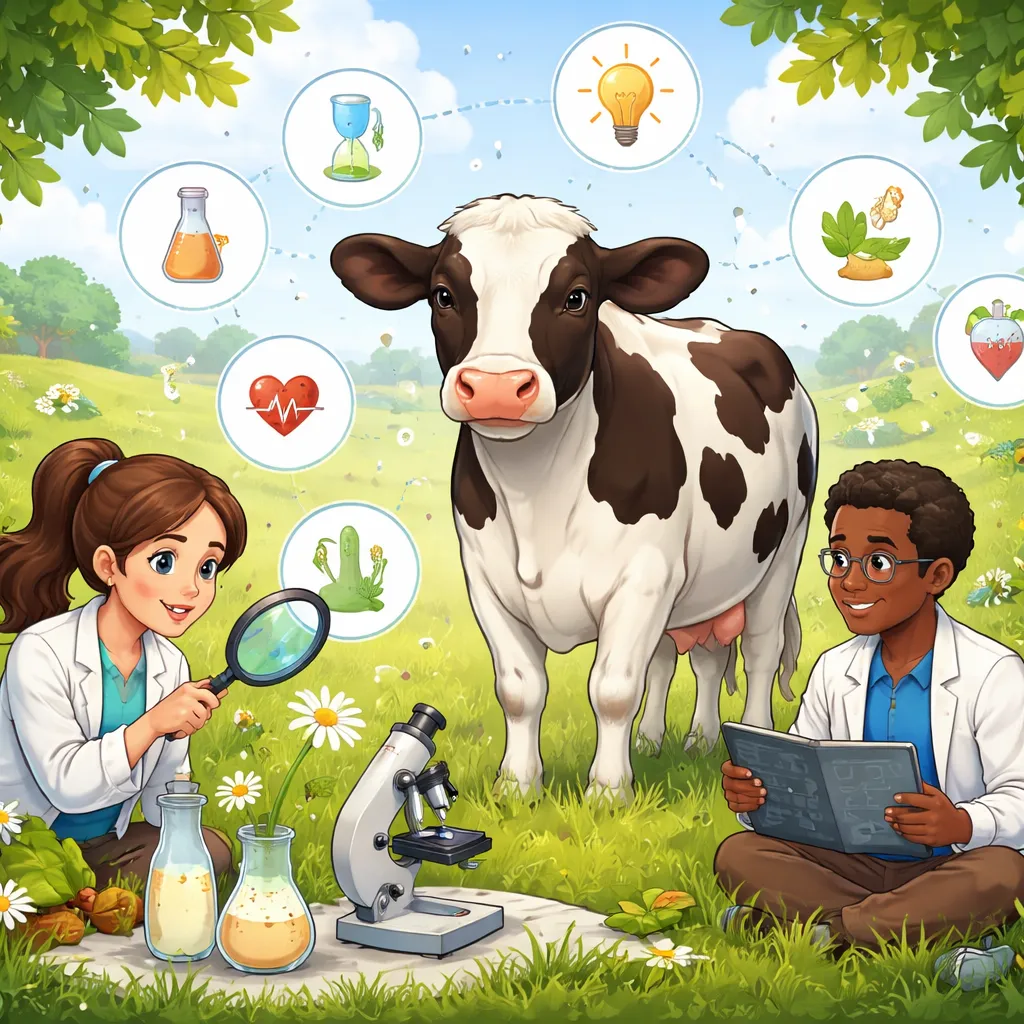

Have you ever seen a cow in a field, happily chewing grass? Maybe on a farm, in a picture book, or from a car window. Cows are gentle, calm animals that give us milk and are important to people all over the world. Learning about cows is a wonderful adventure that takes us to green pastures and farms. Let’s begin our journey of learning about cow friends and their amazing lives!
English Language Learning
Vocabulary and Spelling
Our gentle farm friend is called a cow.
The word "cow" is a noun. A noun names a person, place, or thing. So, a cow is a thing—a large, farm animal.
Spelling "cow" is very short: C-O-W. The 'C' starts the word, the 'O' is in the middle, and the 'W' is at the end. C-O-W spells cow. It’s a small word for a big animal!
Sound and Pronunciation
Let’s say the word correctly. It sounds like this: /kaʊ/.
We can say it in one clear part. First, say the sound "k". It’s the sound at the start of "cat". Next, say "ow". It’s the sound you make when you get a small bump, "ow!".
Now, blend it together! "K" "ow". Cow! Great!
The word "cow" has just one beat, or one syllable. Clap your hands once: Cow! It’s a short, strong word.
Related Words
Learning about cows is more fun with new words! Here are some important ones.
Baby: A baby cow is called a calf. A young female cow is called a heifer.
Sound: The sound a cow makes is a moo.
Group: A group of cows is called a herd. They live, eat, and rest together.
A Famous Saying
There is a famous and funny saying: "Why did the cow cross the road? To get to the udder side!"
This is a joke! "Udder" sounds like "other." A cow’s udder is where milk comes from. It’s a playful joke that makes us smile and reminds us that cows are part of our everyday stories.
Say the joke with me: "Why did the cow cross the road? To get to the udder side!" See? It’s udderly funny!
Now you know the word "cow"! Are you ready to graze on some amazing facts? Let’s walk from words to wonderful knowledge!
Animal Knowledge
Who Are They? – Family and Group
What kind of animal is a cow? Cows are mammals. They have hair, are warm-blooded, and mother cows feed their babies milk.
They are part of the bovine family. This family also includes buffalo, bison, and yaks. Cows are a type of cattle that have been raised by people for thousands of years.
What Do They Look Like? – Amazing Bodies
Cows are large animals, about the size of a small car! They can be black, white, brown, or spotted. Their most famous features are their big, gentle eyes and their four-chambered stomach.
Cows have a special stomach to help them eat grass. They chew, swallow, and then bring the food back up to chew again. This is called chewing the cud. It helps them get all the nutrients from tough plants.
Cows have special body tools. Both male and female cows can have horns. They have a great sense of smell. Their wide mouths are perfect for grazing on grass.
Where Do They Live and How? – Home and Habits
Most cows live on farms and ranches all over the world. They need open spaces with lots of grass to eat. Some cows, like wild cattle, live in forests and grasslands.
Cows are herbivores. This means they only eat plants. They are ruminants, which means they have a special stomach to break down grass and hay. They spend many hours each day eating and chewing cud.
Cows are very social and live in herds. In a herd, they form close friendships and have a leader. They are most active during the day. They spend their time grazing, resting, and caring for their calves.
A Cow’s Life Story – Growing Up
A baby cow is called a calf. Cows are mammals, so calves are born live from their mother. A mother cow, called a dam, usually has one calf at a time.
The mother cow takes excellent care of her calf. She licks it clean and feeds it milk. The calf can stand and walk just a few hours after birth. The mother protects the calf fiercely.
Calves are born with long legs and a soft coat. They drink their mother’s milk for several months. Then they start to eat grass. A young cow is called a heifer (female) or a bull (male). A cow becomes an adult at about two years old.
How Do They "Talk"? – Communication
Cows talk with sounds and body language. They moo to talk to their calves and to the herd. Each moo can have a different meaning.
They use their bodies to show how they feel. A cow that is relaxed will have its ears forward. A cow that is upset might swish its tail or stomp its foot. They groom each other by licking, which is a sign of friendship.
Their best senses are their amazing sense of smell and hearing. They can recognize their friends by smell. Their ears can move to catch sounds from all directions.
Are They Okay? – Taking Care of Them
Most farm cows are cared for by farmers. Some types of wild cattle are endangered because they lose their forest homes.
Problems for cows can include not having enough space, getting sick, or not being treated kindly. Good farmers make sure their cows are healthy, well-fed, and safe.
You can be a cow friend! You can learn about where your food comes from. You can thank farmers for their hard work. You can choose to be kind to all animals. Remember, cows are living beings that feel happy and safe when they are treated well.
Life Connections and Inspiration
How to Be With Them – Safety and Love
Cows are large, gentle animals. Being around them requires calmness and respect.
If you visit a farm: Always have an adult with you. Move slowly and talk softly. Let the cow see you. Do not shout or run. You can pet a cow gently on its shoulder or back if the farmer says it is okay. Never stand directly behind a cow.
Owning cows is a huge responsibility. They need a large field, fresh water, plenty of hay or grass, a vet, and a safe barn. They are herd animals, so they need other cow friends.
We show our love by understanding their needs and treating them with gentleness. A happy cow is a healthy cow.
Super Qualities We Learn from Them
Cows teach us wonderful things. One super quality is calm and steady providing. Cows give us milk, which becomes cheese, butter, and yogurt. They do this calmly and steadily. They teach us to be generous, to provide for others, and to do our part in a peaceful way.
Another quality is strong community and friendship. Cows form close bonds in their herd. They have best friends and get stressed when they are alone. This reminds us of the importance of friendship, family, and sticking together.
Think about it: How can you be a calm and steady helper at home or school? How can you be a good friend and community member, just like a cow in its herd?
Take Action! – Your "Cow Care" Project
Let’s do a fun and caring activity! Your project is to create a model of a happy cow habitat.
Get a large tray or a piece of cardboard. Use green paper or real grass to make a pasture. Build a simple cardboard barn. Make a small pond from blue paper. Now, draw and color a cow and her calf. Cut them out and place them in your habitat. Add a fence for safety. Write down three things a farmer must do every day to keep the cows in your model happy and healthy. Share your model and your care list with your family.
Closing
Learning about cow calm is a fantastic adventure! We learned the word "cow" and how to say its strong, one-syllable name. We discovered amazing facts about their four-chambered stomachs, their gentle moos, and their life in the herd. We know that cows are generous, social animals who provide for us. You can use your new words to tell stories about these gentle giants. You can use your knowledge to appreciate farmers and the food we eat. The animal world is full of calm and steady providers. Always remember to treat all animals with kindness, be a generous friend, and value the community around you. Keep exploring with a gentle heart, provide help where you can, and be a loyal member of your own herd. Your caring actions and peaceful spirit make you a true friend to the wonderful cow.